
基因中的突变是耐甲氧西林金黄色葡萄球菌缺乏决定因素的β-内酰胺类药物耐药的一个具有临床相关性的机制。
Mutations in the gene are a clinically relevant mechanism for β-lactam resistance in meticillin-resistant lacking determinants.
机构信息
Department of Infectious Diseases, Nosocomial Pathogens and Antibiotic Resistances, Robert Koch Institute, Wernigerode, Germany.
Methodology and Research Infrastructure, Bioinformatics, Robert Koch Institute, Berlin, Germany.
出版信息
Microb Genom. 2021 Sep;7(9). doi: 10.1099/mgen.0.000623.
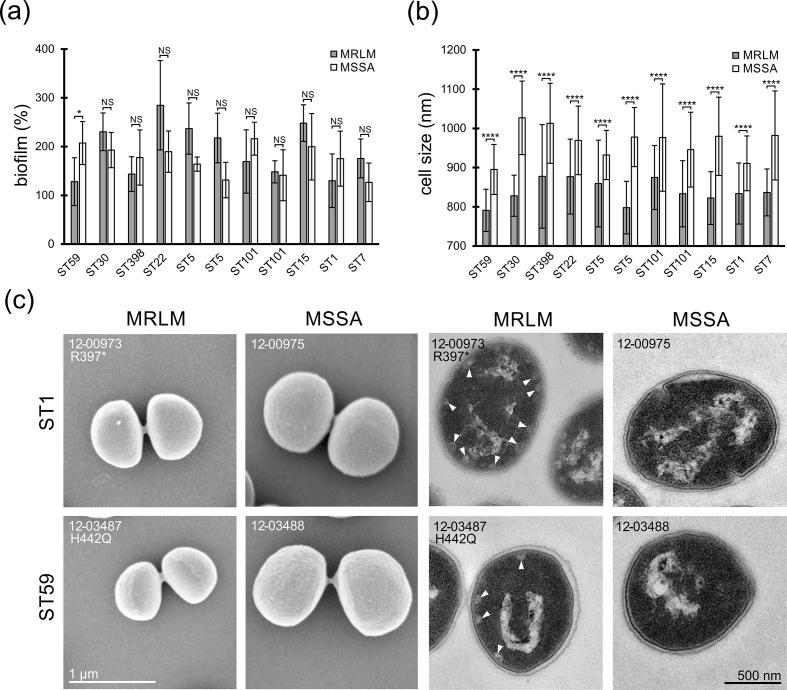
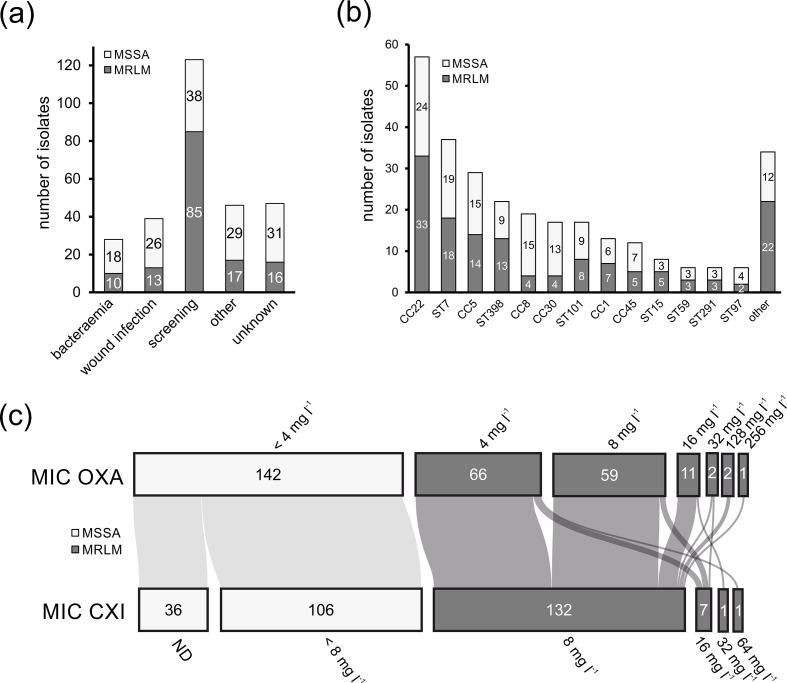
In , resistance to β-lactamase stable β-lactam antibiotics is mediated by the penicillinbinding protein 2a, encoded by or by its homologues or . However, a substantial number of meticillin-resistant isolates lack known genes and, thus, are called meticillin resistant lacking (MRLM). This study aims to identify the genetic mechanisms underlying the MRLM phenotype. A total of 141 MRLM isolates and 142 meticillin-susceptible controls were included in this study. Oxacillin and cefoxitin minimum inhibitory concentrations were determined by broth microdilution and the presence of genes was excluded by PCR. Comparative genomics and a genome-wide association study (GWAS) approach were applied to identify genetic polymorphisms associated with the MRLM phenotype. The potential impact of such mutations on the expression of PBP4, as well as on cell morphology and biofilm formation, was investigated. GWAS revealed that mutations in were significantly associated with the MRLM phenotype. GdpP is a phosphodiesterase enzyme involved in the degradation of the second messenger cyclic-di-AMP in . A total of 131 MRLM isolates carried truncations, insertions or deletions as well as amino acid substitutions, mainly located in the functional DHH-domain of GdpP. We experimentally verified the contribution of these mutations to the MRLM phenotype by heterologous complementation experiments. The mutations in had no effect on transcription levels of ; however, cell sizes of MRLM strains were reduced. The impact on biofilm formation was highly strain dependent. We report mutations in as a clinically relevant mechanism for β-lactam resistance in MRLM isolates. This observation is of particular clinical relevance, since MRLM are easily misclassified as MSSA (meticillin-susceptible ), which may lead to unnoticed spread of β-lactam-resistant isolates and subsequent treatment failure.
在 中,对β-内酰胺酶稳定的β-内酰胺抗生素的耐药性是由青霉素结合蛋白 2a 介导的,该蛋白由 或其同源物 或 编码。然而,大量耐甲氧西林的分离株缺乏已知的 基因,因此被称为耐甲氧西林缺失 (MRLM)。本研究旨在确定 MRLM 表型的遗传机制。本研究共纳入 141 株 MRLM 分离株和 142 株耐甲氧西林敏感对照株。采用肉汤微量稀释法测定苯唑西林和头孢西丁的最小抑菌浓度,并用 PCR 排除 基因的存在。应用比较基因组学和全基因组关联研究(GWAS)方法鉴定与 MRLM 表型相关的遗传多态性。研究了这些突变对 PBP4 表达以及细胞形态和生物膜形成的潜在影响。GWAS 显示, 基因的突变与 MRLM 表型显著相关。GdpP 是一种磷酸二酯酶酶,参与第二信使环二腺苷酸(cyclic-di-AMP)的降解。共有 131 株 MRLM 分离株携带截断、插入或缺失以及氨基酸取代,主要位于 GdpP 的功能 DHH 结构域。我们通过异源互补实验实验验证了这些 突变对 MRLM 表型的贡献。 突变对 的转录水平没有影响;然而,MRLM 菌株的细胞大小减小。对生物膜形成的影响高度依赖于菌株。我们报告了 中的突变作为 MRLM 分离株中β-内酰胺耐药的一种临床相关机制。这一观察结果具有特殊的临床意义,因为 MRLM 很容易被错误分类为 MSSA(耐苯唑西林),这可能导致β-内酰胺耐药分离株的传播未被发现,随后治疗失败。


 Zotero 插件