
通过综合分析鉴定与结直肠癌肝转移相关的枢纽基因
Identification of Hub Genes Related to Liver Metastasis of Colorectal Cancer by Integrative Analysis.
作者信息
Liu Sicheng, Zhang Yaguang, Zhang Su, Qiu Lei, Zhang Bo, Han Junhong
机构信息
Research Laboratory of Cancer Epigenetics and Genomics, Department of General Surgery, Frontiers Science Center for Disease-Related Molecular Network, State Key Laboratory of Biotherapy and National Clinical Research Center for Geriatrics, West China Hospital, Sichuan University, Chengdu, China.
Research Laboratory of Cancer Epigenetics and Genomics, Department of General Surgery, Frontiers Science Center for Disease-related Molecular Network, West China Hospital, Sichuan University, Chengdu, China.
出版信息
Front Oncol. 2021 Aug 19;11:714866. doi: 10.3389/fonc.2021.714866. eCollection 2021.
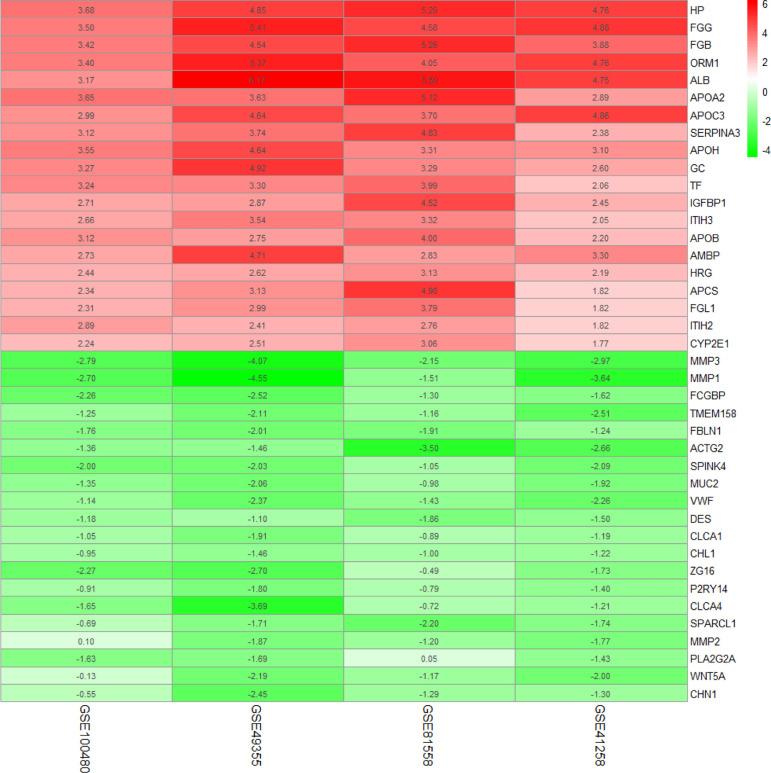
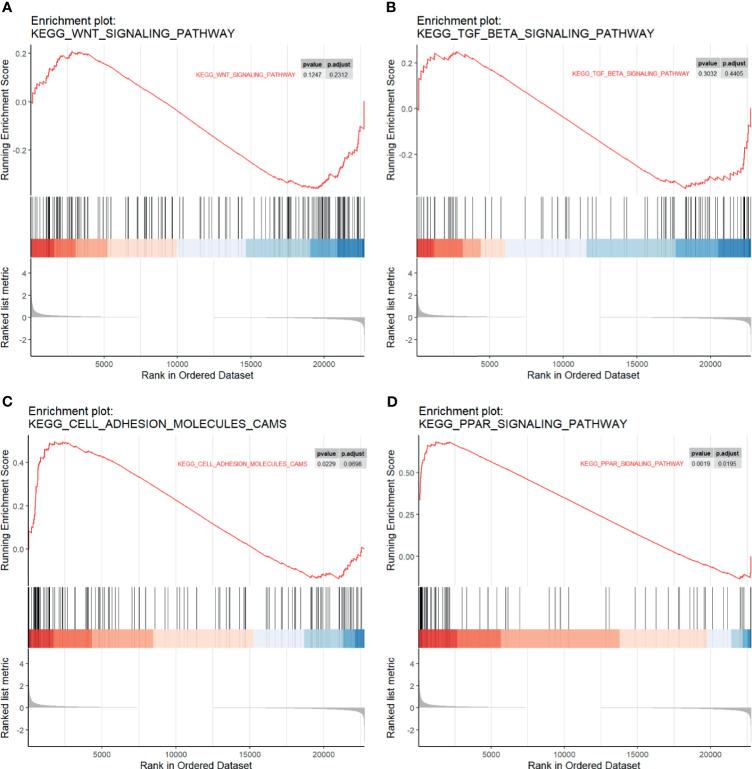
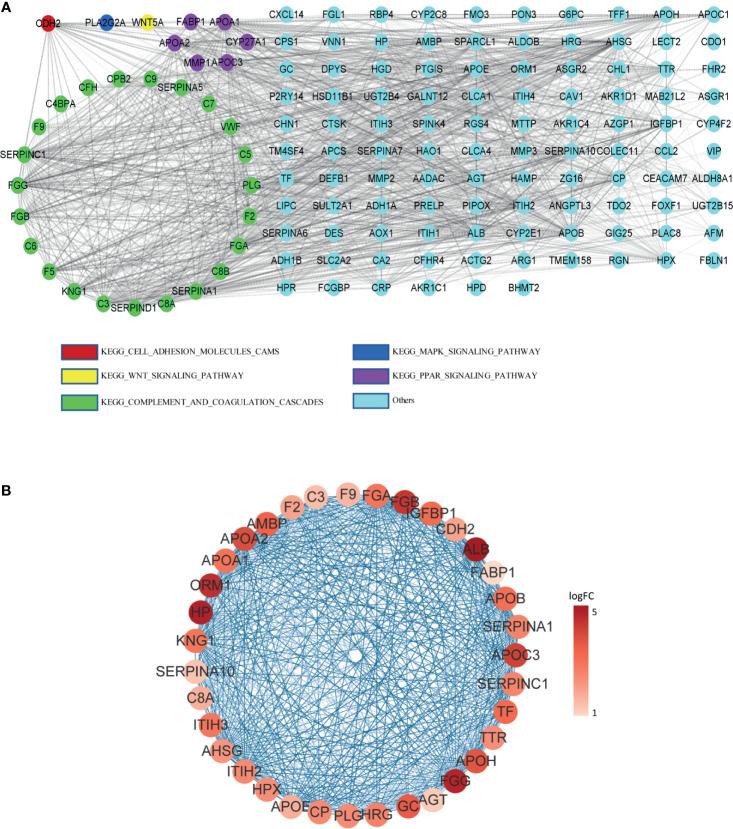
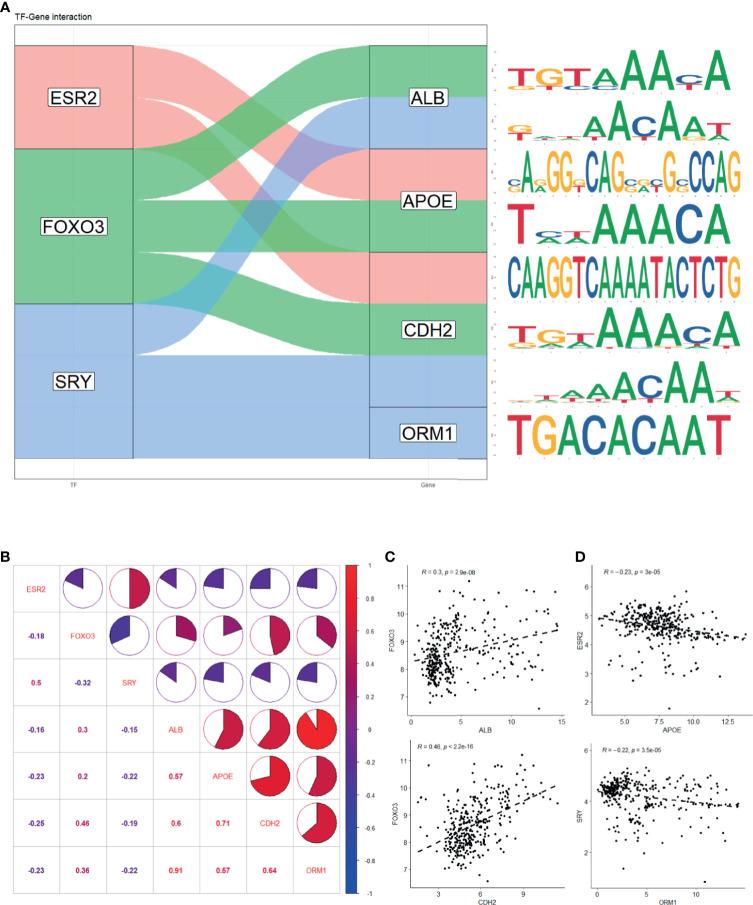
Liver metastasis of colorectal cancer (LMCRC) severely damages patient health, causing poor prognosis and tumor relapse. Marker genes associated with LMCRC identified by previous study did not meet therapeutic demand. Therefore, it is necessary to identify new biomarkers regulating the metastasis network and screen potential drugs for future treatment. Here, we identified that cell adhesion molecules and peroxisome proliferator-activated receptor (PPAR) signaling pathway were significantly enriched by analyzing the integrated-multiple expression profiles. Moreover, analysis with robust rank aggregation approach revealed a total of 138 differentially expressed genes (DEGs), including 108 upexpressed and 30 downexpressed genes. With establishing protein-protein interaction network, we also identified the subnetwork significantly enriching the metastasis-associated hub genes including ALB, APOE, CDH2, and ORM1. ESR2, FOXO3, and SRY were determined as key transcription factors regulating hub genes. In addition, ADH-1, epigallocatechin, CHEMBL1945287, and cochinchinenin C were predicted as potential therapeutic drugs. Moreover, the antimigration capacity of ADH-1 and epigallocatechin were confirmed in CRC cell lines. In conclusion, our findings not only offer opportunities to understand metastasis mechanism but also identify potential therapeutic targets for CRC.
结直肠癌肝转移(LMCRC)严重损害患者健康,导致预后不良和肿瘤复发。先前研究确定的与LMCRC相关的标志物基因无法满足治疗需求。因此,有必要识别调控转移网络的新生物标志物并筛选潜在药物用于未来治疗。在此,我们通过分析整合的多个表达谱,确定细胞粘附分子和过氧化物酶体增殖物激活受体(PPAR)信号通路显著富集。此外,采用稳健秩聚合方法分析共揭示了138个差异表达基因(DEG),包括108个上调基因和30个下调基因。通过建立蛋白质-蛋白质相互作用网络,我们还确定了显著富集包括ALB、APOE、CDH2和ORM1在内的转移相关枢纽基因的子网。ESR2、FOXO3和SRY被确定为调控枢纽基因的关键转录因子。此外,ADH-1、表没食子儿茶素、CHEMBL1945287和柯里拉京C被预测为潜在治疗药物。此外,ADH-1和表没食子儿茶素在结直肠癌细胞系中的抗迁移能力得到了证实。总之,我们的研究结果不仅为理解转移机制提供了机会,还确定了结直肠癌的潜在治疗靶点。





 Zotero 插件