
异基因干细胞移植后移植物功能不良的临床特征、病理生理学和治疗。
Clinical features, pathophysiology, and therapy of poor graft function post-allogeneic stem cell transplantation.
机构信息
Department of Clinical Haematology, Peter MacCallum Cancer Centre/Royal Melbourne Hospital, Parkville, VIC, Australia.
Australian Cancer Research Fund Translational Research Laboratory, Royal Melbourne Hospital, Parkville, VIC, Australia; and.
出版信息
Blood Adv. 2022 Mar 22;6(6):1947-1959. doi: 10.1182/bloodadvances.2021004537.
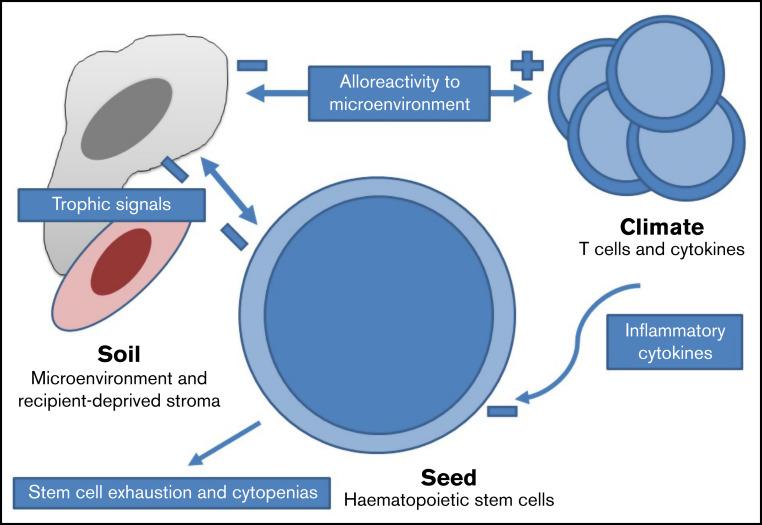
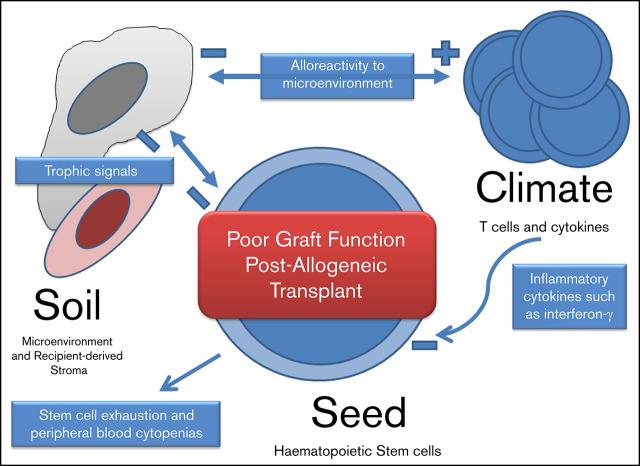
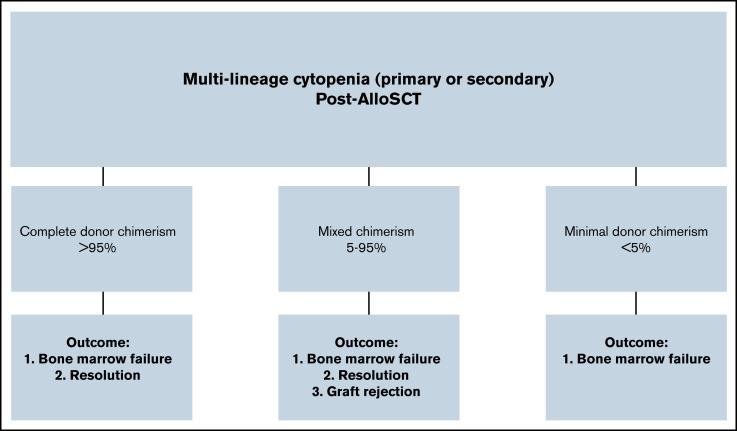
Poor graft function (PGF), defined by the presence of multilineage cytopenias in the presence of 100% donor chimerism, is a serious complication of allogeneic stem cell transplant (alloSCT). Inducers or potentiators of alloimmunity such as cytomegalovirus reactivation and graft-versus-host disease are associated with the development of PGF, however, more clinical studies are required to establish further risk factors and describe outcomes of PGF. The pathophysiology of PGF can be conceptualized as dysfunction related to the number or productivity of the stem cell compartment, defects in bone marrow microenvironment components such as mesenchymal stromal cells and endothelial cells, or immunological suppression of post-alloSCT hematopoiesis. Treatment strategies focused on improving stem cell number and function and microenvironment support of hematopoiesis have been attempted with variable success. There has been limited use of immune manipulation as a therapeutic strategy, but emerging therapies hold promise. This review details the current understanding of the causes of PGF and methods of treatment to provide a framework for clinicians managing this complex problem.
植入失败(PGF)定义为存在 100%供者嵌合体时出现多系细胞减少症,是异基因造血干细胞移植(alloSCT)的严重并发症。同种异体免疫的诱导剂或增强剂,如巨细胞病毒再激活和移植物抗宿主病,与 PGF 的发生有关,但需要更多的临床研究来确定进一步的危险因素,并描述 PGF 的结果。PGF 的病理生理学可以被概念化为与干细胞池的数量或生产力相关的功能障碍、骨髓微环境成分(如间充质基质细胞和内皮细胞)的缺陷,或 alloSCT 后造血的免疫抑制。已经尝试了各种策略来改善干细胞数量和功能以及造血的微环境支持,但治疗效果不一。免疫干预作为一种治疗策略的应用有限,但新兴疗法有希望。这篇综述详细介绍了 PGF 的病因和治疗方法,为临床医生处理这一复杂问题提供了一个框架。
 Zotero 插件