
线粒体钙单向转运体是细胞器间钙转运和 NFAT 激活的核心调节子。
The Mitochondrial Ca uniporter is a central regulator of interorganellar Ca transfer and NFAT activation.
机构信息
Department of Cellular and Molecular Physiology, The Pennsylvania State University College of Medicine, Hershey, Pennsylvania, USA.
Department of Cellular and Molecular Physiology, The Pennsylvania State University College of Medicine, Hershey, Pennsylvania, USA; Department of Pharmacology and Chemical Biology, University of Pittsburgh School of Medicine, Pittsburgh, Pennsylvania, USA; Vascular Medicine Institute, University of Pittsburgh School of Medicine, Pittsburgh, Pennsylvania, USA.
出版信息
J Biol Chem. 2021 Oct;297(4):101174. doi: 10.1016/j.jbc.2021.101174. Epub 2021 Sep 6.
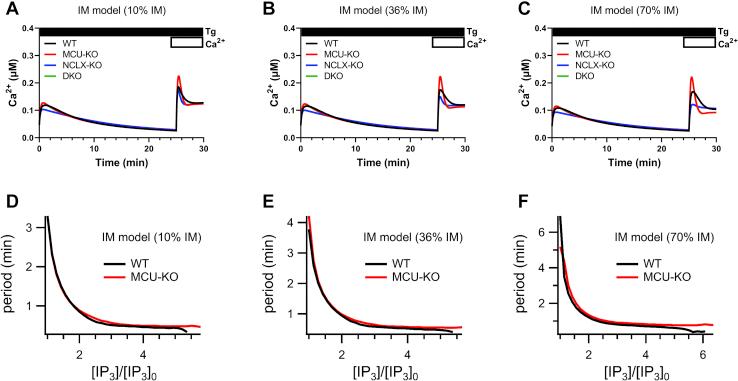
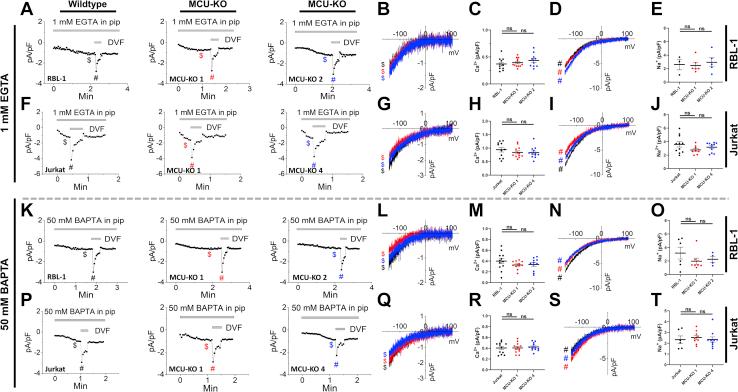
Mitochondrial Ca uptake tailors the strength of stimulation of plasma membrane phospholipase C-coupled receptors to that of cellular bioenergetics. However, how Ca uptake by the mitochondrial Ca uniporter (MCU) shapes receptor-evoked interorganellar Ca signaling is unknown. Here, we used CRISPR/Cas9 gene knockout, subcellular Ca imaging, and mathematical modeling to show that MCU is a universal regulator of intracellular Ca signaling across mammalian cell types. MCU activity sustains cytosolic Ca signaling by preventing Ca-dependent inactivation of store-operated Ca release-activated Ca channels and by inhibiting Ca extrusion. Paradoxically, MCU knockout (MCU-KO) enhanced cytosolic Ca responses to store depletion. Physiological agonist stimulation in MCU-KO cells led to enhanced frequency of cytosolic Ca oscillations, endoplasmic reticulum Ca refilling, nuclear translocation of nuclear factor for activated T cells transcription factors, and cell proliferation, without altering inositol-1,4,5-trisphosphate receptor activity. Our data show that MCU has dual counterbalancing functions at the cytosol-mitochondria interface, whereby the cell-specific MCU-dependent cytosolic Ca clearance and buffering capacity of mitochondria reciprocally regulate interorganellar Ca transfer and nuclear factor for activated T cells nuclear translocation during receptor-evoked signaling. These findings highlight the critical dual function of the MCU not only in the acute Ca buffering by mitochondria but also in shaping endoplasmic reticulum and cytosolic Ca signals that regulate cellular transcription and function.
线粒体 Ca 摄取使质膜磷脂酶 C 偶联受体的刺激强度与细胞生物能量相匹配。然而,线粒体钙单向转运蛋白(MCU)如何塑造受体内细胞器 Ca 信号传递尚不清楚。在这里,我们使用 CRISPR/Cas9 基因敲除、亚细胞 Ca 成像和数学建模表明,MCU 是哺乳动物细胞类型中细胞内 Ca 信号的通用调节剂。MCU 活性通过防止 Ca 依赖性失活的储存操作 Ca 释放激活的 Ca 通道和抑制 Ca 外排来维持胞质 Ca 信号。矛盾的是,MCU 敲除(MCU-KO)增强了对储存耗尽的胞质 Ca 反应。在 MCU-KO 细胞中,生理激动剂刺激导致胞质 Ca 振荡的频率增加、内质网 Ca 再填充、激活 T 细胞核因子转录因子的核易位和细胞增殖,而不改变肌醇 1,4,5-三磷酸受体活性。我们的数据表明,MCU 在细胞质-线粒体界面具有双重平衡作用,即细胞特异性 MCU 依赖的胞质 Ca 清除和线粒体的缓冲能力相互调节受体内细胞器 Ca 转移和激活 T 细胞核因子的核易位在受体激活信号传递过程中。这些发现强调了 MCU 的关键双重功能,不仅在急性 Ca 缓冲方面,而且在塑造内质网和胞质 Ca 信号方面,调节细胞转录和功能。




 Zotero 插件