
白藜芦醇通过调节微生物群、脑水肿和炎症在肝性脑病中的治疗应用
Therapeutic Applications of Resveratrol in Hepatic Encephalopathy through Its Regulation of the Microbiota, Brain Edema, and Inflammation.
作者信息
Kim Young-Kook, Song Juhyun
机构信息
Department of Biochemistry, Chonnam National University Medical School, Hwasun 58128, Jeollanam-do, Korea.
Department of Anatomy, Chonnam National University Medical School, Hwasun 58128, Jeollanam-do, Korea.
出版信息
J Clin Med. 2021 Aug 25;10(17):3819. doi: 10.3390/jcm10173819.
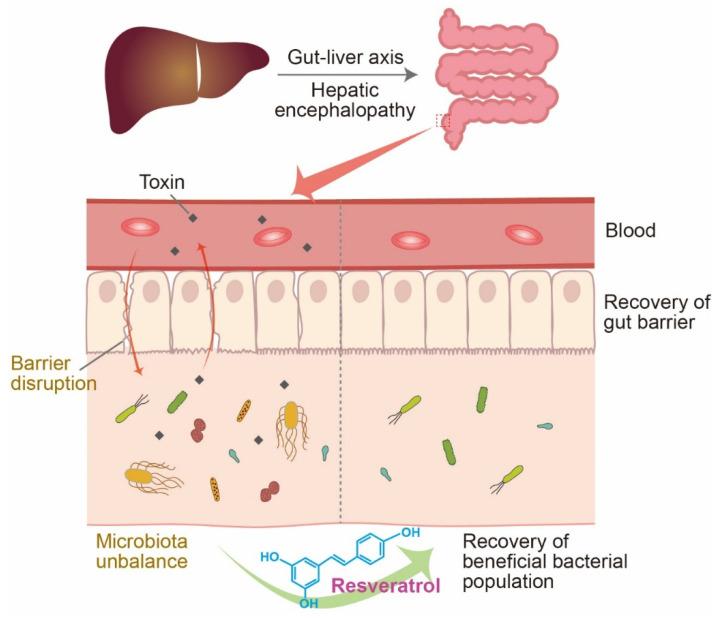
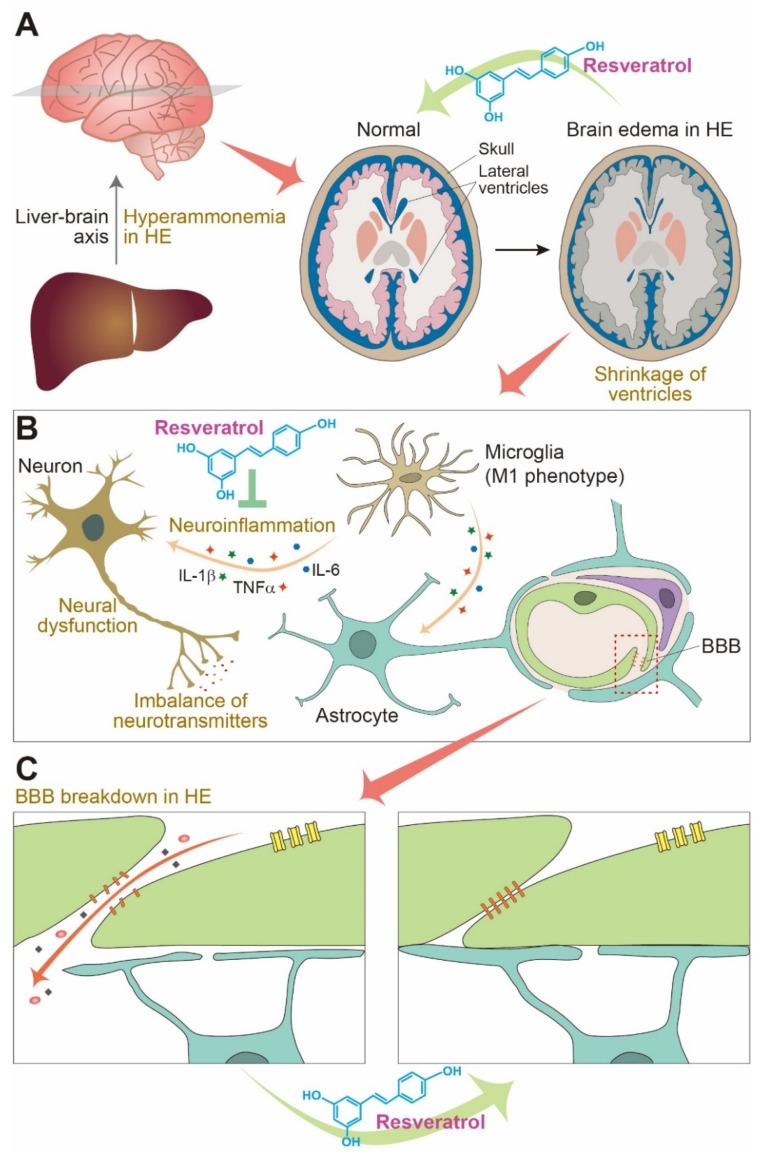
Hepatic encephalopathy is a common complication in patients with liver cirrhosis and portosystemic shunting. Patients with hepatic encephalopathy present a variety of clinical features, including neuropsychiatric manifestations, cognitive dysfunction, impaired gut barrier function, hyperammonemia, and chronic neuroinflammation. These pathogeneses have been linked to various factors, including ammonia-induced oxidative stress, neuronal cell death, alterations in the gut microbiome, astrocyte swelling, and blood-brain barrier disruptions. Many researchers have focused on identifying novel therapeutics and prebiotics in the hope of improving the treatment of these conditions. Resveratrol is a natural polyphenic compound and is known to exert several pharmacological effects, including antioxidant, anti-inflammatory, and neuroprotective activities. Recent studies suggest that resveratrol contributes to improving the neuropathogenic effects of liver failure. Here, we review the current evidence describing resveratrol's effects in neuropathogenesis and its impact on the gut-liver axis relating to hepatic encephalopathy. We highlight the hypothesis that resveratrol exerts diverse effects in hepatic encephalopathy and suggest that these effects are likely mediated by changes to the gut microbiota, brain edema, and neuroinflammation.
肝性脑病是肝硬化和门体分流患者的常见并发症。肝性脑病患者呈现出多种临床特征,包括神经精神表现、认知功能障碍、肠道屏障功能受损、高氨血症和慢性神经炎症。这些发病机制与多种因素有关,包括氨诱导的氧化应激、神经元细胞死亡、肠道微生物群的改变、星形胶质细胞肿胀和血脑屏障破坏。许多研究人员致力于寻找新的治疗方法和益生元,以期改善这些病症的治疗效果。白藜芦醇是一种天然多酚化合物,已知具有多种药理作用,包括抗氧化、抗炎和神经保护活性。最近的研究表明,白藜芦醇有助于改善肝衰竭的神经致病作用。在此,我们综述了目前描述白藜芦醇在神经发病机制中的作用及其对与肝性脑病相关的肠-肝轴影响的证据。我们强调白藜芦醇在肝性脑病中发挥多种作用的假说,并表明这些作用可能是由肠道微生物群、脑水肿和神经炎症的变化介导的。
 Zotero 插件