
不同的白蛋白结合剂如何驱动荧光RGD模拟物的探针分布
How Different Albumin-Binders Drive Probe Distribution of Fluorescent RGD Mimetics.
作者信息
Höltke Carsten, Alsibai Wael, Grewer Martin, Stölting Miriam, Geyer Christiane, Eisenblätter Michel, Wildgruber Moritz, Helfen Anne
机构信息
Clinic for Radiology, University Hospital Münster, Münster, Germany.
Department of Radiology, University Hospital Freiburg, Freiburg, Germany.
出版信息
Front Chem. 2021 Aug 24;9:689850. doi: 10.3389/fchem.2021.689850. eCollection 2021.
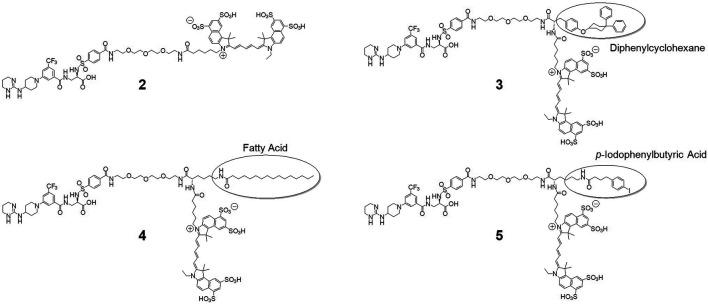
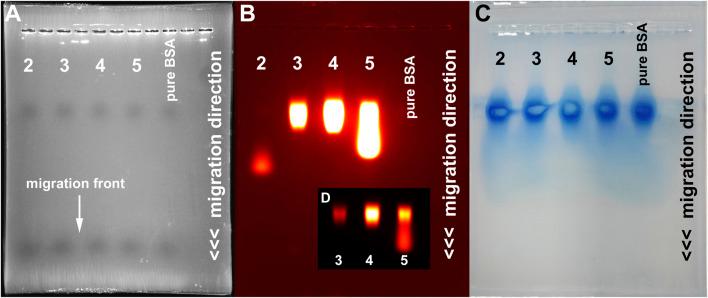
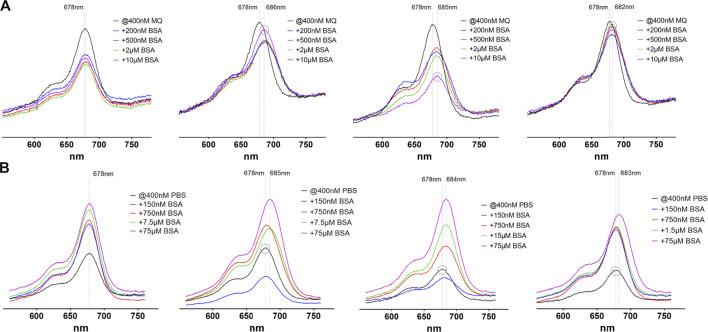
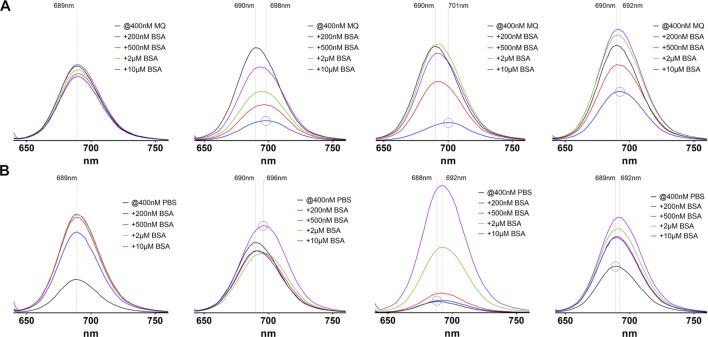
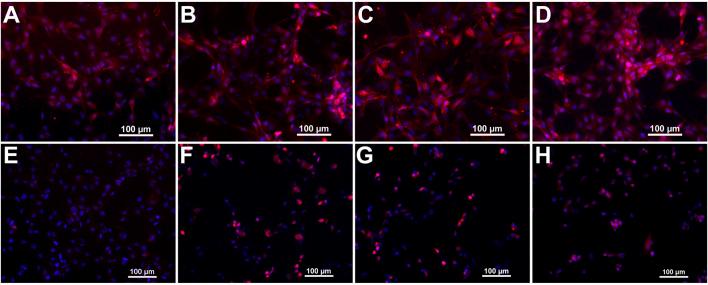
The biodistribution of medical imaging probes depends on the chemical nature of the probe and the preferred metabolization and excretion routes. Especially targeted probes, which have to reach a certain (sub)cellular destination, have to be guided to the tissue of interest. Therefore, small molecular probes need to exhibit a well-balanced polarity and lipophilicity to maintain an advantageous bioavailability. Labelled antibodies circulate for several days due to their size. To alter the biodistribution behavior of probes, different strategies have been pursued, including utilizing serum albumin as an inherent transport mechanism for small molecules. We describe here the modification of an existing fluorescent RGD mimetic probe targeted to integrin αβ with three different albumin binding moieties (ABMs): a diphenylcyclohexyl (DPCH) group, a -iodophenyl butyric acid (IPBA) and a fatty acid (FA) group with the purpose to identify an optimal ABM for molecular imaging applications. All three modifications result in transient albumin binding and a preservation of the target binding capability. Spectrophotometric measurements applying variable amounts of bovine serum albumin (BSA) reveal considerable differences between the compounds concerning their absorption and emission characteristics and hence their BSA binding mode. the modified probes were investigated in a murine U87MG glioblastoma xenograft model over the course of 1 wk by fluorescence reflectance imaging (FRI) and fluorescence mediated tomography (FMT). While the unmodified probe was excreted rapidly, the albumin-binding probes were accumulating in tumor tissue for at least 5 days. Considerable differences between the three probes in biodistribution and excretion characteristics were proved, with the DPCH-modified probe showing the highest overall signal intensities, while the FA-modified probe exhibits a low but more specific fluorescent signal. In conclusion, the modification of small molecular RGD mimetics with ABMs can precisely fine-tune probe distribution and offers potential for future clinical applications.
医学成像探针的生物分布取决于探针的化学性质以及其优先的代谢和排泄途径。特别是靶向探针,它们必须到达特定的(亚)细胞靶点,因此需要被引导至感兴趣的组织。所以,小分子探针需要展现出良好平衡的极性和亲脂性,以维持有利的生物利用度。标记抗体因其大小可在体内循环数天。为改变探针的生物分布行为,人们采用了不同策略,包括利用血清白蛋白作为小分子的固有转运机制。我们在此描述了一种现有的靶向整合素αβ的荧光RGD模拟探针,用三种不同的白蛋白结合基团(ABMs)进行修饰:二苯基环己基(DPCH)基团、对碘苯基丁酸(IPBA)和脂肪酸(FA)基团,目的是为分子成像应用确定最佳的ABM。所有这三种修饰都导致了与白蛋白的短暂结合,并保留了靶点结合能力。使用不同量牛血清白蛋白(BSA)的分光光度测量显示,这些化合物在吸收和发射特性以及因此其BSA结合模式方面存在显著差异。通过荧光反射成像(FRI)和荧光介导断层扫描(FMT),在1周的时间内,对修饰后的探针在小鼠U87MG胶质母细胞瘤异种移植模型中进行了研究。未修饰的探针迅速排出体外,而与白蛋白结合的探针在肿瘤组织中至少积累了5天。三种探针在生物分布和排泄特性方面存在显著差异,DPCH修饰的探针显示出最高的总体信号强度,而FA修饰的探针显示出低但更特异的荧光信号。总之,用ABMs修饰小分子RGD模拟物可以精确微调探针分布,并为未来的临床应用提供潜力。

 Zotero 插件