
前列腺素 E2 在组织修复和再生中的作用。
Role of prostaglandin E2 in tissue repair and regeneration.
机构信息
Nankai University School of Medicine, Tianjin, China.
The Key Laboratory of Bioactive Materials, Ministry of Education, Nankai University, the College of Life Sciences, Tianjin, China.
出版信息
Theranostics. 2021 Aug 13;11(18):8836-8854. doi: 10.7150/thno.63396. eCollection 2021.
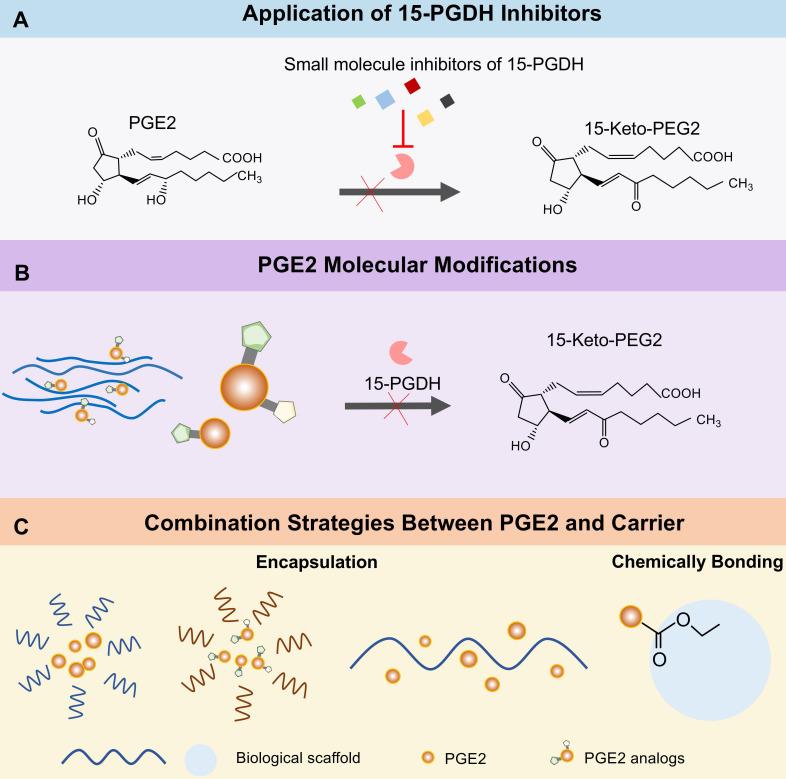
Tissue regeneration following injury from disease or medical treatment still represents a challenge in regeneration medicine. Prostaglandin E2 (PGE2), which involves diverse physiological processes via E-type prostanoid (EP) receptor family, favors the regeneration of various organ systems following injury for its capabilities such as activation of endogenous stem cells, immune regulation, and angiogenesis. Understanding how PGE2 modulates tissue regeneration and then exploring how to elevate the regenerative efficiency of PGE2 will provide key insights into the tissue repair and regeneration processes by PGE2. In this review, we summarized the application of PGE2 to guide the regeneration of different tissues, including skin, heart, liver, kidney, intestine, bone, skeletal muscle, and hematopoietic stem cell regeneration. Moreover, we introduced PGE2-based therapeutic strategies to accelerate the recovery of impaired tissue or organs, including 15-hydroxyprostaglandin dehydrogenase (15-PGDH) inhibitors boosting endogenous PGE2 levels and biomaterial scaffolds to control PGE2 release.
组织再生是再生医学领域的一个挑战,特别是在疾病或医疗治疗导致的组织损伤后。前列腺素 E2(PGE2)通过 E 型前列腺素(EP)受体家族参与多种生理过程,因其激活内源性干细胞、免疫调节和血管生成等功能,有利于损伤后各种器官系统的再生。了解 PGE2 如何调节组织再生,然后探索如何提高 PGE2 的再生效率,将为 PGE2 介导的组织修复和再生过程提供关键见解。在这篇综述中,我们总结了 PGE2 在指导不同组织(包括皮肤、心脏、肝脏、肾脏、肠道、骨骼、骨骼肌和造血干细胞再生)再生中的应用。此外,我们还介绍了基于 PGE2 的治疗策略,以加速受损组织或器官的恢复,包括 15-羟基前列腺素脱氢酶(15-PGDH)抑制剂来提高内源性 PGE2 水平和生物材料支架来控制 PGE2 的释放。


 Zotero 插件