
氯苯丁酸-氧化铁纳米颗粒作为白血病癌细胞的药物传递系统。
Chlorambucil-Iron Oxide Nanoparticles as a Drug Delivery System for Leukemia Cancer Cells.
机构信息
Faculty of Pharmacy, Isra University, Amman, 11622, Jordan.
Department of Chemistry, Faculty of Science, Isra University, Amman, 11622, Jordan.
出版信息
Int J Nanomedicine. 2021 Sep 8;16:6205-6216. doi: 10.2147/IJN.S312752. eCollection 2021.
INTRODUCTION
Traditional cancer therapies may have incomplete eradication of cancer or destroy the normal cells. Nanotechnology solves the demerit by a guide in surgical resection of tumors, targeted chemotherapies, selective to cancerous cells, etc. This new technology can reduce the risk to the patient and automatically increased the probability of survival. Toward this goal, novel iron oxide nanoparticles (IONPs) coupled with leukemia anti-cancer drug were prepared and assessed.
METHODS
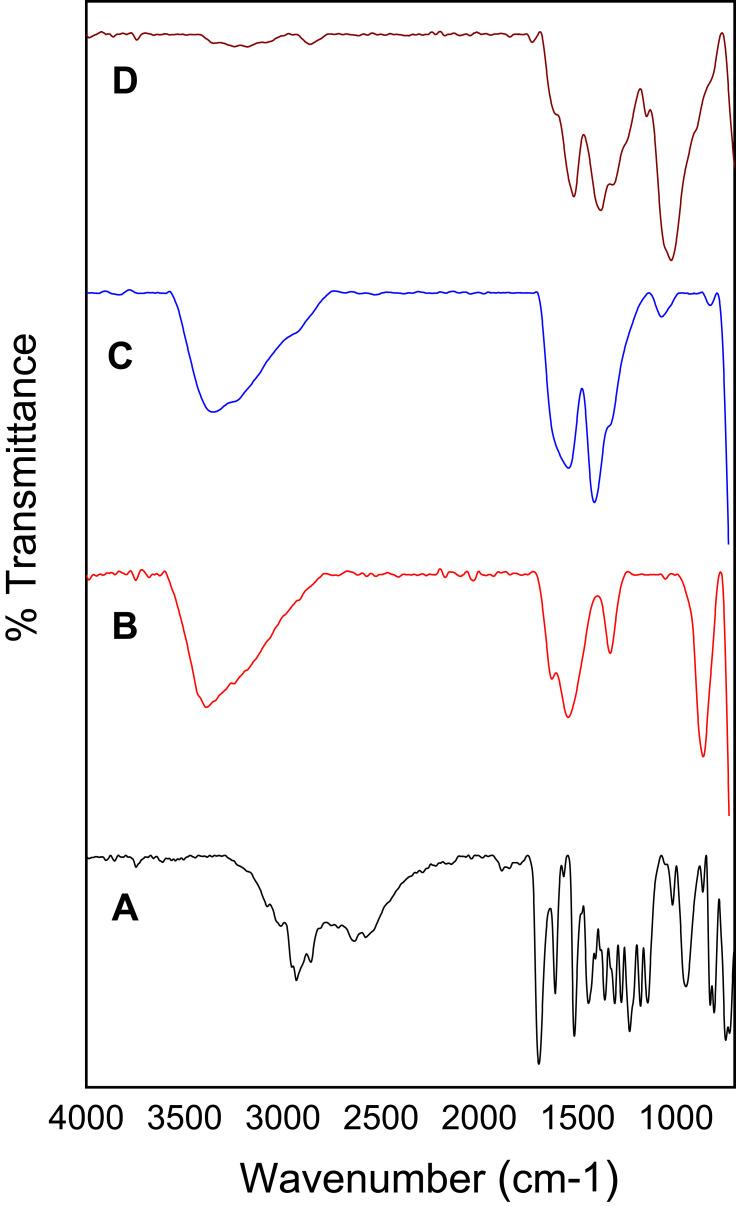
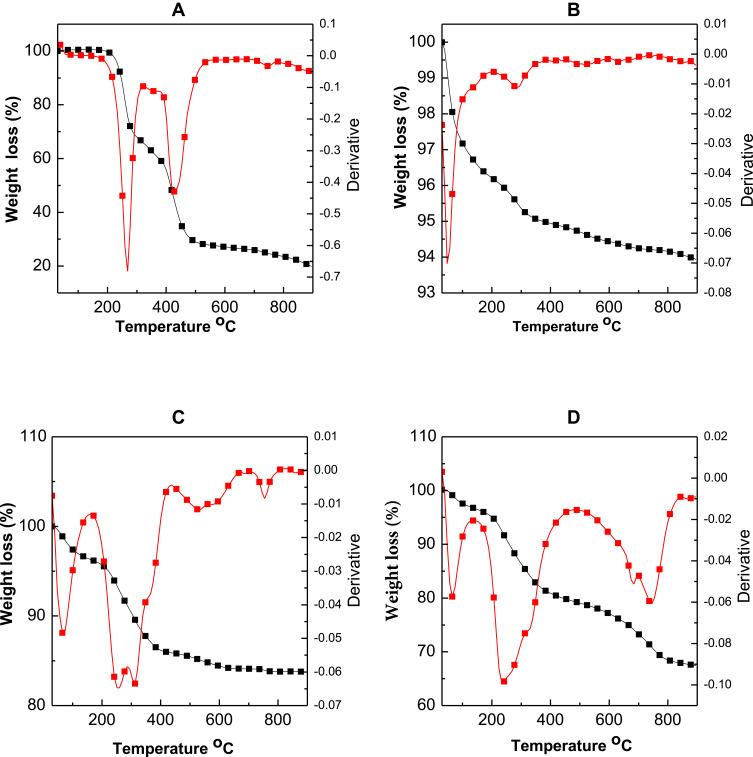
The IONPs were prepared by the co-precipitation method using Fe/Feratio of 2:1. These IONPs were used as a carrier for chlorambucil (Chloramb), where the IONPs serve as the cores and chitosan (CS) as a polymeric shell to form Chloramb-CS-IONPs. The products were characterized using transmission electron microscopy (TEM), powder X-ray diffraction (PXRD), scanning electron microscopy (SEM) analysis, Fourier transform infrared spectroscopy (FTIR), vibrating sample magnetometry (VSM) analyses, and thermal gravimetric analysis (TGA).
RESULTS
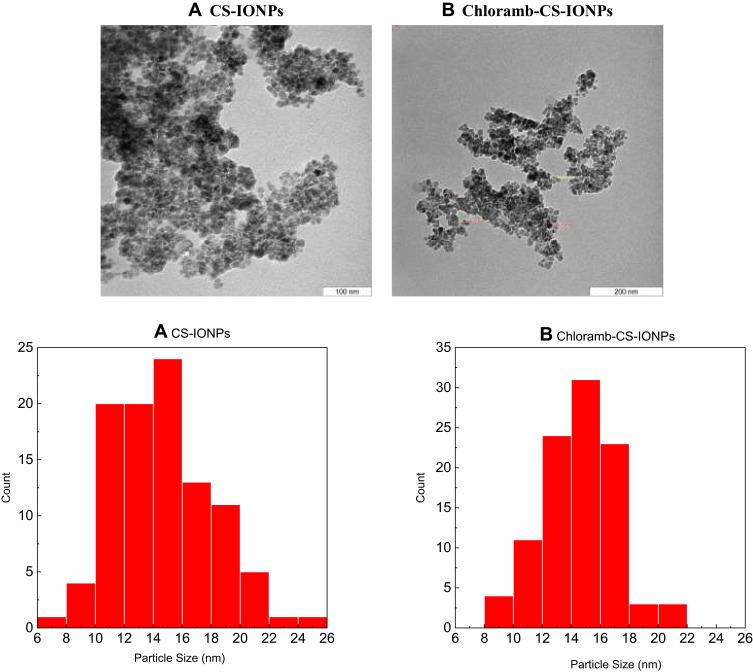
The as-prepared IONPs were found to be magnetite (FeO) and were coated by the CS polymer/Chloramb drug for the formation of the Chloramb-CS-IONPs. The average size for CS-IONPs and Chloramb-CS-IONPs nanocomposite was found to be 15 nm, with a drug loading of 19% for the letter. The release of the drug from the nanocomposite was found to be of a controlled-release manner with around 89.9% of the drug was released within about 5000 min and governed by the pseudo-second order. The in vitro cytotoxicity studies of CS-IONPs and Chloramb-CS-IONPs nanocomposite were tested on the normal fibroblast cell lines (3T3) and leukemia cancer cell lines (WEHI). Chloramb in Chloramb-CS-IONPs nanocomposite was found to be more efficient compared to its free form.
CONCLUSION
This work shows that Chloramb-CS-IONPs nanocomposite is a promising candidate for magnetically targeted drug delivery for leukemia anti-cancer agents.
简介
传统的癌症疗法可能无法完全清除癌症或破坏正常细胞。纳米技术通过引导肿瘤的手术切除、靶向化疗、选择性针对癌细胞等方法解决了这一缺点。这项新技术可以降低患者的风险,并自动提高患者的生存率。为此,我们制备了新型的氧化铁纳米粒子(IONPs)并偶联了白血病抗癌药物进行评估。
方法
采用共沉淀法,使用 Fe/Feratio 为 2:1 制备 IONPs。将这些 IONPs 用作氯氨苯丁酸(Chloramb)的载体,其中 IONPs 作为核,壳聚糖(CS)作为聚合物壳,形成 Chloramb-CS-IONPs。通过透射电子显微镜(TEM)、粉末 X 射线衍射(PXRD)、扫描电子显微镜(SEM)分析、傅里叶变换红外光谱(FTIR)、振动样品磁强计(VSM)分析和热重分析(TGA)对产物进行了表征。
结果
所制备的 IONPs 被发现为磁铁矿(FeO),并被 CS 聚合物/Chloramb 药物包覆,形成 Chloramb-CS-IONPs。CS-IONPs 和 Chloramb-CS-IONPs 纳米复合材料的平均粒径为 15nm,载药量为 19%。药物从纳米复合材料中的释放被发现是一种控制释放方式,大约 89.9%的药物在大约 5000 分钟内释放,并遵循伪二级动力学。CS-IONPs 和 Chloramb-CS-IONPs 纳米复合材料的体外细胞毒性研究在正常成纤维细胞系(3T3)和白血病癌细胞系(WEHI)上进行了测试。与游离形式相比,Chloramb-CS-IONPs 纳米复合材料中的 Chloramb 更有效。
结论
这项工作表明,Chloramb-CS-IONPs 纳米复合材料是一种有前途的用于白血病抗癌药物的磁性靶向药物递送候选物。





 Zotero 插件