
通过仿生肽点击策略在聚醚醚酮骨植入物上实现防御与修复协同作用的合理整合。
Rational integration of defense and repair synergy on PEEK osteoimplants via biomimetic peptide clicking strategy.
作者信息
Li Meng, Bai Jiaxiang, Tao Huaqiang, Hao Li, Yin Weiling, Ren Xiaoxue, Gao Ang, Li Ning, Wang Miao, Fang Shiyuan, Xu Yaozeng, Chen Liang, Yang Huilin, Wang Huaiyu, Pan Guoqing, Geng Dechun
机构信息
Department of Orthopaedics, The First Affiliated Hospital of Soochow University, 188 Shizi Street, Suzhou, 215006, Jiangsu, China.
Department of Orthopaedics, The First Affiliated Hospital of USTC, University of Science and Technology of China, 17 Lujiang Road, Hefei, 230001, Anhui, China.
出版信息
Bioact Mater. 2021 Jul 10;8:309-324. doi: 10.1016/j.bioactmat.2021.07.002. eCollection 2022 Feb.
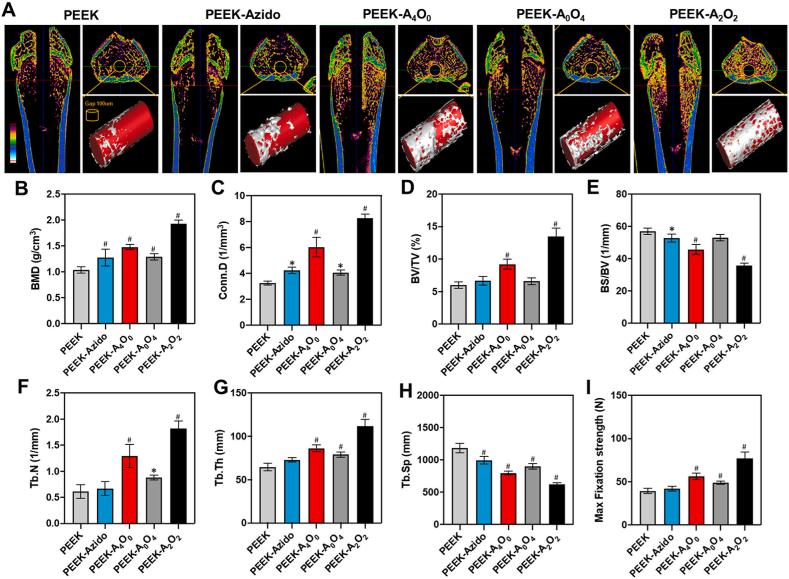
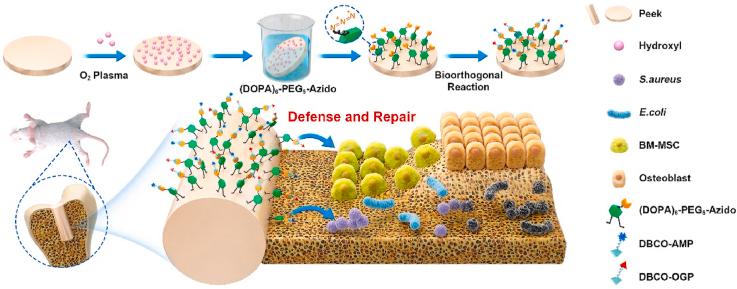
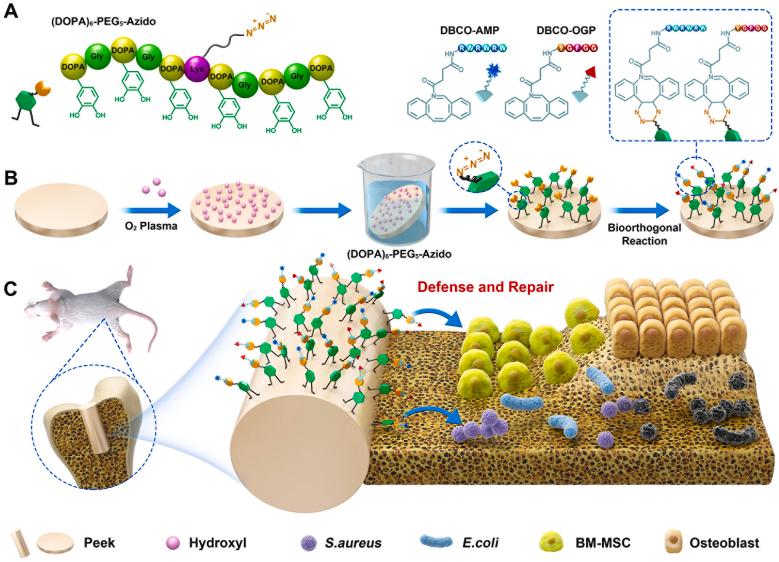
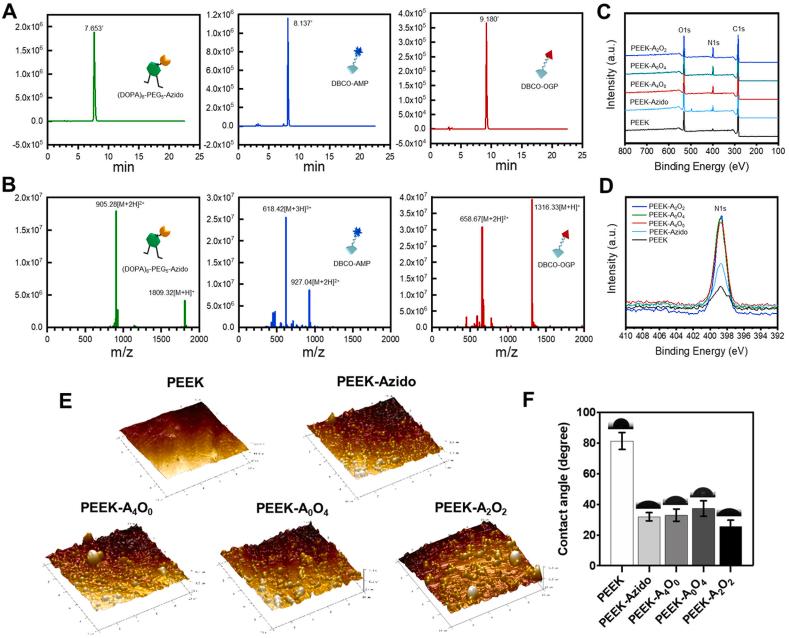
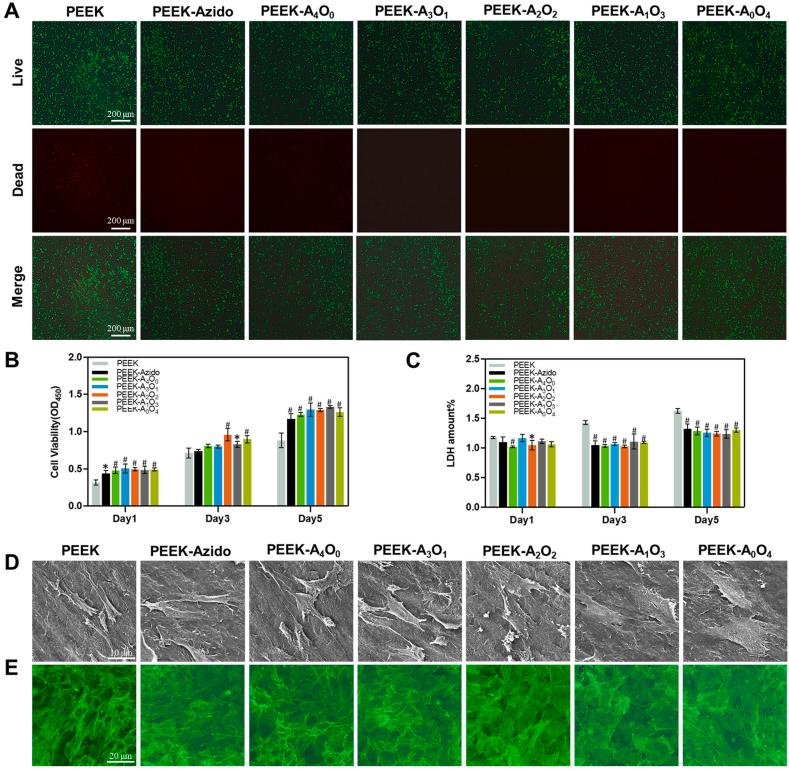
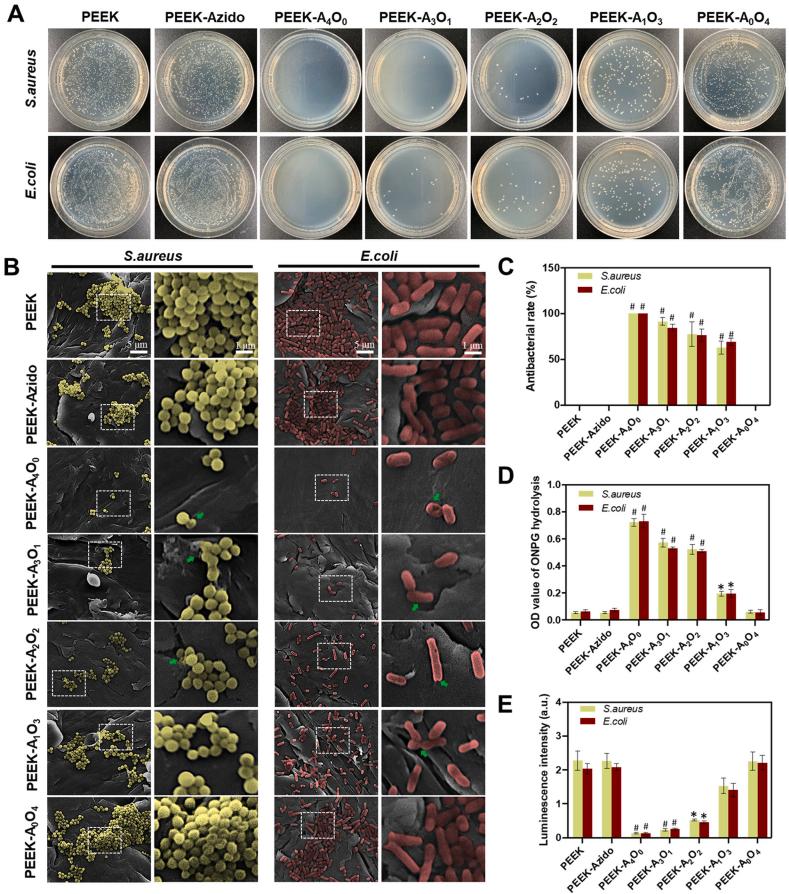
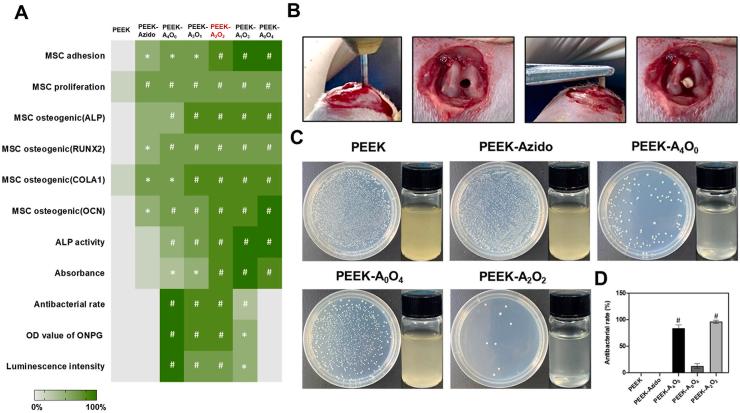
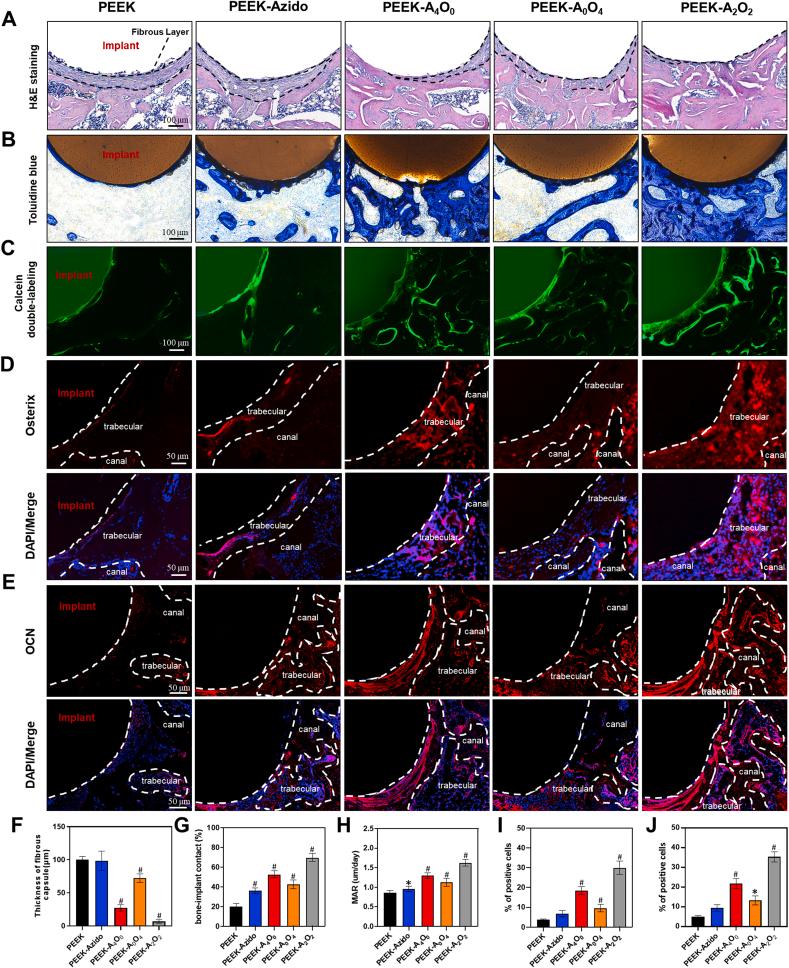
Polyetheretherketone (PEEK) has been widely used as orthopedic and dental materials due to excellent mechanical and physicochemical tolerance. However, its biological inertness, poor osteoinduction, and weak antibacterial activity make the clinical applications in a dilemma. Inspired by the mussel adhesion mechanism, here we reported a biomimetic surface strategy for rational integration and optimization of anti-infectivity and osteo-inductivity onto PEEK surfaces using a mussel foot proteins (Mfps)-mimic peptide with clickable azido terminal. The peptide enables mussel-like adhesion on PEEK biomaterial surfaces, leaving azido groups for the further steps of biofunctionalizations. In this study, antimicrobial peptide (AMP) and osteogenic growth peptide (OGP) were bioorthogonally clicked on the azido-modified PEEK biomaterials to obtain a dual-effect of host defense and tissue repair. Since bioorthogonal clicking allows precise collocation between AMP and OGP through changing their feeding molar ratios, an optimal PEEK surface was finally obtained in this research, which could long-term inhibit bacterial growth, stabilize bone homeostasis and facilitate interfacial bone regeneration. In a word, this upgraded mussel surface strategy proposed in this study is promising for the surface bioengineering of inert medical implants, in particular, achieving rational integration of multiple biofunctions to match clinical requirements.
聚醚醚酮(PEEK)因其优异的机械性能和物理化学耐受性,已被广泛用作骨科和牙科材料。然而,其生物惰性、骨诱导性差和抗菌活性弱,使得其临床应用陷入困境。受贻贝粘附机制的启发,在此我们报道了一种仿生表面策略,该策略使用具有可点击叠氮基末端的贻贝足蛋白(Mfps)模拟肽,将抗感染性和骨诱导性合理整合并优化到PEEK表面。该肽能够在PEEK生物材料表面实现类似贻贝的粘附,留下叠氮基用于进一步的生物功能化步骤。在本研究中,抗菌肽(AMP)和成骨生长肽(OGP)通过生物正交点击连接到叠氮基修饰的PEEK生物材料上,以获得宿主防御和组织修复的双重效果。由于生物正交点击允许通过改变AMP和OGP的进料摩尔比来精确配置它们,最终在本研究中获得了最佳的PEEK表面,该表面可以长期抑制细菌生长、稳定骨稳态并促进界面骨再生。总之,本研究中提出的这种升级的贻贝表面策略对于惰性医疗植入物的表面生物工程具有广阔前景,特别是能够实现多种生物功能的合理整合以满足临床需求。


 Zotero 插件