
人骨肉瘤细胞系MG-63中CD133阳性癌干细胞样细胞的微小RNA表达分析
Analysis of microRNA expression in CD133 positive cancer stem‑like cells of human osteosarcoma cell line MG-63.
作者信息
Shu Xiong, Liu Weifeng, Liu Huiqi, Qi Hui, Wu Chengai, Ran Yu-Liang
机构信息
Beijing Research Institute of Traumatology and Orthopaedics, Beijing JiShuiTan Hospital, Beijing, China.
Department of Orthopaedic Oncology Surgery, Beijing Jishuitan Hospital, Peking University, Beijing, China.
出版信息
PeerJ. 2021 Sep 3;9:e12115. doi: 10.7717/peerj.12115. eCollection 2021.
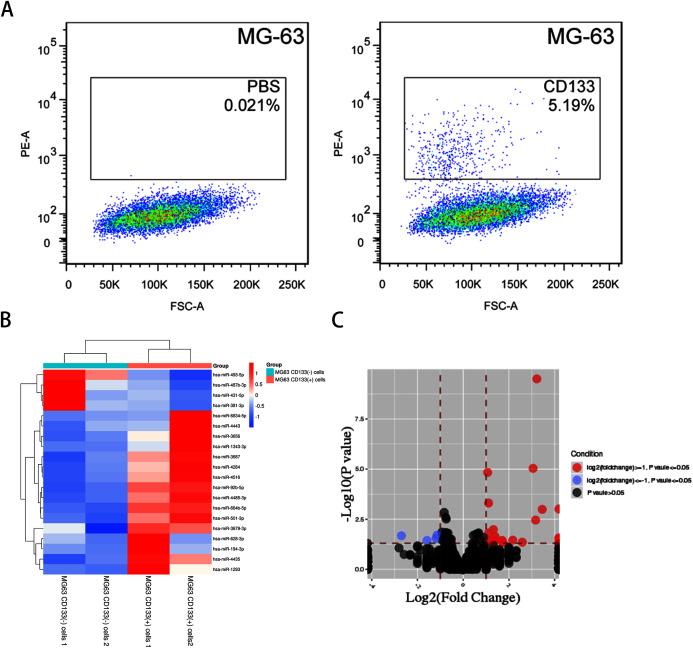
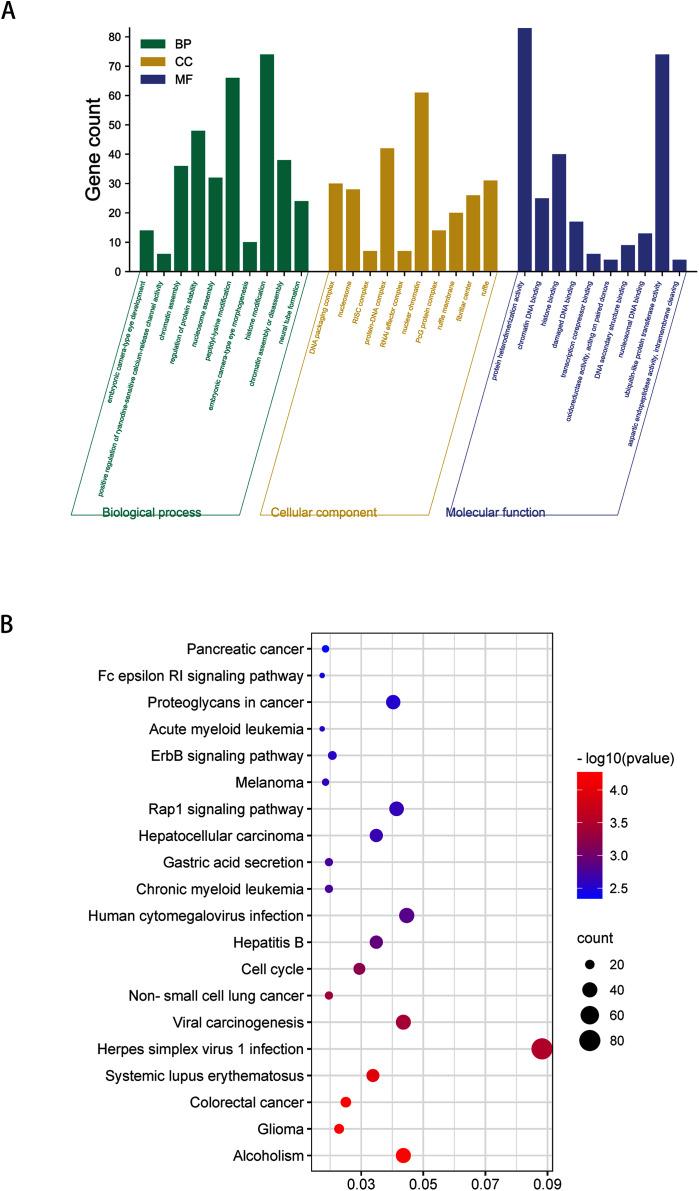
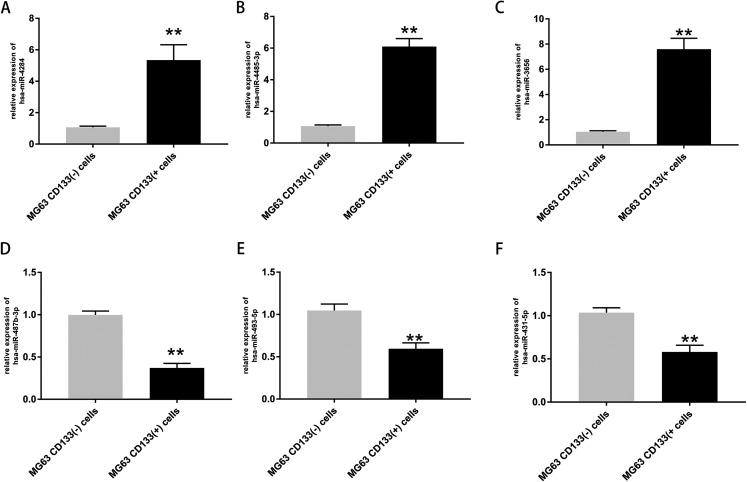
Osteosarcoma (OS) is a primary malignant tumor of bone occurring in young adults. OS stem cells (OSCs) play an important role in the occurrence, growth, metastasis, drug resistance and recurrence of OS. CD133 is an integral membrane glycoprotein, which has been identified as an OSC marker. However, the mechanisms of metastasis, chemoresistance, and progression in CD133(+) OSCs need to be further explored. In this study, we aim to explore differences in miRNA levels between CD133(+) and CD133(-) cells from the MG-63 cell line. We found 20 differentially expressed miRNAs (DEmiRNAs) (16 upregulated and 4 downregulated) in CD133(+) cells compared with CD133(-) cells. Hsa-miR-4485-3p, hsa-miR-4284 and hsa-miR-3656 were the top three upregulated DEmiRNAs, while hsa-miR-487b-3p, hsa-miR-493-5p and hsa-miR-431-5p were the top three downregulated DEmiRNAs. In addition, RT-PCR analysis confirmed that the expression levels of hsa-miR-4284, hsa-miR-4485-3p and hsa-miR-3656 were significantly increased, while the expression levels of hsa-miR-487b-3p, hsa-miR-493-5p, and hsa-miR-431-5p were significantly decreased in CD133(+) cells compared with CD133(-) cells. Moreover, Kyoto Encyclopedia of Genes and Genomes (KEGG) pathway enrichment analysis revealed that predicted or validated target genes for all 20 DEmiRNAs or the selected 6 DEmiRNAs participated in the "PI3K-Akt signaling pathway," "Wnt signaling pathway," "Rap1 signaling pathway," "Cell cycle" and "MAPK signaling pathway". Among the selected six DEmiRNAs, miR-4284 was especially interesting. MiR-4284 knockdown significantly reduced the sphere forming capacity of CD133(+) OS cells. The number of invasive CD133(+) OS cells was markedly decreased after miR-4284 knockdown. In addition, miR-4284 knockdown increased the p-β-catenin levels in CD133(+) OS cells. In conclusion, RNA-seq analysis revealed DEmiRNAs between CD133(+) and CD133(-) cells. MiRNAs might play significant roles in the function of OSCs and could serve as targets for OS treatment. MiR-4284 prompted the self-renewal and invasion of OSCs. The function of miR-4284 might be associated with the Wnt signaling pathway.
骨肉瘤(OS)是一种发生于年轻人的原发性骨恶性肿瘤。骨肉瘤干细胞(OSCs)在骨肉瘤的发生、生长、转移、耐药性及复发中发挥着重要作用。CD133是一种整合膜糖蛋白,已被确定为骨肉瘤干细胞标志物。然而,CD133(+)骨肉瘤干细胞的转移、化疗耐药及进展机制仍有待进一步探索。在本研究中,我们旨在探究MG-63细胞系中CD1(+)和CD133(-)细胞之间miRNA水平的差异。我们发现与CD133(-)细胞相比,CD133(+)细胞中有20种差异表达的miRNA(DEmiRNAs)(上调了16种,下调了4种)。Hsa-miR-4485-3p、hsa-miR-4284和hsa-miR-3656是上调程度最高的前三种DEmiRNAs,而hsa-miR-487b-3p、hsa-miR-493-5p和hsa-miR-431-5p是下调程度最高的前三种DEmiRNAs。此外,逆转录聚合酶链反应(RT-PCR)分析证实,与CD133(-)细胞相比,hsa-miR-4284、hsa-miR-4485-3p和hsa-miR-3656在CD133(+)细胞中的表达水平显著升高,而hsa-miR-487b-3p、hsa-miR-493-5p和hsa-miR-431-5p的表达水平显著降低。此外,京都基因与基因组百科全书(KEGG)通路富集分析显示,所有20种DEmiRNAs或所选的6种DEmiRNAs的预测或验证靶基因参与了“PI3K-Akt信号通路”“Wnt信号通路”“Rap1信号通路”“细胞周期”和“MAPK信号通路”。在所选的6种DEmiRNAs中,miR-4284尤其引人关注。敲低miR-4284可显著降低CD133(+)骨肉瘤细胞的成球能力。敲低miR-4284后,侵袭性CD133(+)骨肉瘤细胞的数量显著减少。此外,敲低miR-4284可增加CD133(+)骨肉瘤细胞中p-β-连环蛋白的水平。总之,RNA测序分析揭示了CD133(+)和CD133(-)细胞之间的DEmiRNAs。miRNAs可能在骨肉瘤干细胞的功能中发挥重要作用,并可作为骨肉瘤治疗的靶点。miR-4284促进了骨肉瘤干细胞的自我更新和侵袭。miR-4284的功能可能与Wnt信号通路有关。




 Zotero 插件