
对长寿哺乳动物中与衰老相关基因的比较分析为自然长寿提供了见解。
Comparative analyses of aging-related genes in long-lived mammals provide insights into natural longevity.
作者信息
Yu Zhenpeng, Seim Inge, Yin Mengxin, Tian Ran, Sun Di, Ren Wenhua, Yang Guang, Xu Shixia
机构信息
Jiangsu Key Laboratory for Biodiversity and Biotechnology, College of Life Sciences, Nanjing Normal University, Nanjing 210023, China.
Integrative Biology Laboratory, College of Life Sciences, Nanjing Normal University, Nanjing 210023, China.
出版信息
Innovation (Camb). 2021 Apr 29;2(2):100108. doi: 10.1016/j.xinn.2021.100108. eCollection 2021 May 28.
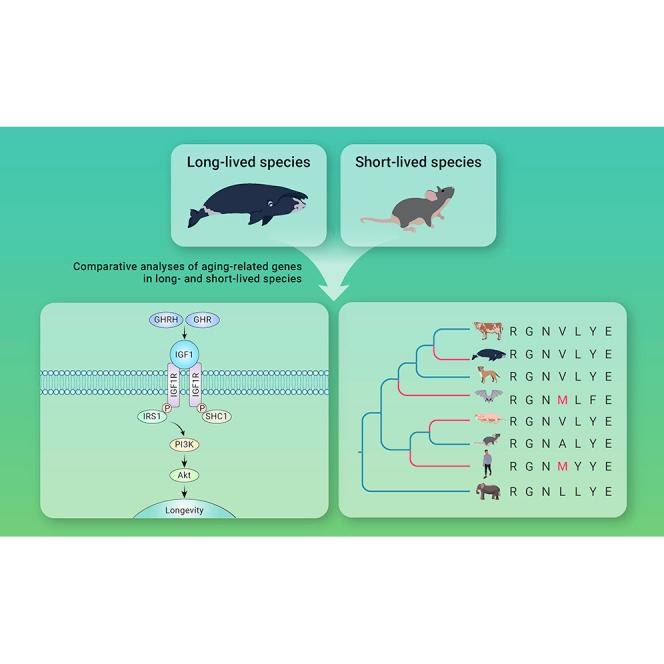
Extreme longevity has evolved multiple times during the evolution of mammals, yet its underlying molecular mechanisms remain largely underexplored. Here, we compared the evolution of 115 aging-related genes in 11 long-lived species and 25 mammals with non-increased lifespan (control group) in the hopes of better understanding the common molecular mechanisms behind longevity. We identified 16 unique positively selected genes and 23 rapidly evolving genes in long-lived species, which included nine genes involved in regulating lifespan through the insulin/IGF-1 signaling (IIS) pathway and 11 genes highly enriched in immune-response-related pathways, suggesting that the IIS pathway and immune response play a particularly important role in exceptional mammalian longevity. Interestingly, 11 genes related to cancer progression, including four positively selected genes and seven genes with convergent amino acid changes, were shared by two or more long-lived lineages, indicating that long-lived mammals might have evolved convergent or similar mechanisms of cancer resistance that extended their lifespan. This suggestion was further corroborated by our identification of 12 robust candidates for longevity-related genes closely related to cancer.
在哺乳动物的进化过程中,极端长寿已经多次进化,但其潜在的分子机制在很大程度上仍未得到充分探索。在这里,我们比较了11种长寿物种和25种寿命未增加的哺乳动物(对照组)中115个与衰老相关基因的进化情况,以期更好地理解长寿背后的共同分子机制。我们在长寿物种中鉴定出16个独特的正选择基因和23个快速进化基因,其中包括9个通过胰岛素/胰岛素样生长因子-1信号通路(IIS)调节寿命的基因和11个在免疫反应相关通路中高度富集的基因,这表明IIS通路和免疫反应在哺乳动物的超长寿命中发挥着特别重要的作用。有趣的是,两个或更多长寿谱系共享了11个与癌症进展相关的基因,包括4个正选择基因和7个具有趋同氨基酸变化的基因,这表明长寿哺乳动物可能已经进化出趋同或相似的抗癌机制,从而延长了它们的寿命。我们对12个与癌症密切相关的长寿相关基因的有力候选基因的鉴定进一步证实了这一观点。



 Zotero 插件