
微波加热在沥青路面纵向接缝施工及裂缝修复中的全面应用。
Full-Scale Use of Microwave Heating in Construction of Longitudinal Joints and Crack Healing in Asphalt Pavements.
作者信息
Maliszewski Maciej, Zofka Adam, Maliszewska Dominika, Sybilski Dariusz, Salski Bartłomiej, Karpisz Tomasz, Rembelski Rafał
机构信息
Pavement Technology Division, Road and Bridge Research Institute, 03-302 Warsaw, Poland.
The Institute of Radioelectronics and Multimedia Technology, The Faculty of Electronics and Information Technology, Warsaw Technical University, 00-665 Warsaw, Poland.
出版信息
Materials (Basel). 2021 Sep 8;14(18):5159. doi: 10.3390/ma14185159.
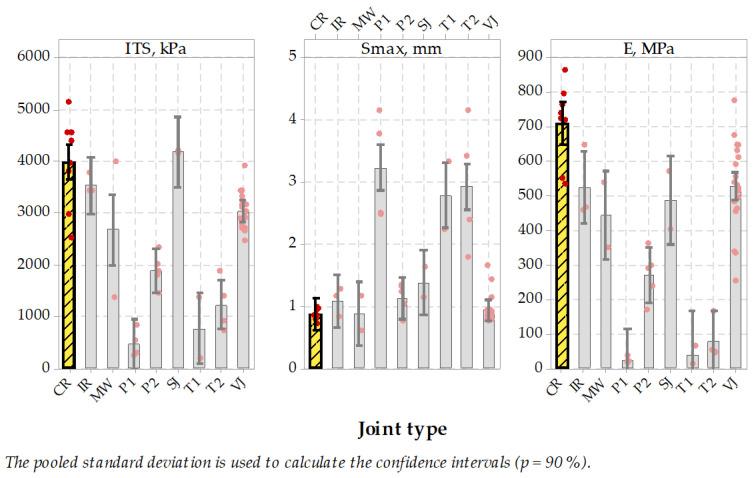
Asphalt pavement construction technology is an industry branch that undergoes constant development. Analyzing the directions of the development, one can divide it into two mainstreams: the development of roadworks equipment and the development of roadworks technology. Microwave heating technique has been mentioned in the road industry from the early '70s, but research records from practical full-scale use are very rare. This article presents the evaluation of the possible use of microwave heating technique during a particular aspect of the construction process, namely, the formation of longitudinal joints and the potential repair process of the cracked asphalt pavement. Research results showed that joints constructed using microwave-assisted heating performed the same or even better with regards to tensile characteristics comparing to other techniques. Also, the highest level of compaction was reached among the other tested techniques applied to the wearing course level. The second part of the research experiment showed the large potential of the microwave crack healing technique. The asphalt pavement was healed on its full depth of 10 cm with the single healing operation applied. Although some limitations may occur in the practical use of microwave heating, the test results suggest that it is a very promising technique and should be further developed (for, e.g., shielding concerns, electricity supply). The microwave heating technique is powered with electricity, which is important when there is a constant need for further reductions of CO emissions. It can be reached in parallel with clean energy or clean electricity sources.
沥青路面施工技术是一个不断发展的行业分支。分析其发展方向,可以将其分为两个主流:道路工程设备的发展和道路工程技术的发展。微波加热技术自20世纪70年代初就在道路行业中被提及,但实际大规模应用的研究记录却非常罕见。本文介绍了对微波加热技术在施工过程的一个特定方面,即纵向接缝的形成以及开裂沥青路面的潜在修复过程中可能应用的评估。研究结果表明,与其他技术相比,采用微波辅助加热建造的接缝在拉伸特性方面表现相同甚至更好。此外,在应用于磨耗层的其他测试技术中,达到了最高的压实水平。研究实验的第二部分显示了微波裂缝修复技术的巨大潜力。通过单次修复操作,沥青路面在其10厘米的全深度上得到了修复。尽管微波加热在实际应用中可能会出现一些限制,但测试结果表明它是一种非常有前途的技术,应该进一步开发(例如,针对屏蔽问题、电力供应)。微波加热技术由电力驱动,当持续需要进一步减少碳排放时,这一点很重要。可以与清洁能源或清洁电源并行实现这一点。





 Zotero 插件