
评估全球抗菌药物消耗和耐药性点患病率调查(Global-PPS)对医院抗菌药物管理计划影响的研究:一项全球调查结果。
Assessing the impact of the Global Point Prevalence Survey of Antimicrobial Consumption and Resistance (Global-PPS) on hospital antimicrobial stewardship programmes: results of a worldwide survey.
机构信息
Laboratory of Medical Microbiology, Vaccine & Infectious Disease Institute (VAXINFECTIO), Faculty of Medicine and Health Sciences, University of Antwerp, Antwerp, Belgium.
Interuniversity Institute for Biostatistics and Statistical Bioinformatics (I-BIOSTAT), Data Science Institute, Hasselt University, Diepenbeek, Belgium.
出版信息
Antimicrob Resist Infect Control. 2021 Sep 28;10(1):138. doi: 10.1186/s13756-021-01010-w.
BACKGROUND
The Global Point Prevalence Survey of Antimicrobial Consumption and Resistance (Global-PPS) provides a methodology to support hospitals worldwide in collecting antimicrobial use data. We aim to evaluate the impact of the Global-PPS on local antimicrobial stewardship (AMS) programmes and assess health care professionals' educational needs and barriers for implementing AMS.
METHODS
A cross-sectional survey was disseminated within the Global-PPS network. The target audience consisted of hospital healthcare workers, involved in local surveillance of antimicrobial consumption and resistance. This included contacts from hospitals that already participated in the Global-PPS or were planning to do so. The survey contained 24 questions that addressed the hospital's AMS activities, experiences conducting the PPS, as well as the learning needs and barriers for implementing AMS.
RESULTS
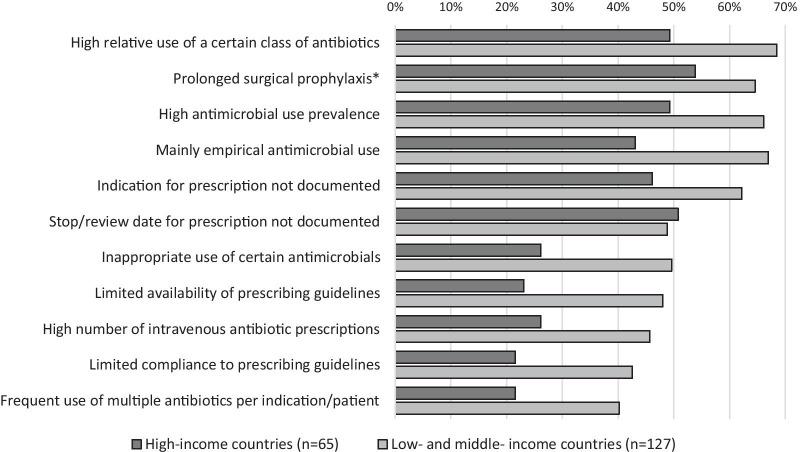
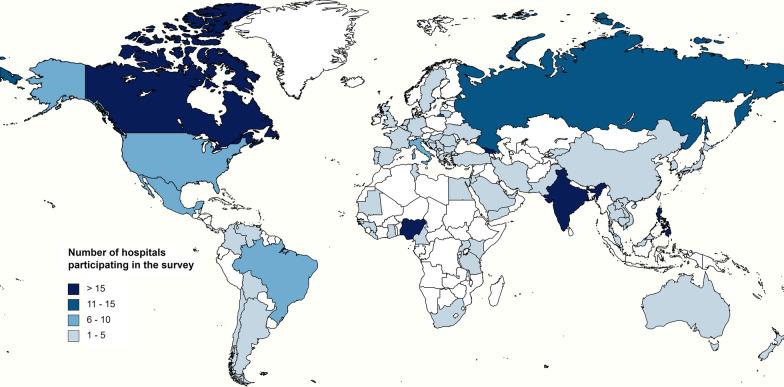
A total of 248 hospitals from 74 countries participated in the survey, of which 192 had already conducted the PPS at least once. The survey response rate was estimated at 25%. In 96.9% of these 192 hospitals, Global-PPS participation had led to the identification of problems related to antimicrobial prescribing. In 69.3% at least one of the hospital's AMS components was initiated as a result of Global-PPS findings. The level of AMS implementation varied across regions. Up to 43.1% of all hospitals had a formal antimicrobial stewardship strategy, ranging from 10.8% in Africa to 60.9% in Northern America. Learning needs of hospitals in high-income countries and in low-and middle-income countries were largely similar and included general topics (e.g. 'optimising antibiotic treatment'), but also PPS-related topics (e.g. 'translating PPS results into meaningful interventions'). The main barriers to implementing AMS programmes were a lack of time (52.7%), knowledge on good prescribing practices (42.0%), and dedicated funding (39.9%). Hospitals in LMIC more often reported unavailability of prescribing guidelines, insufficient laboratory capacity and suboptimal use of the available laboratory services.
CONCLUSIONS
Although we observed substantial variation in the level of AMS implementation across regions, the Global-PPS has been very useful in informing stewardship activities in many participating hospitals. More is still to be gained in guiding hospitals to integrate the PPS throughout AMS activities, building on existing structures and processes.
背景
全球抗菌药物消耗和耐药性点 prevalence 调查(Global-PPS)提供了一种支持全球医院收集抗菌药物使用数据的方法。我们旨在评估 Global-PPS 对当地抗菌药物管理(AMS)计划的影响,并评估卫生保健专业人员实施 AMS 的教育需求和障碍。
方法
在 Global-PPS 网络内传播了一项横断面调查。目标人群包括参与当地抗菌药物消耗和耐药性监测的医院卫生保健工作者。这包括已经参与 Global-PPS 或计划参与的医院的联系人。该调查包含 24 个问题,涉及医院的 AMS 活动、进行 PPS 的经验,以及实施 AMS 的学习需求和障碍。
结果
共有来自 74 个国家的 248 家医院参与了这项调查,其中 192 家医院至少进行过一次 PPS。调查的回复率估计为 25%。在这 192 家医院中,96.9%的医院表示 Global-PPS 的参与导致发现了与抗菌药物处方相关的问题。在至少一家医院的 AMS 组成部分因 Global-PPS 结果而启动的情况下,占 69.3%。AMS 的实施水平在不同地区有所不同。高达 43.1%的所有医院都有正式的抗菌药物管理策略,从非洲的 10.8%到北美的 60.9%不等。高收入国家和中低收入国家的医院的学习需求大致相似,包括一般主题(例如“优化抗生素治疗”),但也包括与 PPS 相关的主题(例如“将 PPS 结果转化为有意义的干预措施”)。实施 AMS 计划的主要障碍是缺乏时间(52.7%)、良好处方实践知识(42.0%)和专用资金(39.9%)。中低收入国家的医院更常报告缺乏处方指南、实验室能力不足以及未充分利用现有实验室服务。
结论
尽管我们观察到不同地区 AMS 实施水平存在很大差异,但 Global-PPS 非常有助于指导许多参与医院的管理活动。在指导医院将 PPS 纳入 AMS 活动中,利用现有结构和流程方面,还有更多的工作要做。
 Zotero 插件