
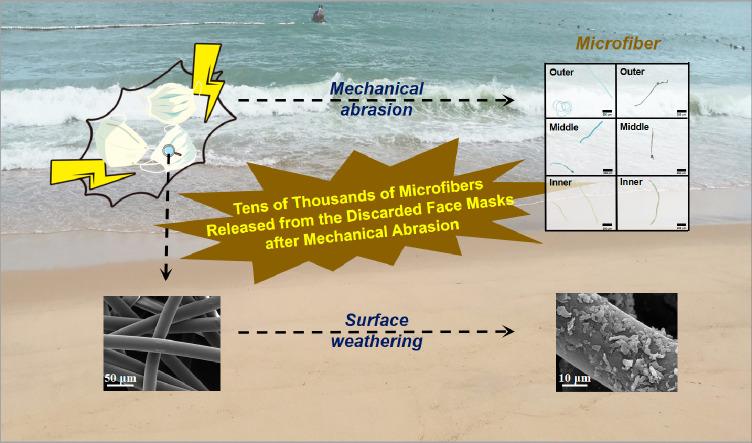
在模拟环境条件下,从丢弃的口罩中释放出数万根微纤维。
Release of tens of thousands of microfibers from discarded face masks under simulated environmental conditions.
机构信息
State Environmental Protection Key Laboratory of Integrated Surface Water-Groundwater Pollution Control, School of Environmental Science and Engineering, Southern University of Science and Technology, Shenzhen 518055, PR China; State Key Laboratory of Environmental and Biological Analysis, Department of Chemistry, Hong Kong Baptist University, Hong Kong SAR, PR China.
State Environmental Protection Key Laboratory of Integrated Surface Water-Groundwater Pollution Control, School of Environmental Science and Engineering, Southern University of Science and Technology, Shenzhen 518055, PR China; Guangdong Provincial Key Laboratory of Soil and Groundwater Pollution Control, School of Environmental Science and Engineering, Southern University of Science and Technology, Shenzhen 518055, PR China.
出版信息
Sci Total Environ. 2022 Feb 1;806(Pt 2):150458. doi: 10.1016/j.scitotenv.2021.150458. Epub 2021 Sep 28.
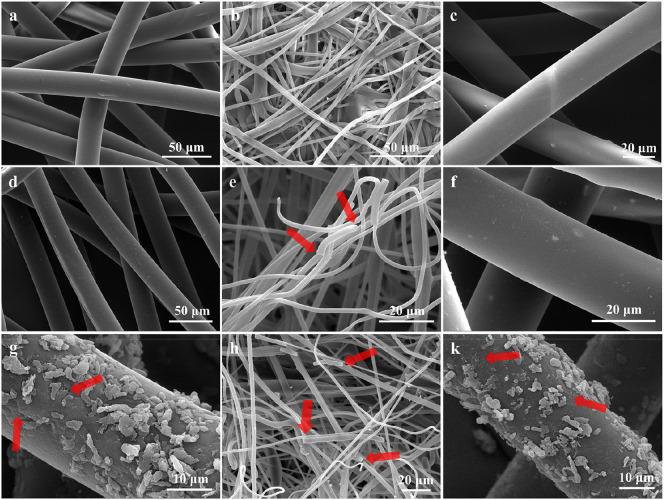
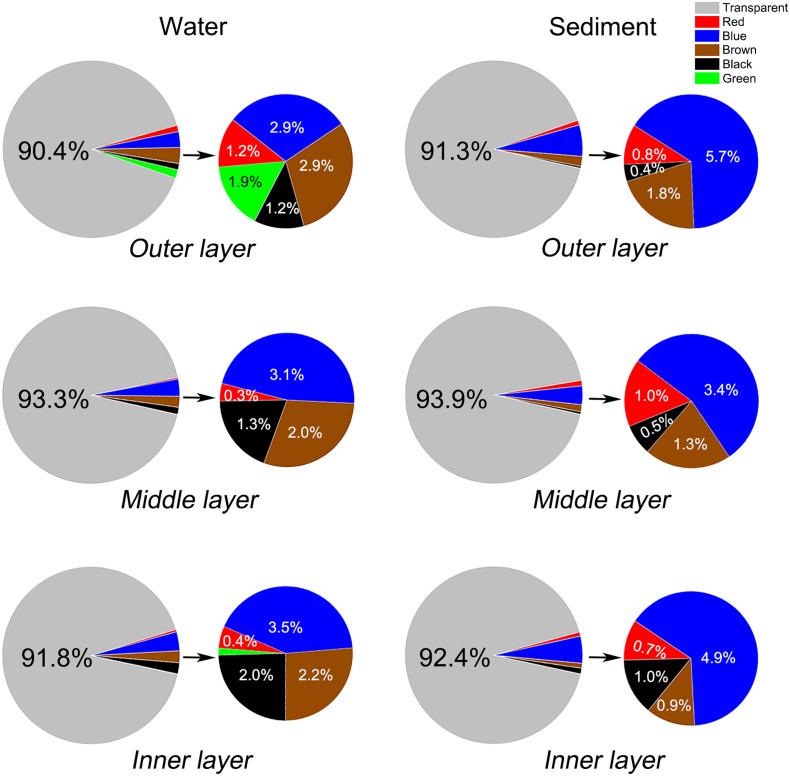
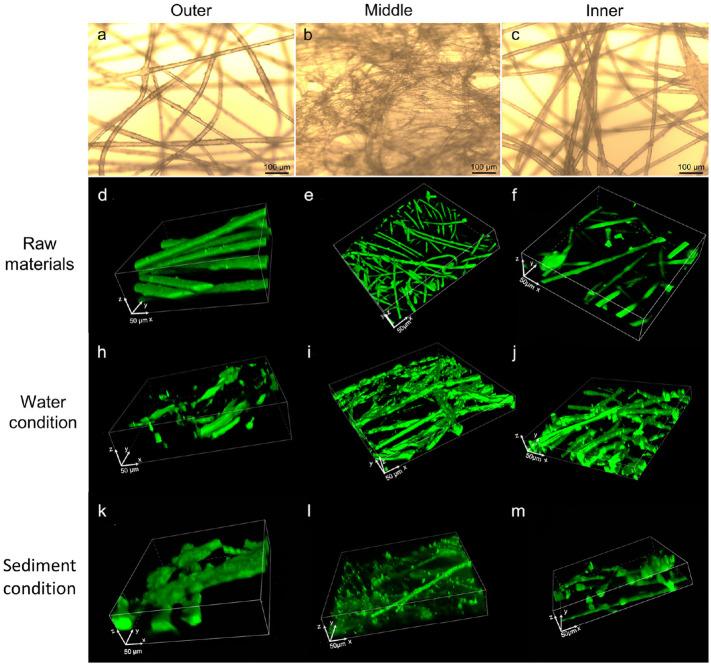
While mechanical abrasion by water and sediment is a primary and critical step in weathering process, the upsurge of discarded face masks will undoubtedly become a potential source of micro-/nanofibers owing to the spread of novel coronavirus (COVID-19) pneumonia. However, effects of mechanical abrasion on discarded face masks have neither been seriously addressed nor understood. Therefore, we conducted a simulated experiment to explore abundance, size distribution and morphology of microfibers released from common, surgical and face filtering piece (FFP) masks after mechanical abrasion. Technologies such as Fourier transform infrared spectrometry, fluorescence microscopy, scanning electron microscopy, and confocal laser scanning microscopy were used. Results showed that the abundance of released microfibers followed order of surgical > common > FFP in both water and sediment environments, and the maximum abundance reached 272 ± 12.49 items per square centimeter of mask (items·cm) after sediment abrasion. Taking surgical mask for further investigation, the length of released fiber was observed to vary from 47.78 μm to 3.93 mm, and 72.41-89.58% of the total number of released microfibers fell in the range of 0.1-1 mm. However, microfibers with a very small length (1-100 μm) can occupy 0.09-13.59% of the total number of released fibers in sediment environment. The roughness of fiber surface after sediment abrasion was successively increased. Furthermore, the morphology analysis showed significant changes with countless cracks and many prominent protrusions on fiber surface after sediment abrasion. The cracks and protrusions may further accelerate mask decomposition, thereby potentially resulting in the adsorption of other contaminants and the release of self-containing chemicals. This study provides a valuable database of microfibers released from discarded face masks at the primary but critical stage, and further contributes knowledge on environmental impact of discarded personal protective equipment due to COVID-19.
虽然水和沉积物的机械磨损是风化过程的主要和关键步骤,但由于新型冠状病毒(COVID-19)肺炎的传播,废弃的口罩数量激增,无疑将成为微/纳米纤维的潜在来源。然而,机械磨损对废弃口罩的影响既没有得到认真对待,也没有被理解。因此,我们进行了一项模拟实验,以探索机械磨损后常见的、外科的和面部过滤片(FFP)口罩释放的微纤维的丰度、尺寸分布和形态。使用了傅里叶变换红外光谱、荧光显微镜、扫描电子显微镜和共焦激光扫描显微镜等技术。结果表明,在水和沉积物环境中,释放的微纤维丰度顺序为外科口罩>普通口罩>FFP,沉积物磨损后达到每平方厘米口罩 272±12.49 个(items·cm)的最大丰度。以外科口罩为例进一步研究,释放纤维的长度观察到从 47.78μm 到 3.93mm 不等,释放的微纤维总数中 72.41-89.58%落在 0.1-1mm 的范围内。然而,在沉积物环境中,非常小长度(1-100μm)的微纤维可以占据释放纤维总数的 0.09-13.59%。纤维表面经过沉积物磨损后粗糙度依次增加。此外,形态分析表明,沉积物磨损后纤维表面出现无数裂缝和许多突出的突起,形态发生显著变化。这些裂缝和突起可能会进一步加速口罩的分解,从而可能导致其他污染物的吸附和自含化学物质的释放。本研究提供了一个有价值的数据库,记录了废弃口罩在主要但关键阶段释放的微纤维,进一步为 COVID-19 期间因个人防护装备而产生的环境影响提供了知识。

 Zotero 插件