
肿瘤放射组学:实用指南。
Radiomics in Oncology: A Practical Guide.
机构信息
From the Department of Radiology, Royal Marsden Hospital NHS Foundation Trust, Sutton, England (J.D.S., D.a.D., K.D., N. P., C.M., D.M.K.); Institute of Cancer Research, 15 Cotswold Road, Sutton SM2 5NG, England (S.J.D., S.K., J.P.B.O., N. P., C.M., D.M.K., M.R.O.); and Computational Clinical Imaging Group, Champalimaud Foundation, Centre for the Unknown, Lisbon, Portugal (N.P.).
出版信息
Radiographics. 2021 Oct;41(6):1717-1732. doi: 10.1148/rg.2021210037.
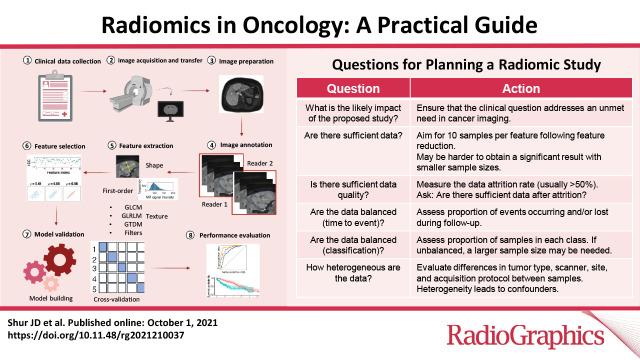
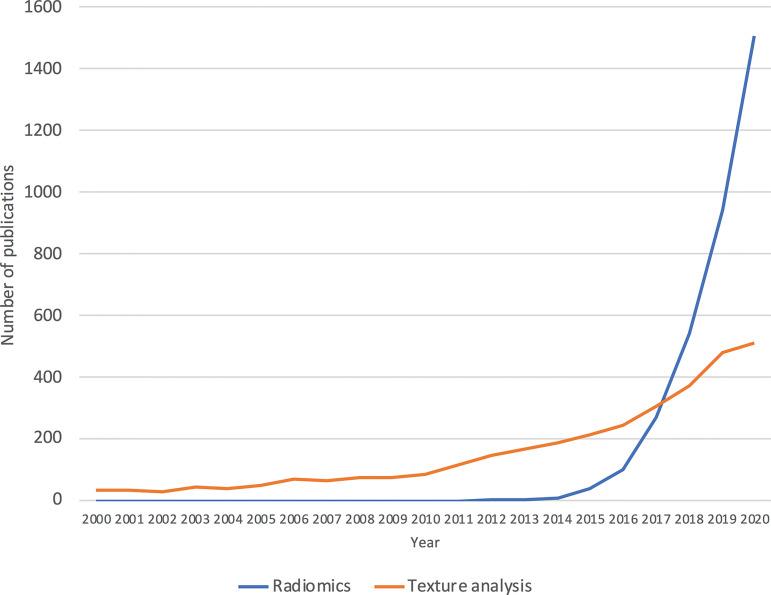
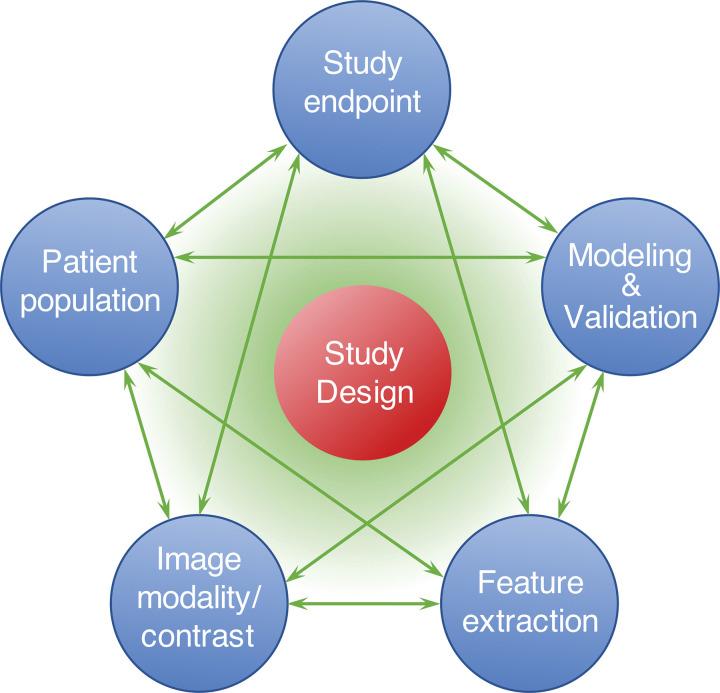
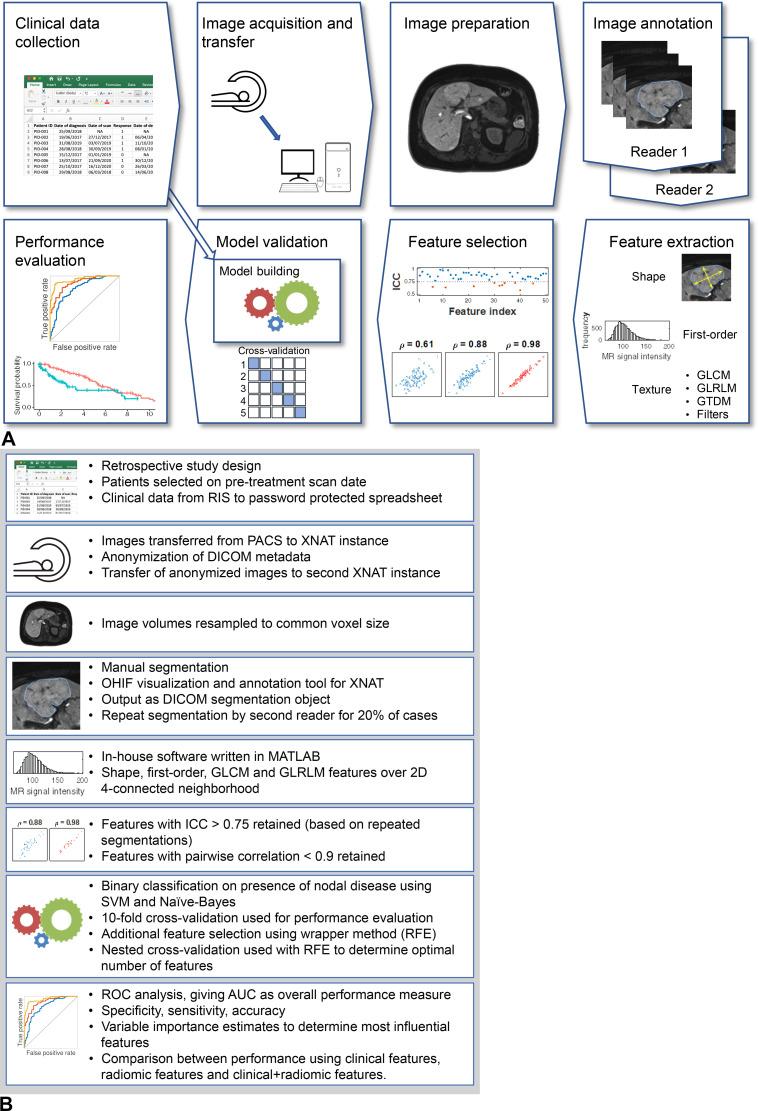
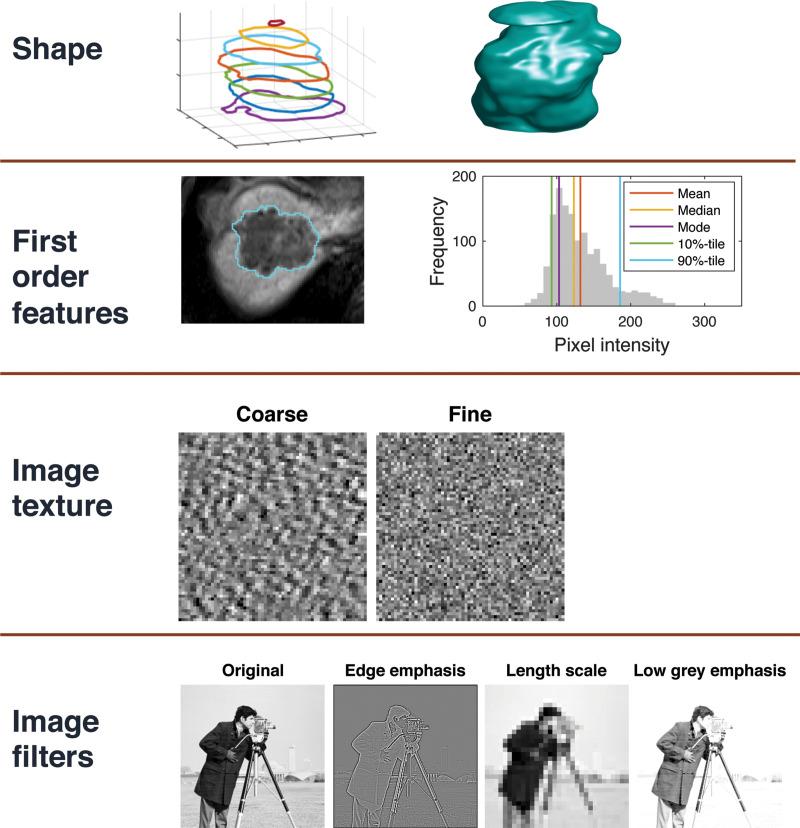
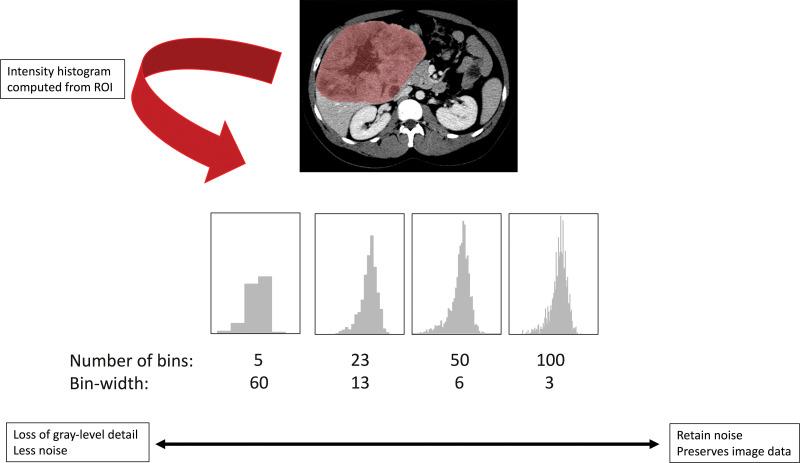
Radiomics refers to the extraction of mineable data from medical imaging and has been applied within oncology to improve diagnosis, prognostication, and clinical decision support, with the goal of delivering precision medicine. The authors provide a practical approach for successfully implementing a radiomic workflow from planning and conceptualization through manuscript writing. Applications in oncology typically are either classification tasks that involve computing the probability of a sample belonging to a category, such as benign versus malignant, or prediction of clinical events with a time-to-event analysis, such as overall survival. The radiomic workflow is multidisciplinary, involving radiologists and data and imaging scientists, and follows a stepwise process involving tumor segmentation, image preprocessing, feature extraction, model development, and validation. Images are curated and processed before segmentation, which can be performed on tumors, tumor subregions, or peritumoral zones. Extracted features typically describe the distribution of signal intensities and spatial relationship of pixels within a region of interest. To improve model performance and reduce overfitting, redundant and nonreproducible features are removed. Validation is essential to estimate model performance in new data and can be performed iteratively on samples of the dataset (cross-validation) or on a separate hold-out dataset by using internal or external data. A variety of noncommercial and commercial radiomic software applications can be used. Guidelines and artificial intelligence checklists are useful when planning and writing up radiomic studies. Although interest in the field continues to grow, radiologists should be familiar with potential pitfalls to ensure that meaningful conclusions can be drawn. Published under a CC BY 4.0 license.
放射组学是指从医学影像中提取可挖掘的数据,已应用于肿瘤学领域,以提高诊断、预后和临床决策支持能力,从而实现精准医疗。本文作者提供了一种实用的方法,成功地实施了从规划和概念化到论文写作的放射组学工作流程。肿瘤学中的应用通常是分类任务,包括计算样本属于某一类(如良性或恶性)的概率,或者进行时间相关的分析以预测临床事件,如总生存时间。放射组学工作流程是多学科的,涉及放射科医生、数据和成像科学家,遵循一个逐步的过程,包括肿瘤分割、图像预处理、特征提取、模型开发和验证。在分割之前对图像进行策管和处理,可以对肿瘤、肿瘤亚区或肿瘤周围区进行分割。提取的特征通常描述感兴趣区内信号强度的分布和像素的空间关系。为了提高模型性能和减少过拟合,可以去除冗余和不可重现的特征。验证对于估计新数据中的模型性能至关重要,可以通过对数据集的样本(交叉验证)或使用内部或外部数据的单独保留数据集进行迭代来进行。可以使用各种商业和非商业的放射组学软件应用程序。在规划和撰写放射组学研究时,指南和人工智能检查表非常有用。尽管人们对该领域的兴趣持续增长,但放射科医生应该熟悉潜在的陷阱,以确保可以得出有意义的结论。

 Zotero 插件