
分析神经病理学中的小胶质细胞表型:实用指南。
Analyzing microglial phenotypes across neuropathologies: a practical guide.
机构信息
Institute of Neuropathology, Medical Faculty, University of Freiburg, Freiburg, Germany.
Institute of Neuropathology, University Medical Center Goettingen, Goettingen, Germany.
出版信息
Acta Neuropathol. 2021 Dec;142(6):923-936. doi: 10.1007/s00401-021-02370-8. Epub 2021 Oct 8.
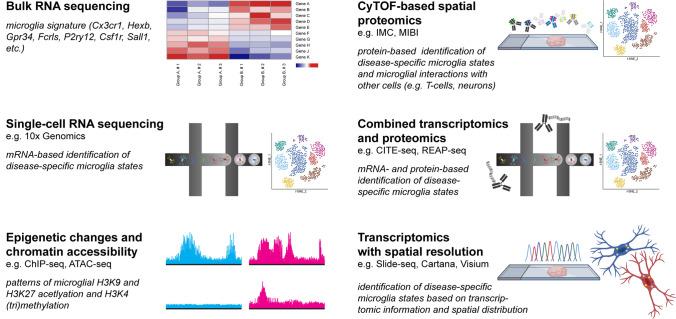
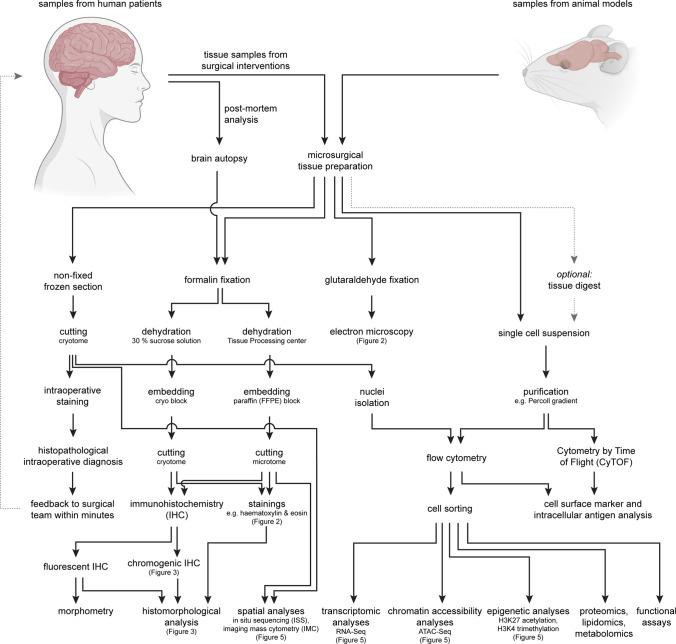
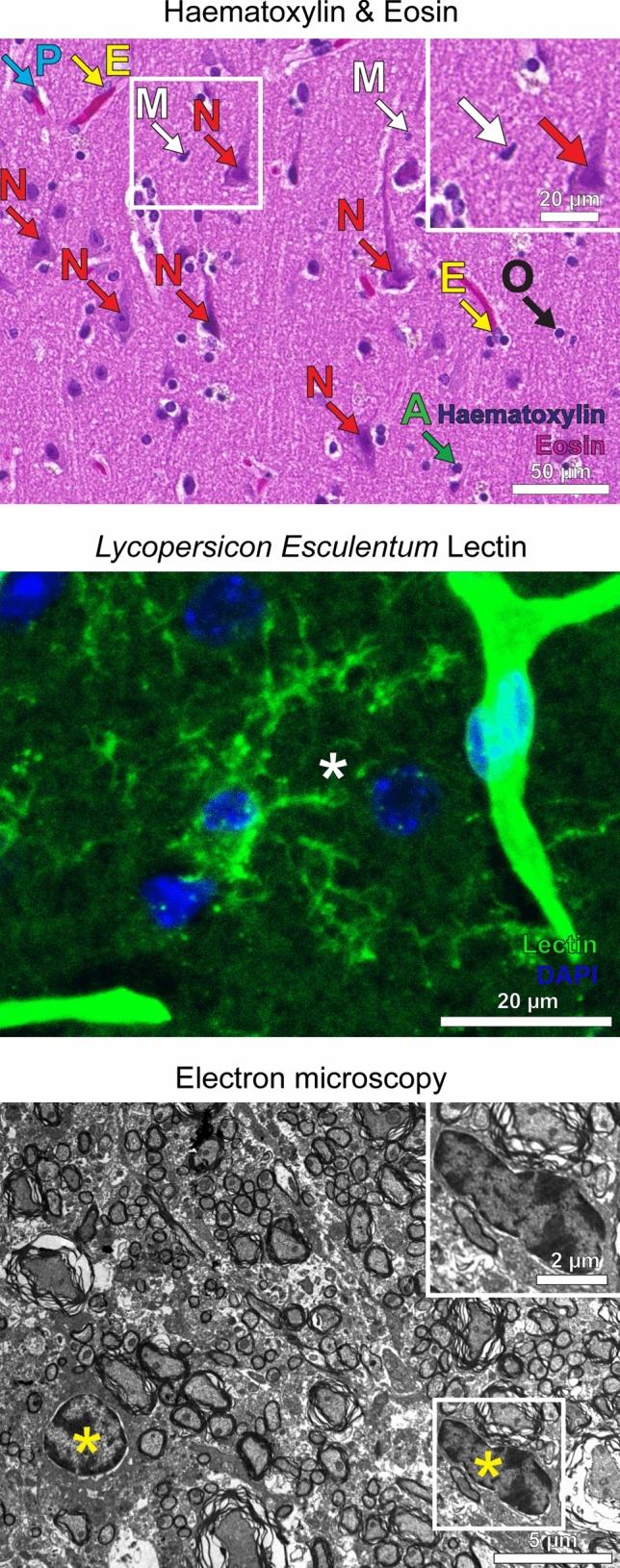
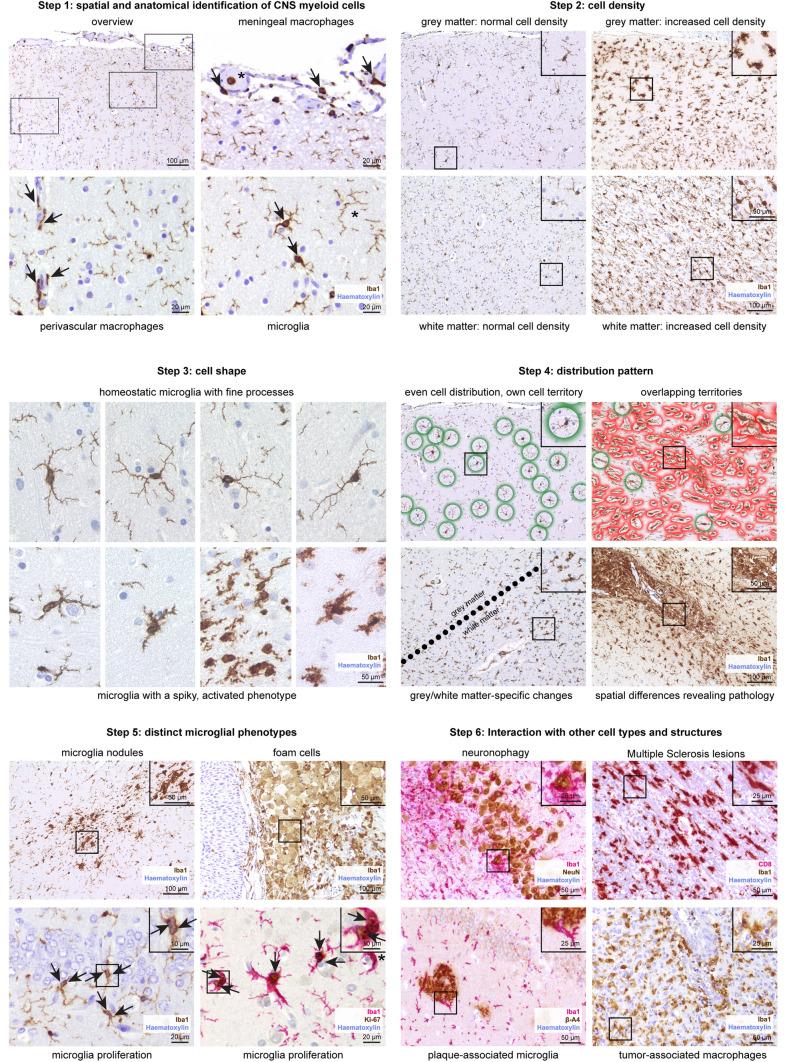
As extremely sensitive immune cells, microglia act as versatile watchdogs of the central nervous system (CNS) that tightly control tissue homeostasis. Therefore, microglial activation is an early and easily detectable hallmark of virtually all neuropsychiatric, neuro-oncological, neurodevelopmental, neurodegenerative and neuroinflammatory diseases. The recent introduction of novel high-throughput technologies and several single-cell methodologies as well as advances in epigenetic analyses helped to identify new microglia expression profiles, enhancer-landscapes and local signaling cues that defined diverse previously unappreciated microglia states in the healthy and diseased CNS. Here, we give an overview on the recent developments in the field of microglia biology and provide a practical guide to analyze disease-associated microglia phenotypes in both the murine and human CNS, on several morphological and molecular levels. Finally, technical limitations, potential pitfalls and data misinterpretations are discussed as well.
作为极其敏感的免疫细胞,小胶质细胞充当中枢神经系统 (CNS) 的多面监控器,可严密控制组织的动态平衡。因此,小胶质细胞的激活是几乎所有神经精神疾病、神经肿瘤学、神经发育障碍、神经退行性疾病和神经炎症性疾病的早期且易于检测的标志。新型高通量技术和几种单细胞方法的引入以及表观遗传学分析的进展,有助于确定新的小胶质细胞表达谱、增强子景观和局部信号提示,从而在健康和患病的中枢神经系统中定义了先前未被认识到的多种不同的小胶质细胞状态。在这里,我们概述了小胶质细胞生物学领域的最新进展,并提供了一个实用指南,用于在多种形态和分子水平上分析啮齿动物和人类中枢神经系统中与疾病相关的小胶质细胞表型。最后,还讨论了技术限制、潜在陷阱和数据误读等问题。

 Zotero 插件