
药物性超敏反应继发的库尼斯综合征
Kounis Syndrome Secondary to Medicine-Induced Hypersensitivity.
作者信息
Karunathilake Parackrama, Ralapanawa Udaya, Jayalath Thilak, Abeyagunawardena Shamali
机构信息
Department of Medicine, Faculty of Medicine, University of Peradeniya, Kandy, Sri Lanka.
出版信息
Case Rep Med. 2021 Oct 1;2021:4485754. doi: 10.1155/2021/4485754. eCollection 2021.
INTRODUCTION
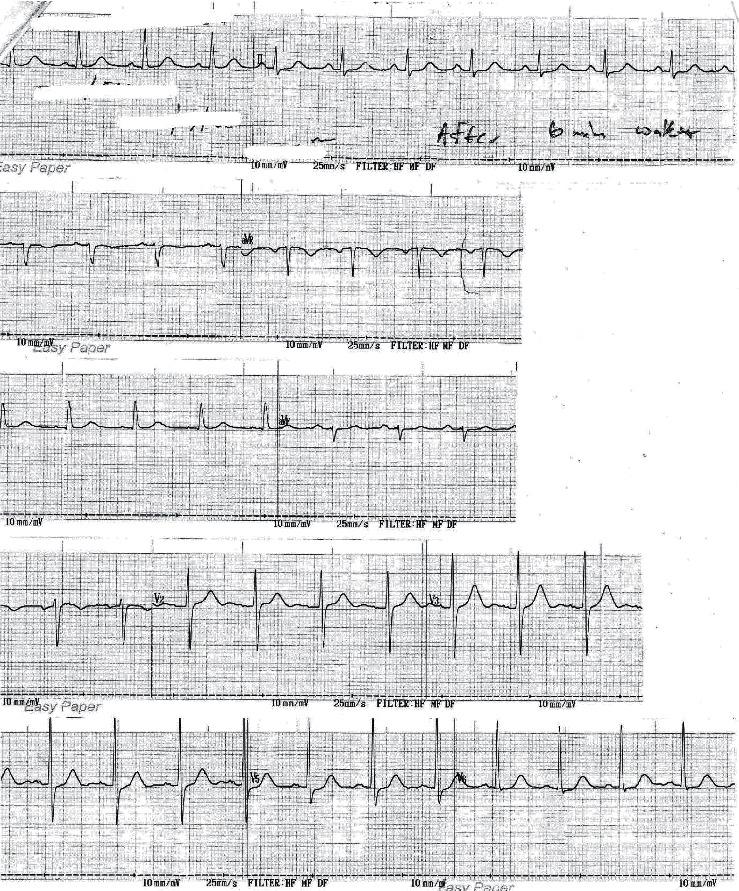
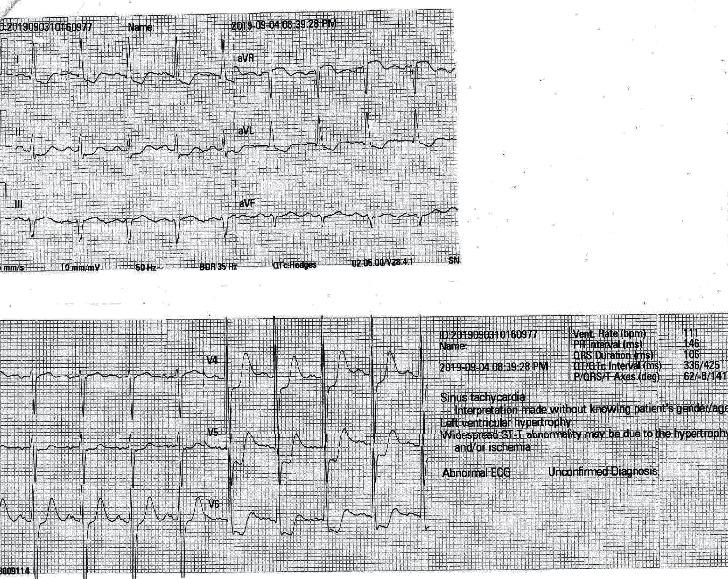
Kounis syndrome is the concurrence of an acute coronary syndrome (ACS) caused by coronary vasospasms, acute myocardial infarctions, or stent thromboses in case of allergic or hypersensitivity reactions. Kounis syndrome is mediated by mast cells that interact with macrophages and T-lymphocytes, causing degranulation and inflammation with cytokine release. It is a life-threatening condition that has many trigger factors and is most commonly caused by medicines. . A 71-year-old male was admitted with a fever of five days' duration associated with cellulitis, for which he had been treated with clindamycin and flucloxacillin before admission. He was a diagnosed patient with hypertension and dyslipidemia five years ago. After taking the antibiotics, he had developed generalized itching followed by urticaria suggesting an allergic reaction. Therefore, he was admitted to the hospital. After admission, he developed an ischaemic-type chest pain associated with autonomic symptoms and shortness of breath. An immediate ECG was taken that showed ST-segment depressions in the chest leads V4-V6, confirmed by a repeat ECG. Troponin I was 8 ng/mL. Acute management of ACS was started, and prednisolone 10 mg daily dose was given. After complete recovery, the patient was discharged with aspirin, clopidogrel, atorvastatin, metoprolol, losartan, isosorbide mononitrate, and nicorandil. Prednisolone 10 mg daily dose was given for five days after discharge.
CONCLUSION
In immediate hypersensitivity, with persistent cardiovascular instability, Kounis syndrome should be considered, and an electrocardiogram and other appropriate assessments and treatments should be initiated. Prompt management of the allergic reaction and the ACS is vital for a better outcome of Kounis syndrome.
引言
库尼斯综合征是指在发生过敏或超敏反应时,由冠状动脉痉挛、急性心肌梗死或支架血栓形成所引发的急性冠状动脉综合征(ACS)。库尼斯综合征由肥大细胞介导,肥大细胞与巨噬细胞和T淋巴细胞相互作用,导致脱颗粒并释放细胞因子,引发炎症。这是一种危及生命的病症,有多种触发因素,最常见的是药物。一名71岁男性因持续五天的发热伴蜂窝织炎入院,入院前已接受克林霉素和氟氯西林治疗。他五年前被诊断患有高血压和血脂异常。服用抗生素后,他出现全身瘙痒,随后出现荨麻疹,提示过敏反应。因此,他入院治疗。入院后,他出现了与自主神经症状和呼吸急促相关的缺血性胸痛。立即进行了心电图检查,结果显示胸导联V4-V6出现ST段压低,复查心电图予以证实。肌钙蛋白I为8 ng/mL。开始对ACS进行紧急处理,并给予每日10 mg的泼尼松龙。完全康复后,患者出院时带药阿司匹林、氯吡格雷、阿托伐他汀、美托洛尔、氯沙坦、单硝酸异山梨酯和尼可地尔。出院后给予每日10 mg的泼尼松龙,持续五天。
结论
在速发型超敏反应且伴有持续心血管不稳定的情况下,应考虑库尼斯综合征,并启动心电图及其他适当的评估和治疗。迅速处理过敏反应和ACS对于库尼斯综合征取得更好的治疗效果至关重要。

 Zotero 插件