
噬菌体疗法作为水产养殖中的集中管理策略。
Phage Therapy as a Focused Management Strategy in Aquaculture.
机构信息
Grupo de Investigación en Acuicultura, Universidad de Las Palmas de Gran Canaria, 35214 Las Palmas de Gran Canaria, Spain.
Research Group on Foods, Nutritional Biochemistry and Health, Universidad Europea del Atlántico, 39011 Santander, Spain.
出版信息
Int J Mol Sci. 2021 Sep 28;22(19):10436. doi: 10.3390/ijms221910436.
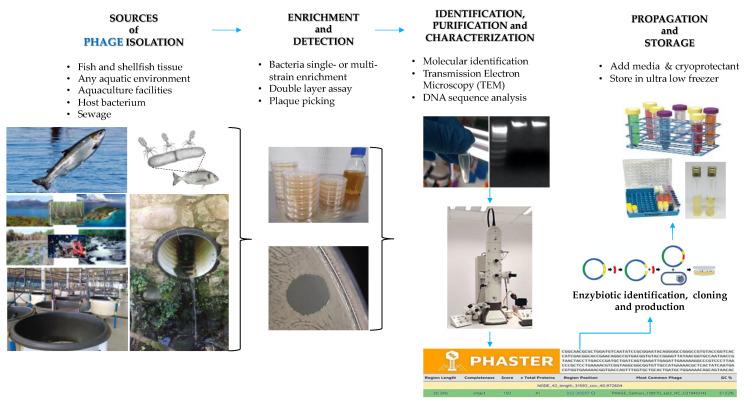
Therapeutic bacteriophages, commonly called as phages, are a promising potential alternative to antibiotics in the management of bacterial infections of a wide range of organisms including cultured fish. Their natural immunogenicity often induces the modulation of a variated collection of immune responses within several types of immunocytes while promoting specific mechanisms of bacterial clearance. However, to achieve standardized treatments at the practical level and avoid possible side effects in cultivated fish, several improvements in the understanding of their biology and the associated genomes are required. Interestingly, a particular feature with therapeutic potential among all phages is the production of lytic enzymes. The use of such enzymes against human and livestock pathogens has already provided in vitro and in vivo promissory results. So far, the best-understood phages utilized to fight against either Gram-negative or Gram-positive bacterial species in fish culture are mainly restricted to the and , and the , respectively. However, the current functional use of phages against bacterial pathogens of cultured fish is still in its infancy. Based on the available data, in this review, we summarize the current knowledge about phage, identify gaps, and provide insights into the possible bacterial control strategies they might represent for managing aquaculture-related bacterial diseases.
治疗性噬菌体,通常称为噬菌体,是一种有前途的抗生素替代品,可用于治疗包括养殖鱼类在内的多种生物体的细菌感染。它们的天然免疫原性通常会在几种免疫细胞中诱导多样化的免疫反应调节,同时促进细菌清除的特定机制。然而,为了在实际水平上实现标准化治疗并避免养殖鱼类中可能出现的副作用,需要对其生物学和相关基因组有更深入的了解。有趣的是,所有噬菌体中具有治疗潜力的一个特定特征是产生裂解酶。这种酶在针对人类和家畜病原体的应用已经提供了有前途的体外和体内结果。到目前为止,在鱼类养殖中用于对抗革兰氏阴性或革兰氏阳性细菌的研究最多的噬菌体主要局限于 和 ,以及 。然而,目前利用噬菌体对抗养殖鱼类细菌病原体的功能仍处于起步阶段。基于现有数据,在这篇综述中,我们总结了噬菌体的现有知识,确定了差距,并深入探讨了它们可能代表的用于管理水产养殖相关细菌病的潜在细菌控制策略。

 Zotero 插件