
泛癌症分析人类癌症中 SMARCA4 改变。
A Pan-Cancer Analysis of SMARCA4 Alterations in Human Cancers.
机构信息
Department of Respiratory Disease, Zhejiang Provincial People's Hospital, Affiliated People's Hospital, Hangzhou Medical College, Hangzhou, China.
Department of Medical Oncology, Qilu Hospital, Cheeloo College of Medicine, Shandong University, Jinan, China.
出版信息
Front Immunol. 2021 Oct 4;12:762598. doi: 10.3389/fimmu.2021.762598. eCollection 2021.
BACKGROUND
SMARCA4, the essential ATPase subunit of SWI/SNF chromatin remodeling complex, regulates transcription through the control of chromatin structure and is increasingly thought to play significant roles in human cancers. This study aims to explore the potential role of SMARCA4 with a view to providing insights on pathologic mechanisms implicated here.
METHODS
The potential roles of SMARCA4 in different tumors were explored based on The Cancer Genome Atlas (TCGA), Genotype-tissue expression (GTEx), Tumor Immune Estimation Resource (TIMER), and Gene Set Enrichment Analysis (GSEA) datasets. The expression difference, mutation and phosphorylation status, survival, pathological stage, DNA methylation, tumor mutation burden (TMB), microsatellite instability (MSI), mismatch repair (MMR), tumor microenvironment (TME), and immune cell infiltration related to SMARCA4 were analyzed.
RESULTS
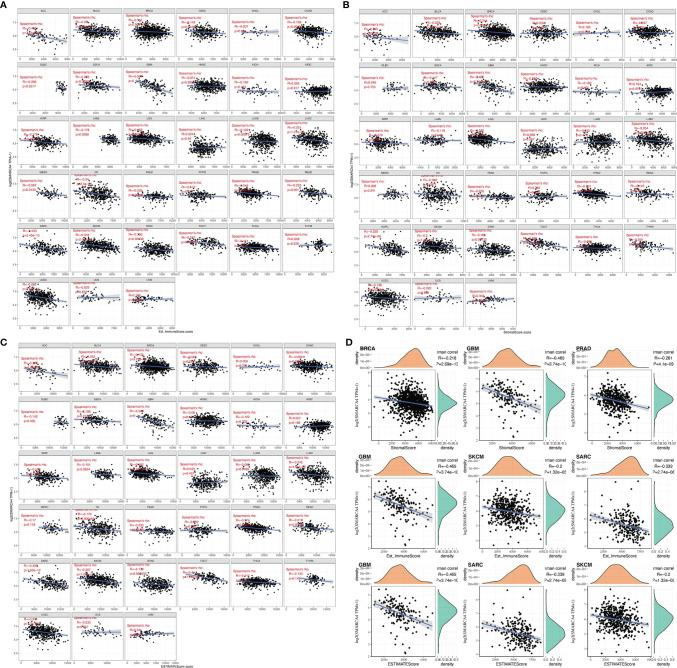
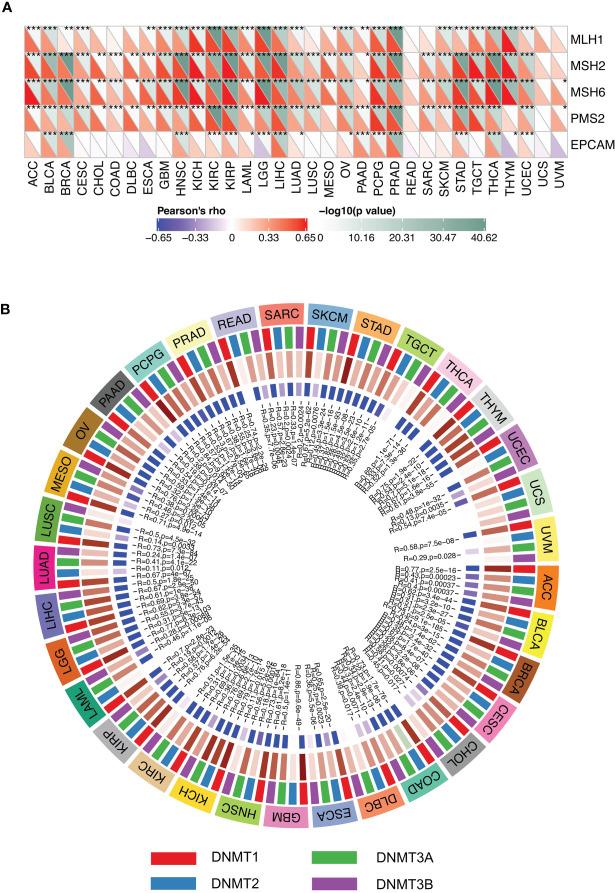
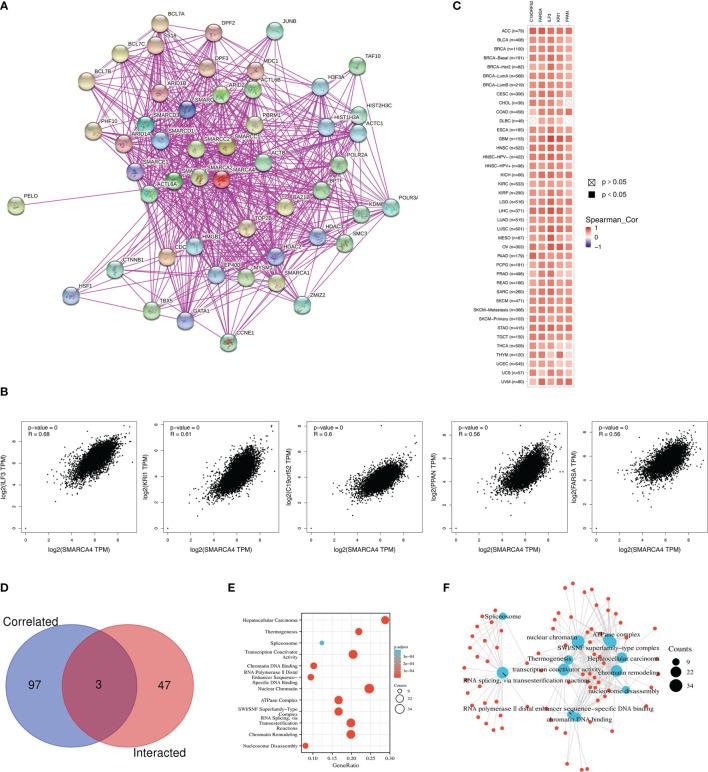
High expression levels of SMARCA4 were observed in most cancer types. SMARCA4 expression in tumor samples correlates with poor overall survival in several cancers. Lung adenocarcinoma cases with altered SMARCA4 showed a poorer prognosis. Enhanced phosphorylation levels of S613, S695, S699, and S1417 were observed in several tumors, including breast cancer. SMARCA4 correlated with tumor immunity and associated with different immune cells and genes in different cancer types. TMB, MSI, MMR, and DNA methylation correlated with SMARCA4 dysregulation in cancers. SMARCA4 expression was negatively associated with CD8+ T-cell infiltration in several tumors. Furthermore, the SWI/SNF superfamily-type complex and ATPase complex may be involved in the functional mechanisms of SMARCA4, albeit these data require further confirmation.
CONCLUSIONS
Our study offers a comprehensive understanding of the oncogenic roles of SMARCA4 across different tumors. SMARCA4 may correlate with tumor immunity.
背景
SMARCA4 是 SWI/SNF 染色质重塑复合物的必需 ATP 酶亚基,通过控制染色质结构调节转录,并且越来越被认为在人类癌症中发挥重要作用。本研究旨在探索 SMARCA4 的潜在作用,以期深入了解其中涉及的病理机制。
方法
基于癌症基因组图谱(TCGA)、基因型组织表达(GTEx)、肿瘤免疫估计资源(TIMER)和基因集富集分析(GSEA)数据集,探索 SMARCA4 在不同肿瘤中的潜在作用。分析 SMARCA4 的表达差异、突变和磷酸化状态、生存情况、病理分期、DNA 甲基化、肿瘤突变负担(TMB)、微卫星不稳定性(MSI)、错配修复(MMR)、肿瘤微环境(TME)和免疫细胞浸润与 SMARCA4 的关系。
结果
SMARCA4 在大多数癌症类型中的表达水平较高。几种癌症的肿瘤样本中 SMARCA4 的表达与整体生存不良相关。SMARCA4 改变的肺腺癌病例预后较差。在包括乳腺癌在内的几种肿瘤中,观察到 S613、S695、S699 和 S1417 的磷酸化水平增强。SMARCA4 与肿瘤免疫相关,并与不同癌症类型中的不同免疫细胞和基因相关。TMB、MSI、MMR 和 DNA 甲基化与癌症中 SMARCA4 的失调相关。SMARCA4 的表达与几种肿瘤中 CD8+T 细胞浸润呈负相关。此外,SWI/SNF 超家族型复合物和 ATP 酶复合物可能参与了 SMARCA4 的功能机制,但这些数据需要进一步验证。
结论
本研究全面了解了 SMARCA4 在不同肿瘤中的致癌作用。SMARCA4 可能与肿瘤免疫相关。




 Zotero 插件