
整合代谢组学揭示胶质母细胞瘤中的深部组织和全身代谢重塑
Integrative Metabolomics Reveals Deep Tissue and Systemic Metabolic Remodeling in Glioblastoma.
作者信息
Gilard Vianney, Ferey Justine, Marguet Florent, Fontanilles Maxime, Ducatez Franklin, Pilon Carine, Lesueur Céline, Pereira Tony, Basset Carole, Schmitz-Afonso Isabelle, Di Fioré Frédéric, Laquerrière Annie, Afonso Carlos, Derrey Stéphane, Marret Stéphane, Bekri Soumeya, Tebani Abdellah
机构信息
Department of Neurosurgery, UNIROUEN, CHU Rouen, INSERM U1245, Normandie University, 76000 Rouen, France.
Department of Metabolic Biochemistry, UNIROUEN, CHU Rouen, INSERM U1245, Normandie University, 76000 Rouen, France.
出版信息
Cancers (Basel). 2021 Oct 14;13(20):5157. doi: 10.3390/cancers13205157.
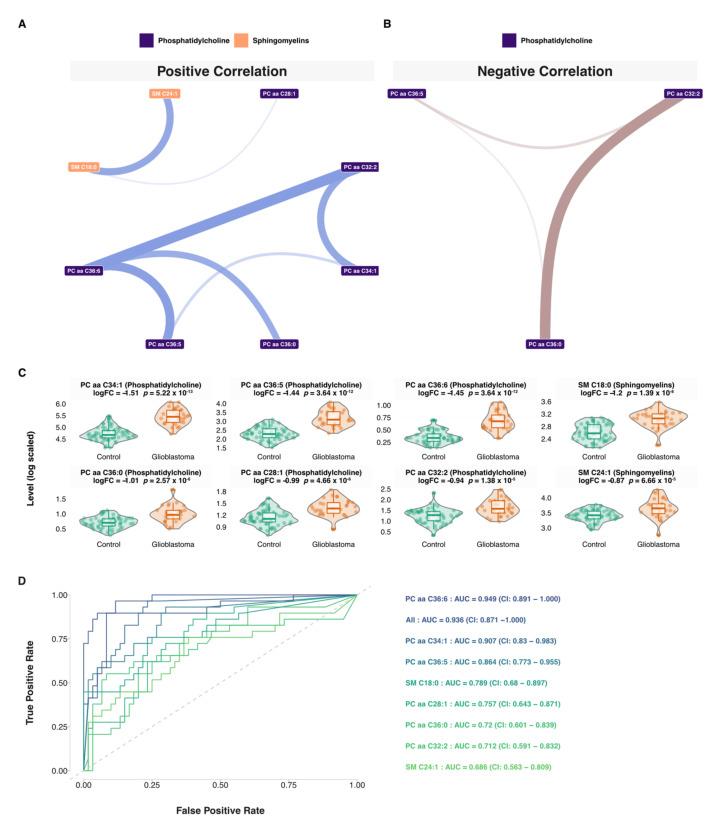
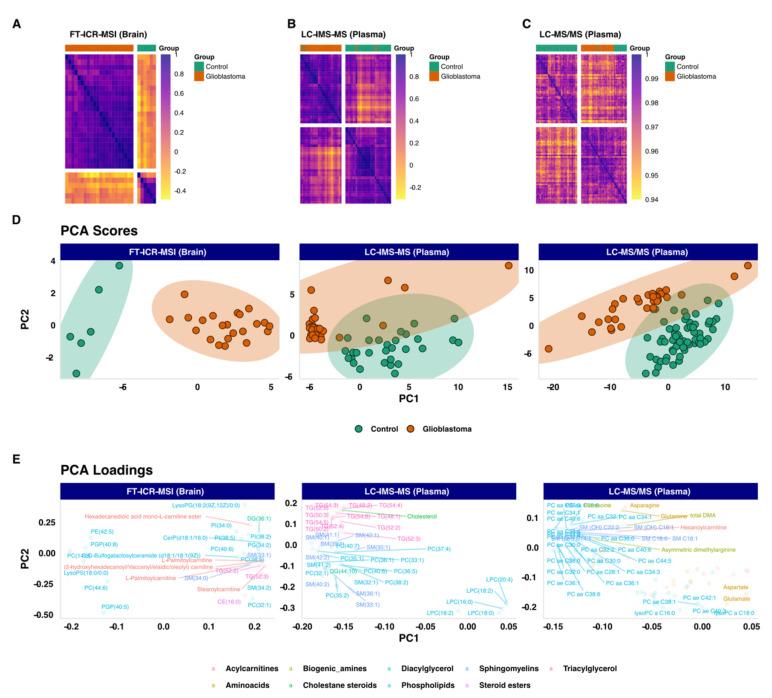
(1) Background: Glioblastoma is the most common malignant brain tumor in adults. Its etiology remains unknown in most cases. Glioblastoma pathogenesis consists of a progressive infiltration of the white matter by tumoral cells leading to progressive neurological deficit, epilepsy, and/or intracranial hypertension. The mean survival is between 15 to 17 months. Given this aggressive prognosis, there is an urgent need for a better understanding of the underlying mechanisms of glioblastoma to unveil new diagnostic strategies and therapeutic targets through a deeper understanding of its biology. (2) Methods: To systematically address this issue, we performed targeted and untargeted metabolomics-based investigations on both tissue and plasma samples from patients with glioblastoma. (3) Results: This study revealed 176 differentially expressed lipids and metabolites, 148 in plasma and 28 in tissue samples. Main biochemical classes include phospholipids, acylcarnitines, sphingomyelins, and triacylglycerols. Functional analyses revealed deep metabolic remodeling in glioblastoma lipids and energy substrates, which unveils the major role of lipids in tumor progression by modulating its own environment. (4) Conclusions: Overall, our study demonstrates in situ and systemic metabolic rewiring in glioblastoma that could shed light on its underlying biological plasticity and progression to inform diagnosis and/or therapeutic strategies.
(1) 背景:胶质母细胞瘤是成人中最常见的恶性脑肿瘤。在大多数情况下,其病因尚不清楚。胶质母细胞瘤的发病机制包括肿瘤细胞对白质的渐进性浸润,导致进行性神经功能缺损、癫痫和/或颅内高压。平均生存期在15至17个月之间。鉴于这种侵袭性的预后情况,迫切需要更好地了解胶质母细胞瘤的潜在机制,通过更深入地了解其生物学特性来揭示新的诊断策略和治疗靶点。(2) 方法:为了系统地解决这个问题,我们对胶质母细胞瘤患者的组织和血浆样本进行了基于靶向和非靶向代谢组学的研究。(3) 结果:本研究揭示了176种差异表达的脂质和代谢物,其中血浆中有148种,组织样本中有28种。主要生化类别包括磷脂、酰基肉碱、鞘磷脂和三酰甘油。功能分析揭示了胶质母细胞瘤脂质和能量底物的深度代谢重塑,这通过调节自身环境揭示了脂质在肿瘤进展中的主要作用。(4) 结论:总体而言,我们的研究证明了胶质母细胞瘤的原位和全身代谢重排,这可能有助于揭示其潜在的生物学可塑性和进展情况,为诊断和/或治疗策略提供信息。


 Zotero 插件