
慢性暴露于 10nm 二氧化硅纳米颗粒引起的行为改变。
Behavioural alterations induced by chronic exposure to 10 nm silicon dioxide nanoparticles.
机构信息
Nanobiology Unit, Department of Biological Sciences, College of Science, Jerash University, Jordan.
Department of Biology, College of Science, King Khalid University, Saudi Arabia.
出版信息
IET Nanobiotechnol. 2021 Apr;15(2):221-235. doi: 10.1049/nbt2.12041. Epub 2021 Mar 23.
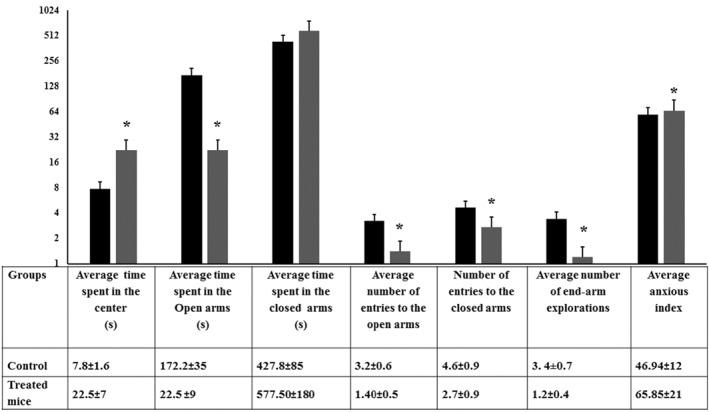
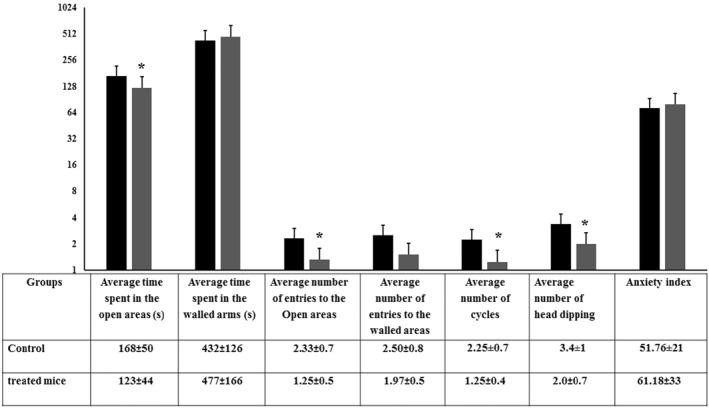
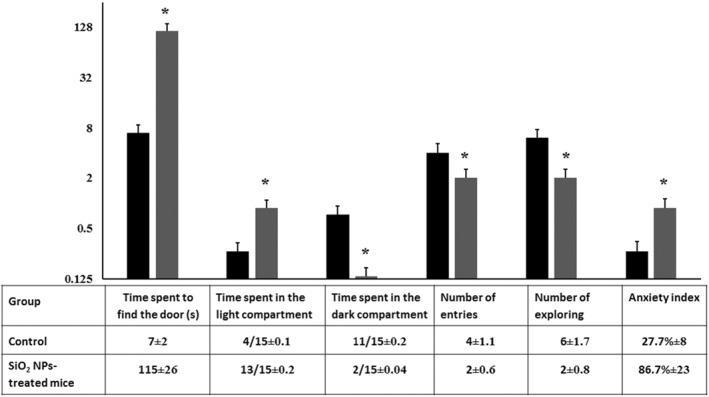
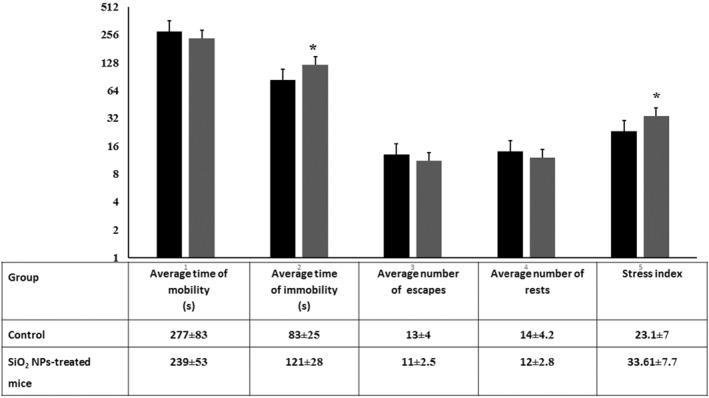
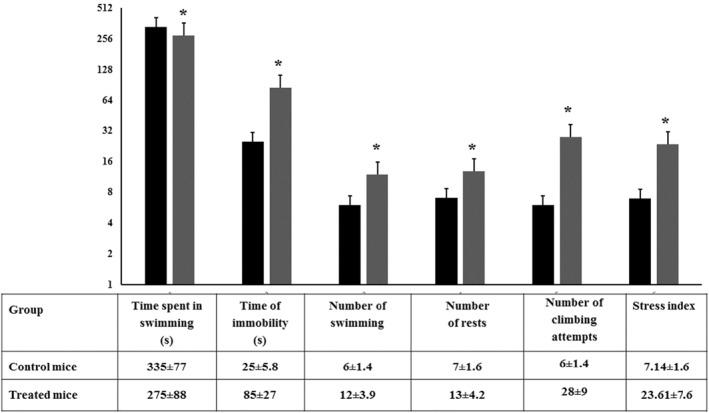
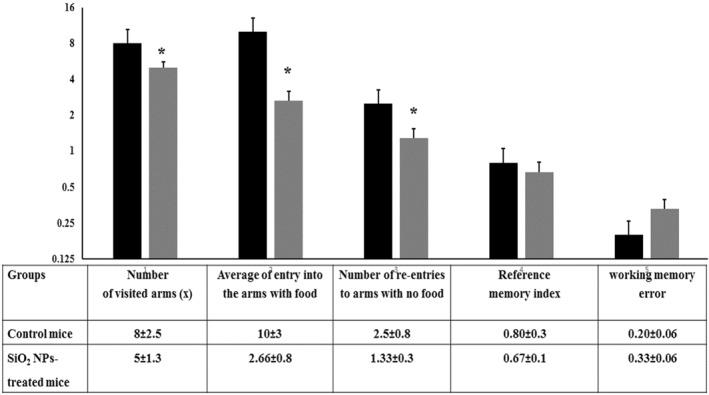
Silicon dioxide nanoparticles (SiO NPs) are widely invested in medicine, industry, agriculture, consuming products, optical imaging agents, cosmetics, and drug delivery. However, the toxicity of these NPs on human health and the ecosystem have not been extensively studied and little information is available about their behavioural toxicities. The current study aimed to find out the behavioural alterations that might be induced by chronic exposure to 10 nm SiO NPs. BALB/C mice were subjected to 36 injections of SiO NPs (2 mg/kg Bw) and subjected to 11 neurobehavioural tests: elevated plus-maze test, elevated zero-maze test, multiradial maze test, open field test, hole-board test, light-dark box test, forced swimming test, tail-suspension test, Morris water-maze test, Y-maze test and multiple T-maze test. Treated mice demonstrated anxiety-like effect, depression tendency, behavioural despair stress, exploration and locomotors activity reduction with error induction in both reference and working memories. The findings may suggest that silica NPs are anxiogenic and could aggravate depression affecting memory, learning, overall activity and exploratory behaviour. Moreover, the findings may indicate that these nanomaterials (NMs) may induce potential oxidative stress in the body leading to neurobehavioural alterations with possible changes in the vital organ including the central nervous system.
二氧化硅纳米颗粒(SiO NPs)广泛应用于医学、工业、农业、消费品、光学成像剂、化妆品和药物输送等领域。然而,这些 NPs 对人类健康和生态系统的毒性尚未得到广泛研究,关于它们的行为毒性的信息也很少。本研究旨在探讨长期暴露于 10nm SiO NPs 可能引起的行为改变。BALB/C 小鼠接受 36 次 SiO NPs(2mg/kgBw)注射,并接受 11 项神经行为测试:高架十字迷宫测试、高架零迷宫测试、多放射迷宫测试、旷场测试、洞板测试、明暗箱测试、强迫游泳测试、悬尾测试、Morris 水迷宫测试、Y 迷宫测试和多项 T 迷宫测试。结果表明,实验组小鼠表现出焦虑样行为、抑郁倾向、行为绝望应激、参考记忆和工作记忆错误诱导下的探索和运动活性降低。这些发现可能表明,硅纳米颗粒具有焦虑诱导作用,可能会加重记忆、学习、整体活动和探索行为方面的抑郁。此外,这些结果可能表明,这些纳米材料(NMs)可能会在体内引起潜在的氧化应激,导致神经行为改变,包括中枢神经系统在内的重要器官可能发生变化。






 Zotero 插件