
免疫检查点抑制剂治疗表皮生长因子受体突变的非小细胞肺癌患者的疗效及可能机制。
The efficacy and possible mechanisms of immune checkpoint inhibitors in treating non-small cell lung cancer patients with epidermal growth factor receptor mutation.
机构信息
Cheeloo College of Medicine, Shandong University, Jinan 250117, Shandong, P. R. China.
Department of Radiation Oncology, Shandong Cancer Hospital and Institute, Shandong First Medical University and Shandong Academy of Medical Sciences, Jinan 250117, Shandong, P. R. China.
出版信息
Cancer Commun (Lond). 2021 Dec;41(12):1314-1330. doi: 10.1002/cac2.12229. Epub 2021 Oct 26.
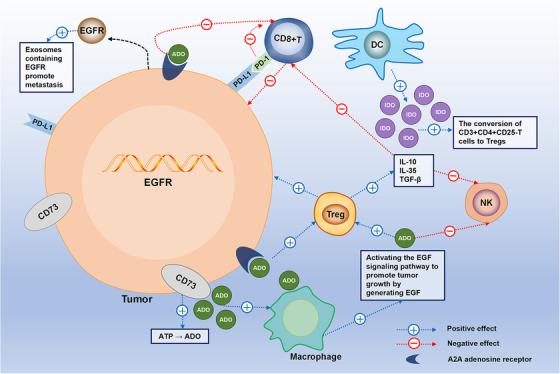
Over the past few years, immune checkpoint inhibitors (ICIs) have greatly improved the survival for patients with non-small cell lung cancer (NSCLC) without driver mutations. Compared with wild-type tumors, tumors with epidermal growth factor receptor (EGFR) mutations show more heterogeneity in the expression level of programmed cell death-ligand 1 (PD-L1), tumor mutational burden (TMB), and other immune microenvironment characteristics. Whether ICIs are suitable for NSCLC patients with EGFR mutations is still worth exploring. In previous studies, no significantly improved benefits were observed with immunotherapy monotherapy in NSCLC patients with EGFR mutation. Here, we summarized and analyzed data from the clinical trials of ICIs or combined therapy in NSCLC patients with EGFR mutations. We also focused on the mechanisms affecting the efficacy of ICIs in NSCLC patients with EGFR mutations, the characteristics of potential responders, and provided insights into areas worth further investigations in future studies.
在过去的几年中,免疫检查点抑制剂(ICIs)极大地提高了无驱动基因突变的非小细胞肺癌(NSCLC)患者的生存率。与野生型肿瘤相比,具有表皮生长因子受体(EGFR)突变的肿瘤在程序性细胞死亡配体 1(PD-L1)、肿瘤突变负荷(TMB)和其他免疫微环境特征的表达水平上表现出更多的异质性。ICI 是否适用于 EGFR 突变的 NSCLC 患者仍值得探索。在之前的研究中,免疫治疗单药治疗 EGFR 突变的 NSCLC 患者并未观察到明显的获益改善。在这里,我们总结和分析了 EGFR 突变 NSCLC 患者接受 ICI 或联合治疗的临床试验数据。我们还重点关注了影响 EGFR 突变 NSCLC 患者 ICIs 疗效的机制、潜在应答者的特征,并为未来研究中值得进一步研究的领域提供了见解。
 Zotero 插件