
微环境中的白细胞介素 6 抑制细胞毒性化疗产生的抗肿瘤免疫反应。
Microenvironmental IL-6 inhibits anti-cancer immune responses generated by cytotoxic chemotherapy.
机构信息
The David H. Koch Institute for Integrative Cancer Research, Cambridge, MA, 02142, USA.
Department of Biology, Massachusetts Institute of Technology, Cambridge, MA, 02142, USA.
出版信息
Nat Commun. 2021 Oct 28;12(1):6218. doi: 10.1038/s41467-021-26407-4.
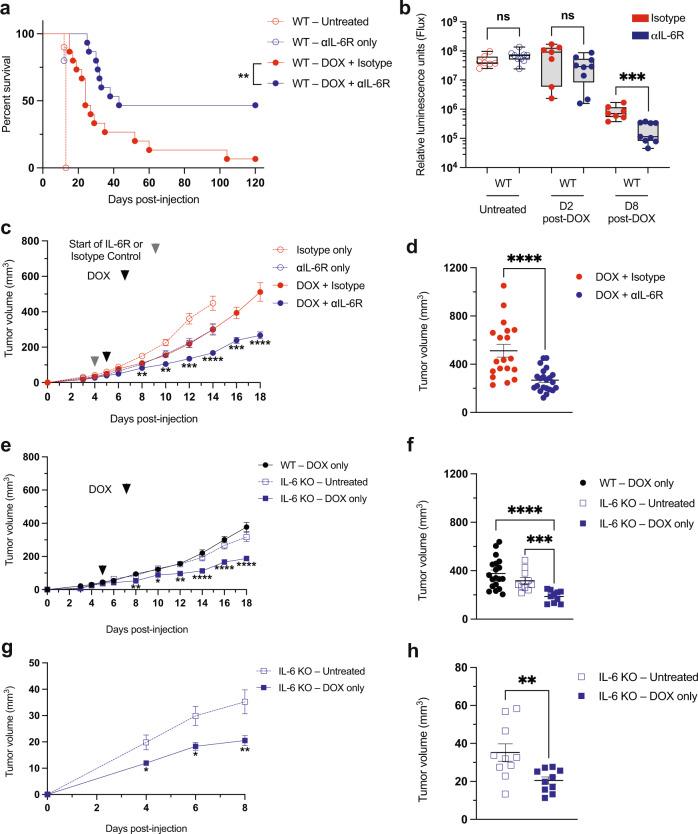
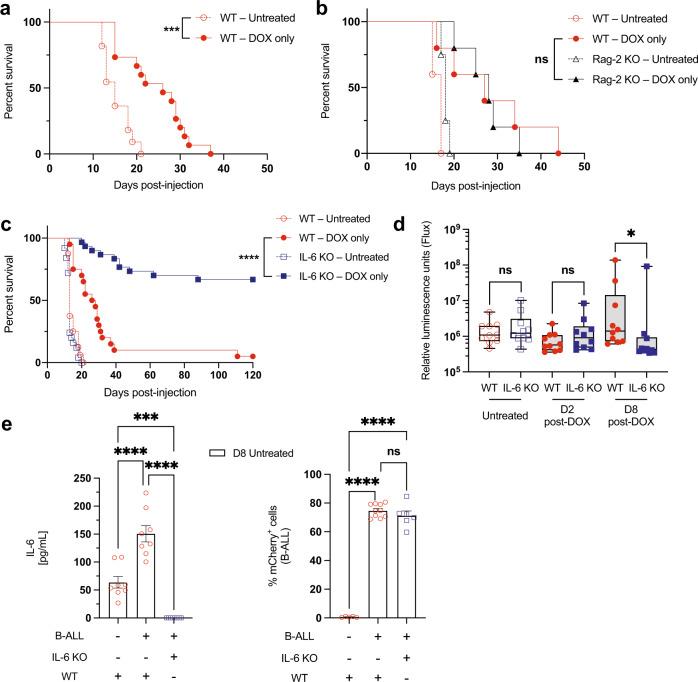
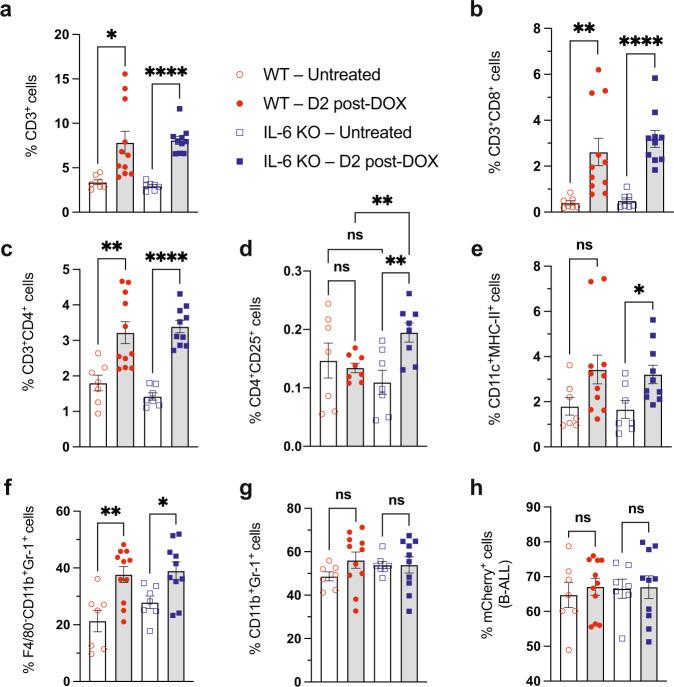
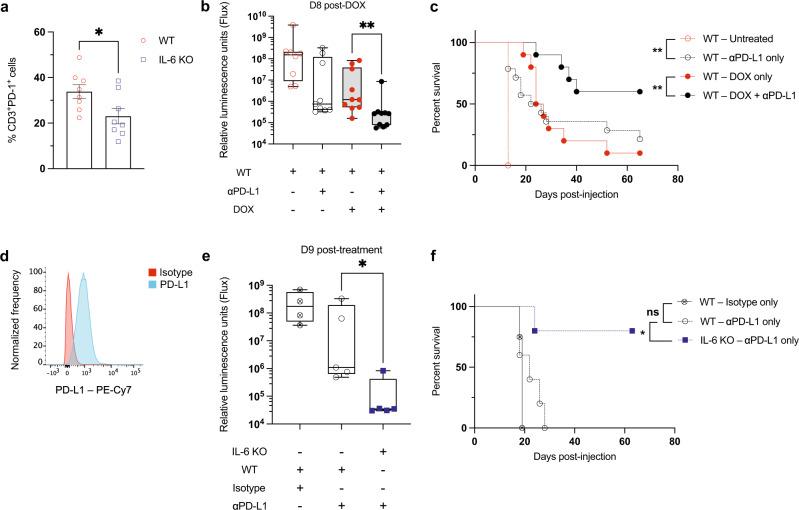
Cytotoxic chemotherapeutics primarily function through DNA damage-induced tumor cell apoptosis, although the inflammation provoked by these agents can stimulate anti-cancer immune responses. The mechanisms that control these distinct effects and limit immunogenic responses to DNA-damage mediated cell death in vivo are currently unclear. Using a mouse model of BCR-ABL B-cell acute lymphoblastic leukemia, we show that chemotherapy-induced anti-cancer immunity is suppressed by the tumor microenvironment through production of the cytokine IL-6. The chemotherapeutic doxorubicin is curative in IL-6-deficient mice through the induction of CD8 T-cell-mediated anti-cancer responses, while moderately extending lifespan in wild type tumor-bearing mice. We also show that IL-6 suppresses the effectiveness of immune-checkpoint inhibition with anti-PD-L1 blockade. Our results suggest that IL-6 is a key regulator of anti-cancer immune responses induced by genotoxic stress and that its inhibition can switch cancer cell clearance from primarily apoptotic to immunogenic, promoting and maintaining durable anti-tumor immune responses.
细胞毒性化疗药物主要通过诱导肿瘤细胞凋亡来发挥作用,尽管这些药物引起的炎症可以刺激抗肿瘤免疫反应。然而,目前尚不清楚控制这些不同效应的机制,以及限制体内 DNA 损伤介导的细胞死亡引起的免疫原性反应的机制。我们使用 BCR-ABL B 细胞急性淋巴细胞白血病的小鼠模型表明,肿瘤微环境通过产生细胞因子 IL-6 抑制化疗引起的抗癌免疫。在缺乏 IL-6 的小鼠中,阿霉素等化疗药物通过诱导 CD8 T 细胞介导的抗癌反应而具有治愈作用,而在野生型荷瘤小鼠中则适度延长了生存期。我们还表明,IL-6 抑制了抗 PD-L1 阻断的免疫检查点抑制的效果。我们的研究结果表明,IL-6 是由遗传毒性应激诱导的抗癌免疫反应的关键调节剂,其抑制作用可以将癌细胞清除从主要凋亡转变为免疫原性,从而促进和维持持久的抗肿瘤免疫反应。

 Zotero 插件