
食管癌的肠道微生物群:在致癌作用中的作用及临床意义
Gut Microbiota for Esophageal Cancer: Role in Carcinogenesis and Clinical Implications.
作者信息
Zhou Jianfeng, Sun Shangwei, Luan Siyuan, Xiao Xin, Yang Yushang, Mao Chengyi, Chen Longqi, Zeng Xiaoxi, Zhang Yonggang, Yuan Yong
机构信息
Department of Thoracic Surgery, West China Hospital, Sichuan University, Chengdu, China.
West China Biomedical Big Data Center, West China Hospital, Sichuan University, Chengdu, China.
出版信息
Front Oncol. 2021 Oct 18;11:717242. doi: 10.3389/fonc.2021.717242. eCollection 2021.
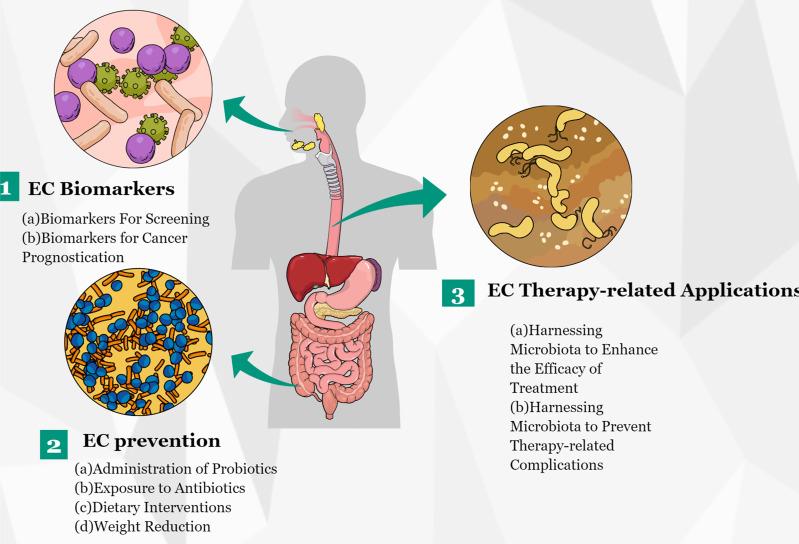
Esophageal cancer (EC) is a common malignant tumor of the upper digestive tract. The microbiota in the digestive tract epithelium comprises a large number of microorganisms that adapt to the immune defense and interact with the host to form symbiotic networks, which affect many physiological processes such as metabolism, tissue development, and immune response. Reports indicate that there are microbial compositional changes in patients with EC, which provides an important opportunity to advance clinical applications based on findings on the gut microbiota. For example, microbiota detection can be used as a biomarker for screening and prognosis, and microorganism levels can be adjusted to treat cancer and decrease the adverse effects of treatment. This review aims to provide an outline of the gut microbiota in esophageal neoplasia, including the mechanisms involved in microbiota-related carcinogenesis and the prospect of utilizing the microbiota as EC biomarkers and treatment targets. These findings have important implications for translating the use of gut microbiota in clinical applications.
食管癌(EC)是上消化道常见的恶性肿瘤。消化道上皮中的微生物群包含大量适应免疫防御并与宿主相互作用以形成共生网络的微生物,这些共生网络会影响许多生理过程,如新陈代谢、组织发育和免疫反应。报告表明,食管癌患者存在微生物组成变化,这为基于肠道微生物群研究结果推进临床应用提供了重要契机。例如,微生物群检测可作为筛查和预后的生物标志物,还可通过调节微生物水平来治疗癌症并减轻治疗的不良反应。本综述旨在概述食管肿瘤形成中的肠道微生物群,包括微生物群相关致癌作用所涉及的机制以及将微生物群用作食管癌生物标志物和治疗靶点的前景。这些研究结果对于将肠道微生物群应用于临床具有重要意义。

 Zotero 插件