
沙特阿拉伯东部一家医院临床样本中分离的皮肤真菌流行病学:20 年调查。
Epidemiology of Dermatophytes Isolated from Clinical Samples in a Hospital in Eastern Saudi Arabia: A 20-Year Survey.
机构信息
Department of Laboratory Services, Johns Hopkins Aramco Healthcare, Dhahran, Kingdom of Saudi Arabia.
Department of Clinical Laboratory Sciences, College of Applied Medical Sciences, Imam Abdulrahman Bin Faisal University, Dammam, Kingdom of Saudi Arabia.
出版信息
J Epidemiol Glob Health. 2021 Dec;11(4):405-412. doi: 10.1007/s44197-021-00005-5. Epub 2021 Sep 16.
BACKGROUND
Dermatophytes are group of fungi that cause superficial infections via enzymes that degrade keratin in human skin. Several factors, including climate, gender, age, lifestyle, human migration, cultural habits, and socioeconomic status influence the prevalence of dermatophyte infections. We analyzed the prevalence of dermatophyte isolates in a hospital in Eastern Saudi Arabia from 2000 to 2019.
METHODS
The data on fungal cultures were obtained from the Laboratory Information System of the Mycology Laboratories at Johns Hopkins Aramco Healthcare, and were used for the analysis. Fungal isolates were examined microscopically for the presence of specialized hyphal structures and conidia. The Vitek MS microbial identification system (biomerieux) was used if the culture type was not identified microscopically.
RESULTS
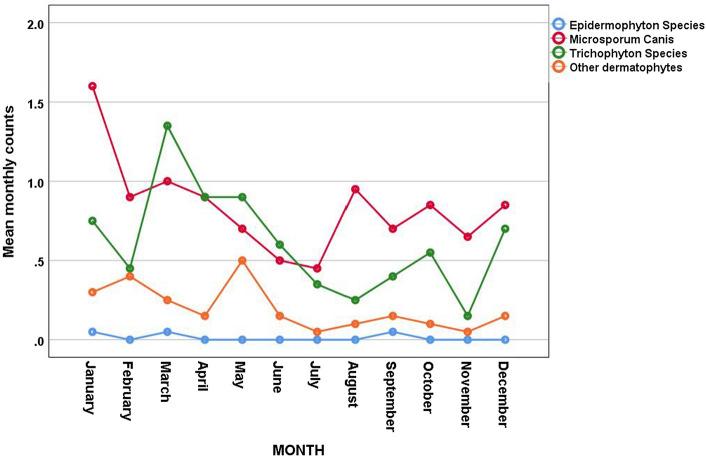
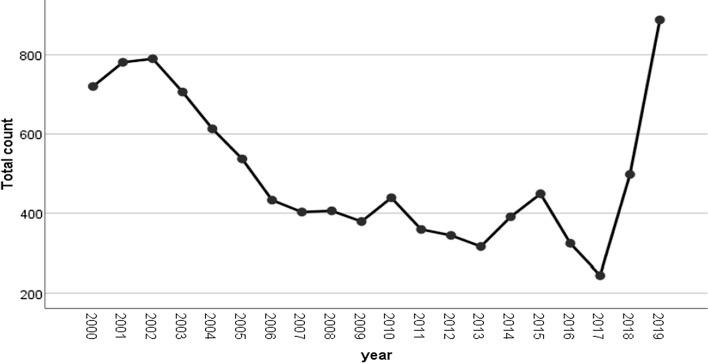
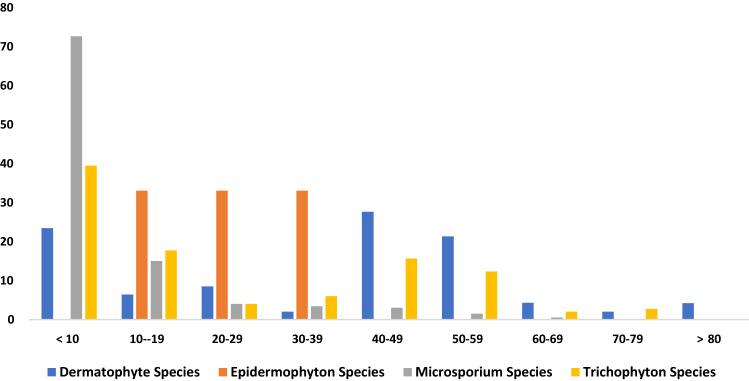
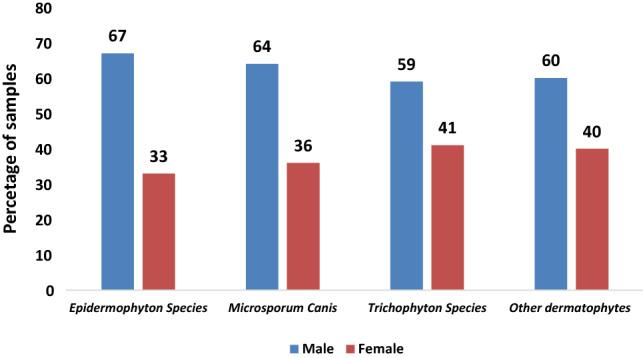
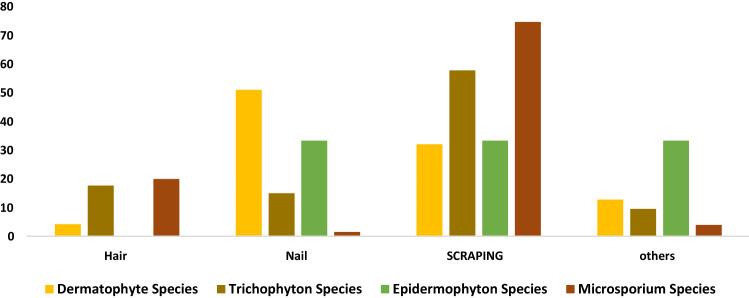
Among the 10,021 samples analyzed, 3040 (30.33%) were positive for fungi and only 398 (3.97%) were dermatophytes. Microsporum species was the most common dermatophyte accounting for 50.5% (n = 201) followed by trichophyton with 36.9% (n = 147). The most common positive samples were scrapping (251, 63%) and hair (68, 17%). Culture positivity relative to the age groups revealed a cluster of positive dermatophyte species in children < 10 years of age with 215 (54%) of all cases and among 10-19 years of age with 60 (15) of the cases (p < 0.001). Microsporum species were the prevalent dermatophytes in patients < 10 years of age, while Epidermophyton species were the most frequent dermatophyte species in age groups 10-19, 20-29, and 30-39 years. However, Trichophyton species were the most frequent dermatophyte species in individuals 70-79 years. The percentage of Microsporum and Trichophyton species decreased significantly over time (p < 0.001). In addition, there was a significant seasonal variation in relation to Trichophyton species. A comparison between the most frequent species showed that there was no difference in relation to gender, but there was a difference in relation to the specimen type and age group.
CONCLUSION
Dermatophytosis was common among children and adolescent with the most common samples were scrapping and hair. There was a significant reduction in Microsporum and Trichophyton species over time.
背景
皮肤癣菌是一组能够通过降解人类皮肤角蛋白而引发浅表感染的真菌。气候、性别、年龄、生活方式、人类迁移、文化习惯和社会经济地位等多种因素都会影响皮肤癣菌感染的流行率。我们分析了沙特东部一家医院 2000 年至 2019 年的皮肤癣菌分离株的流行率。
方法
从约翰霍普金斯阿美医疗真菌学实验室的实验室信息系统中获取真菌培养数据,并进行分析。通过专门的菌丝结构和分生孢子检查真菌分离物的显微镜特征。如果无法通过显微镜鉴定培养物类型,则使用 Vitek MS 微生物鉴定系统(生物梅里埃)。
结果
在分析的 10021 个样本中,3040 个(30.33%)样本真菌培养阳性,其中仅 398 个(3.97%)为皮肤癣菌。微小毛癣菌是最常见的皮肤癣菌,占 50.5%(n=201),其次是须癣毛癣菌,占 36.9%(n=147)。最常见的阳性样本是刮屑(251 个,占 63%)和毛发(68 个,占 17%)。与年龄组相关的培养阳性率显示,儿童期(10 岁以下)和青春期(10-19 岁)均存在一组阳性皮肤癣菌,儿童期(10 岁以下)有 215 例(占所有病例的 54%),青春期有 60 例(占 15%)(p<0.001)。微小毛癣菌是儿童期最常见的皮肤癣菌,而表皮毛癣菌是 10-19 岁、20-29 岁和 30-39 岁年龄组最常见的皮肤癣菌。然而,在 70-79 岁的个体中,最常见的皮肤癣菌是须癣毛癣菌。微小毛癣菌和须癣毛癣菌的比例随时间显著下降(p<0.001)。此外,与须癣毛癣菌有关的季节性变化显著。对最常见的物种进行比较发现,性别无差异,但样本类型和年龄组有差异。
结论
皮肤癣菌病在儿童和青少年中很常见,最常见的样本是刮屑和毛发。微小毛癣菌和须癣毛癣菌的比例随时间显著下降。
 Zotero 插件