
使用Flip-GFP和蛋白酶-Glo荧光素酶检测法对严重急性呼吸综合征冠状病毒2(SARS-CoV-2)主要蛋白酶抑制剂进行验证和失效验证。
Validation and invalidation of SARS-CoV-2 main protease inhibitors using the Flip-GFP and Protease-Glo luciferase assays.
作者信息
Ma Chunlong, Tan Haozhou, Choza Juliana, Wang Yuyin, Wang Jun
机构信息
Department of Pharmacology and Toxicology, College of Pharmacy, the University of Arizona, Tucson, AZ 85721, USA.
出版信息
Acta Pharm Sin B. 2022 Apr;12(4):1636-1651. doi: 10.1016/j.apsb.2021.10.026. Epub 2021 Nov 1.
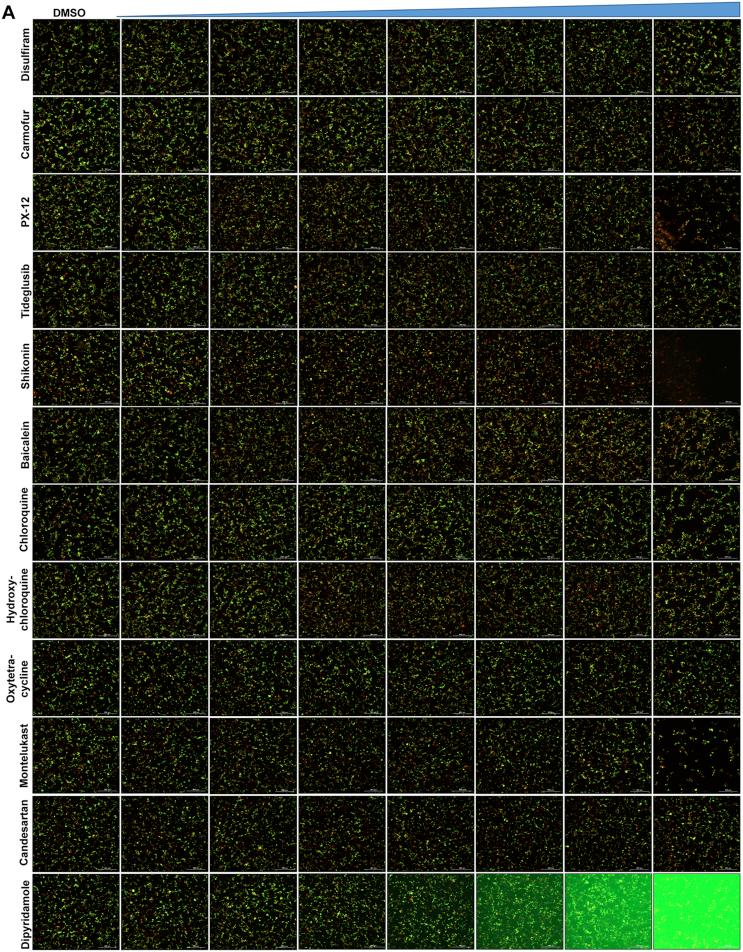
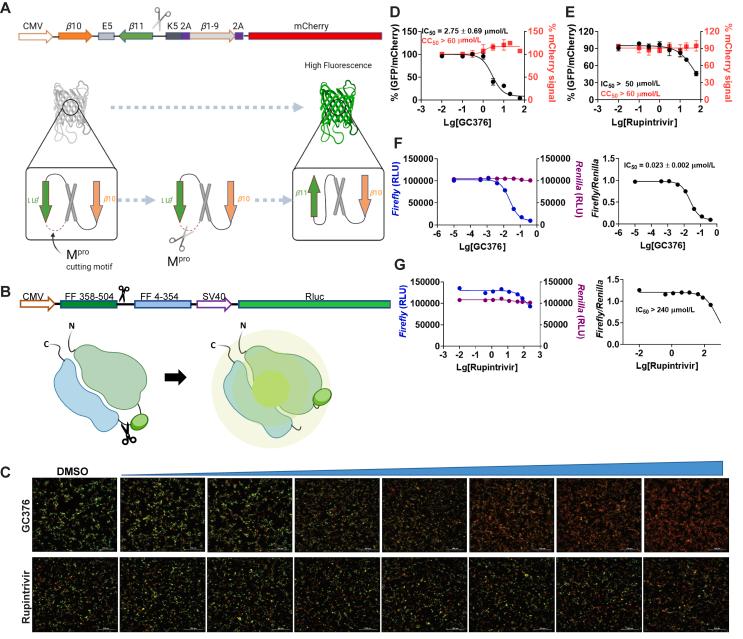
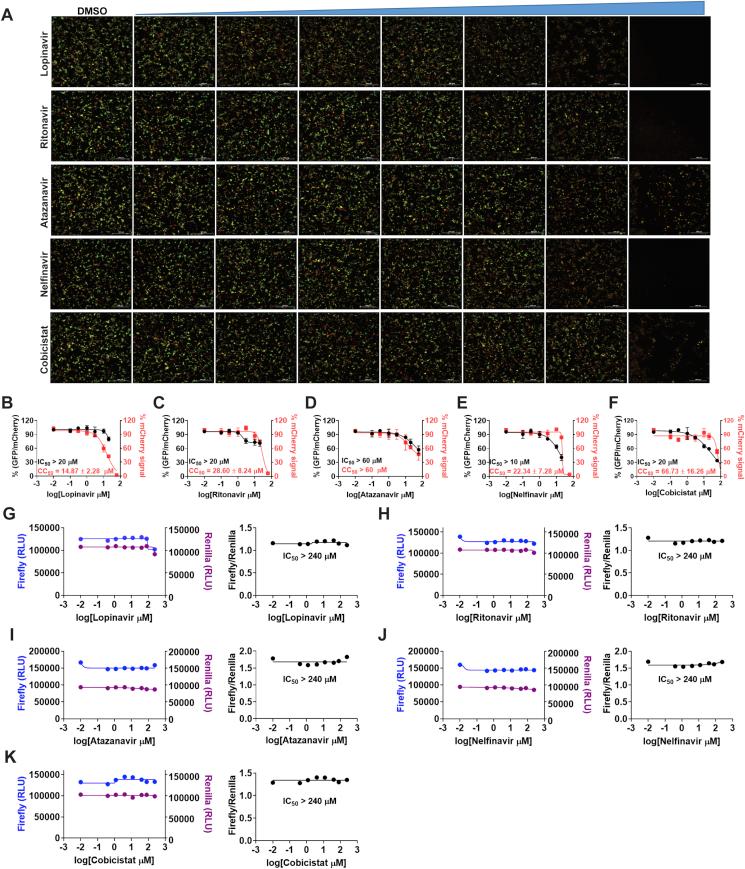
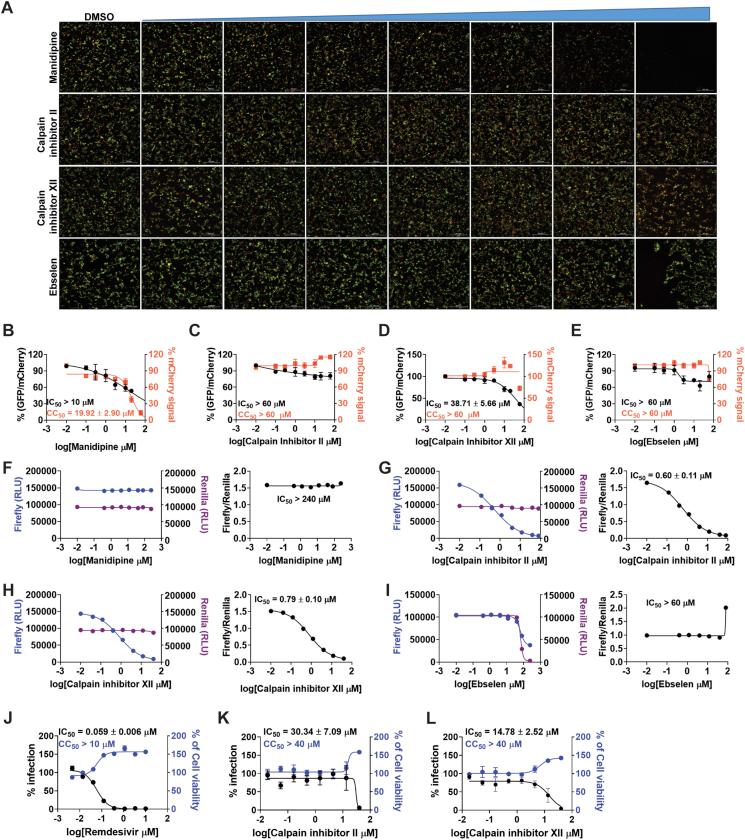
SARS-CoV-2 main protease (M) is one of the most extensively exploited drug targets for COVID-19. Structurally disparate compounds have been reported as M inhibitors, raising the question of their target specificity. To elucidate the target specificity and the cellular target engagement of the claimed M inhibitors, we systematically characterize their mechanism of action using the cell-free FRET assay, the thermal shift-binding assay, the cell lysate Protease-Glo luciferase assay, and the cell-based FlipGFP assay. Collectively, our results have shown that majority of the M inhibitors identified from drug repurposing including ebselen, carmofur, disulfiram, and shikonin are promiscuous cysteine inhibitors that are not specific to M, while chloroquine, oxytetracycline, montelukast, candesartan, and dipyridamole do not inhibit M in any of the assays tested. Overall, our study highlights the need of stringent hit validation at the early stage of drug discovery.
严重急性呼吸综合征冠状病毒2型主要蛋白酶(M)是针对2019冠状病毒病(COVID-19)开发最为广泛的药物靶点之一。据报道,结构各异的化合物可作为M抑制剂,这就引发了其靶点特异性的问题。为阐明所宣称的M抑制剂的靶点特异性及细胞靶点结合情况,我们运用无细胞荧光共振能量转移(FRET)检测、热位移结合检测、细胞裂解液蛋白酶 - 荧光素酶检测以及基于细胞的翻转绿色荧光蛋白(FlipGFP)检测,系统地表征了它们的作用机制。总体而言,我们的结果表明,从药物再利用中鉴定出的大多数M抑制剂,包括依布硒啉、卡莫氟、双硫仑和紫草素,都是混杂的半胱氨酸抑制剂,并非特异性针对M,而氯喹、土霉素、孟鲁司特、坎地沙坦和双嘧达莫在任何测试检测中均不抑制M。总的来说,我们的研究凸显了在药物发现早期进行严格的活性筛选验证的必要性。


 Zotero 插件