
新冠疫情引发的塑料垃圾排放及其在全球海洋中的归宿。
Plastic waste release caused by COVID-19 and its fate in the global ocean.
机构信息
School of Atmospheric Sciences, Nanjing University, Nanjing 210023, China.
Scripps Institution of Oceanography, University of California San Diego, La Jolla, CA 92037.
出版信息
Proc Natl Acad Sci U S A. 2021 Nov 23;118(47). doi: 10.1073/pnas.2111530118.
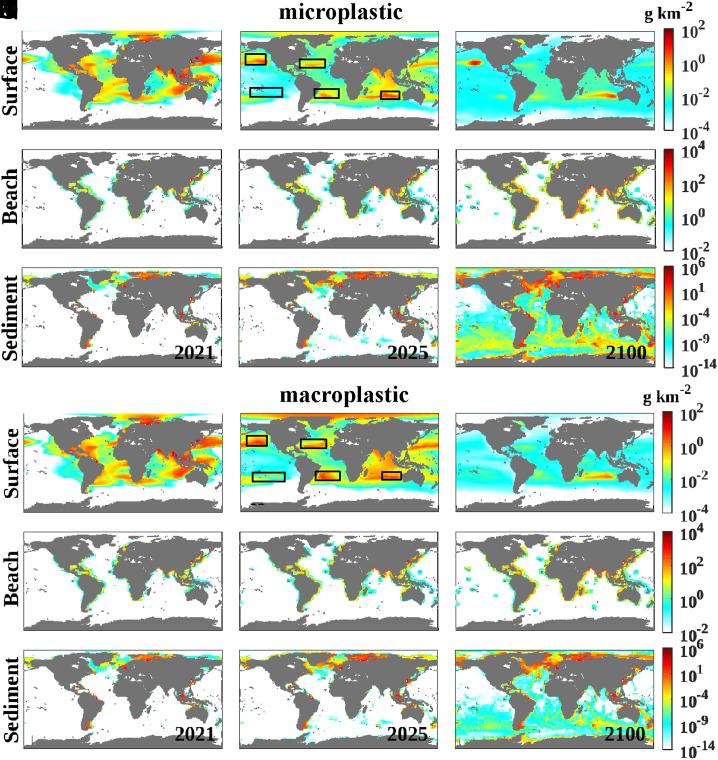
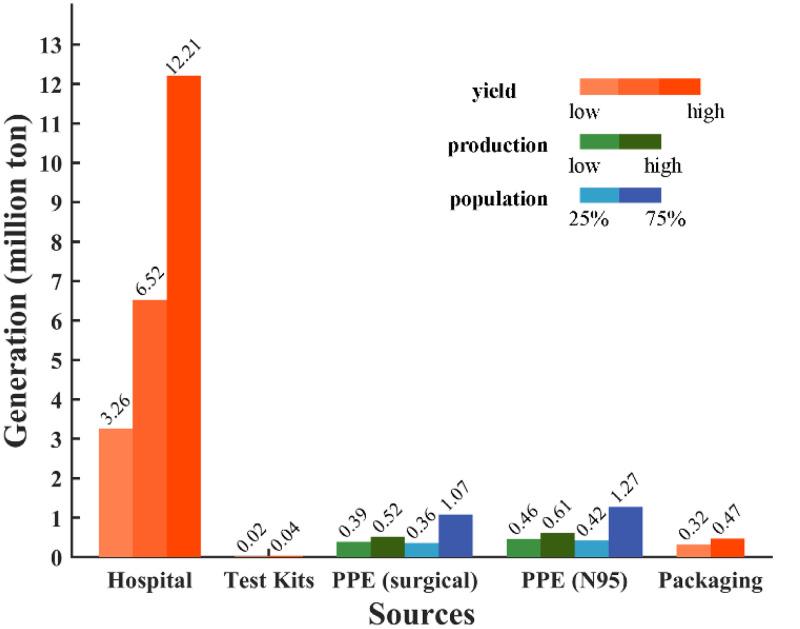
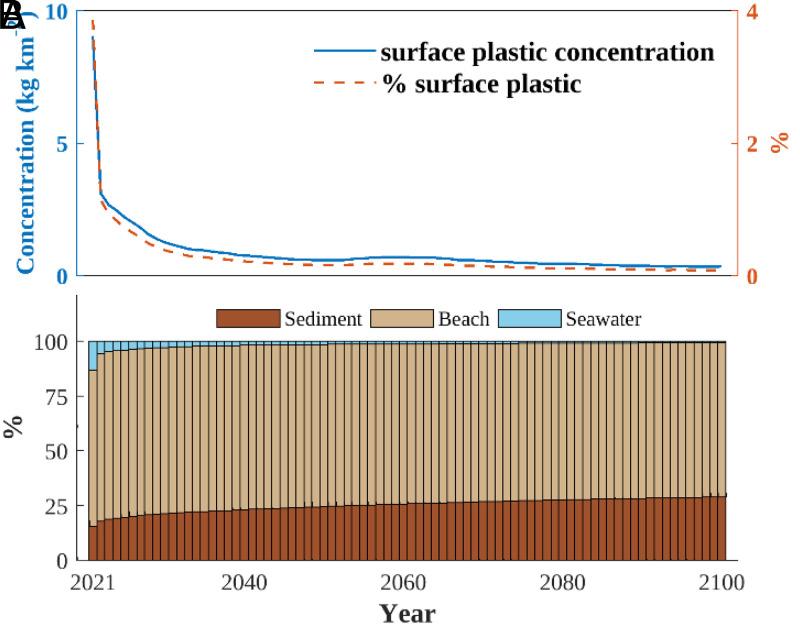
The COVID-19 pandemic has led to an increased demand for single-use plastics that intensifies pressure on an already out-of-control global plastic waste problem. While it is suspected to be large, the magnitude and fate of this pandemic-associated mismanaged plastic waste are unknown. Here, we use our MITgcm ocean plastic model to quantify the impact of the pandemic on plastic discharge. We show that 8.4 ± 1.4 million tons of pandemic-associated plastic waste have been generated from 193 countries as of August 23, 2021, with 25.9 ± 3.8 thousand tons released into the global ocean representing 1.5 ± 0.2% of the global total riverine plastic discharge. The model projects that the spatial distribution of the discharge changes rapidly in the global ocean within 3 y, with a significant portion of plastic debris landing on the beach and seabed later and a circumpolar plastic accumulation zone will be formed in the Arctic. We find hospital waste represents the bulk of the global discharge (73%), and most of the global discharge is from Asia (72%), which calls for better management of medical waste in developing countries.
新冠疫情大流行导致对一次性塑料的需求增加,这加剧了已经失控的全球塑料废物问题的压力。虽然据推测数量巨大,但与疫情相关的管理不善的塑料废物的规模和命运尚不清楚。在这里,我们使用麻省理工学院的 MITgcm 海洋塑料模型来量化疫情对塑料排放的影响。我们表明,截至 2021 年 8 月 23 日,已有 193 个国家产生了 840 万吨与疫情相关的塑料废物,其中 25900 至 3800 吨被排放到全球海洋,占全球河流塑料总排放量的 1.5%至 0.2%。该模型预测,在全球海洋中,排放的空间分布在 3 年内迅速变化,大量塑料碎片随后在海滩和海底登陆,并将在北极形成一个环极塑料积累区。我们发现医院废物是全球排放量的主要来源(73%),而全球大部分排放量来自亚洲(72%),这就需要发展中国家更好地管理医疗废物。

 Zotero 插件