
2017年全球、区域和国家心血管疾病死亡及伤残调整生命年(DALYs),以及1990年至2017年的趋势和风险分析:基于全球疾病负担研究及预防意义
Global, Regional, and National Death, and Disability-Adjusted Life-Years (DALYs) for Cardiovascular Disease in 2017 and Trends and Risk Analysis From 1990 to 2017 Using the Global Burden of Disease Study and Implications for Prevention.
作者信息
Li Zhiyong, Lin Longfei, Wu Hongwei, Yan Lei, Wang Huanhuan, Yang Hongjun, Li Hui
机构信息
Institute Chinese Materia Medica China Academy of Chinese Medical Sciences, Beijing, China.
Fengtai District Community Health Center, Beijing, China.
出版信息
Front Public Health. 2021 Oct 29;9:559751. doi: 10.3389/fpubh.2021.559751. eCollection 2021.
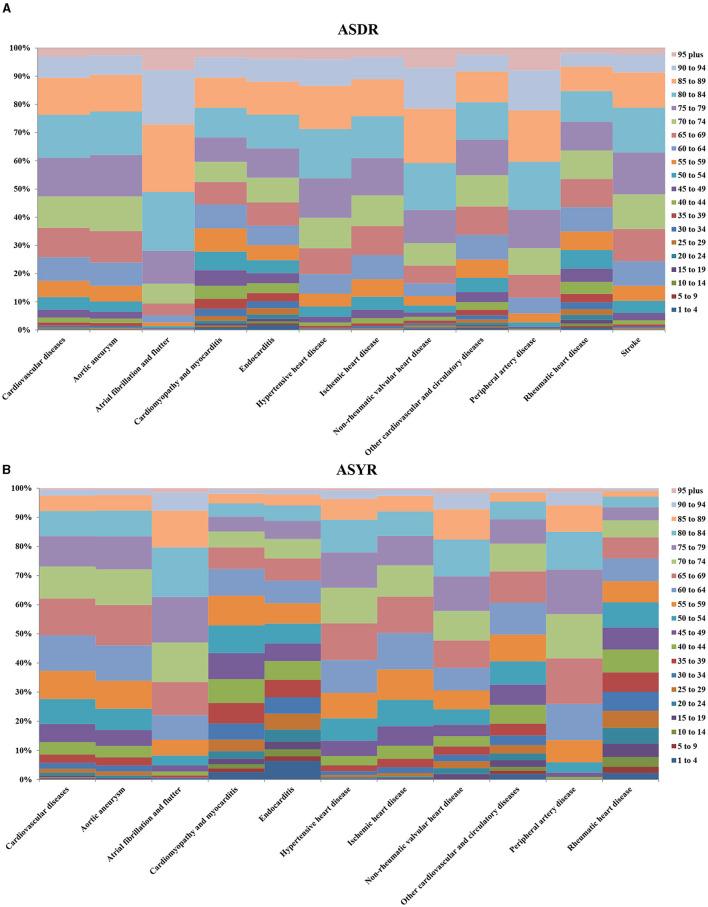
Cardiovascular disease is the leading cause of death worldwide and a major barrier to sustainable human development. The objective of this study was to evaluate the global, sex, age, region, and country-related cardiovascular disease (CVD) burden, as well as the trends, risk factors, and implications for the prevention of CVD. Detailed information from 1990 to 2017, including global, regional, and national rates of CVD, and 11 categories of mortality and disability-adjusted life years (DALYs) were collected from the Global Burden of Disease Study 2017. The time-dependent change in the trends of CVD burdens was evaluated by annual percentage change. More than 17 million people died from CVD in 2017, which was approximately two times as many as cancer, and increased nearly 50% compared with 1990. Ischemic heart disease and stroke accounted for 85% of the total age-standardized death rate (ASDR) of CVD. The ASDR and age-standardized DALYs rate (ASYR) of CVD were 1.5 times greater in men compared with women. People over the age of 50 were especially at risk for developing CVD, with the number of cases and deaths in this age group accounting for more than 90% of all age groups. CVD mortality was related to regional economic development and the social demographic index. In regions with a high economic income or socio-demographic index, there was a greater decline in the ASDR of CVD. The ASDR of CVD in high SDI regions decreased more than 50% from 1990 to 2017. Tobacco use, diets low in whole grains, diets high in sodium, and high systolic blood pressure were the important risk factors related to CVD mortality. CVD remains a major cause of death and chronic disability in all regions of the world. Ischemic heart disease and stroke account for the majority of deaths related to CVD. Although the mortality rate for CVD has declined in recent years from a global perspective, the results of CVD data in 2017 suggest that the mortality and DALYs of CVD varied in different ages, sexes, and countries/regions around the world. Therefore, it is necessary to elucidate the specific characteristics of global CVD burden and establish more effective and targeted prevention strategies.
心血管疾病是全球主要死因,也是人类可持续发展的主要障碍。本研究的目的是评估全球、性别、年龄、地区和国家相关的心血管疾病(CVD)负担,以及CVD的趋势、风险因素和预防意义。从《2017年全球疾病负担研究》收集了1990年至2017年的详细信息,包括全球、区域和国家的CVD发病率,以及11类死亡率和伤残调整生命年(DALYs)。通过年度百分比变化评估CVD负担趋势的时间依赖性变化。2017年,超过1700万人死于CVD,约为癌症死亡人数的两倍,与1990年相比增加了近50%。缺血性心脏病和中风占CVD年龄标准化总死亡率(ASDR)的85%。男性的CVD ASDR和年龄标准化DALYs率(ASYR)是女性的1.5倍。50岁以上人群尤其容易患CVD,该年龄组的病例数和死亡数占所有年龄组的90%以上。CVD死亡率与区域经济发展和社会人口指数有关。在经济收入高或社会人口指数高的地区,CVD的ASDR下降幅度更大。高社会人口指数(SDI)地区的CVD ASDR从1990年到2017年下降了50%以上。吸烟、全谷物含量低的饮食、高钠饮食和高收缩压是与CVD死亡率相关的重要风险因素。CVD仍然是世界所有地区死亡和慢性残疾的主要原因。缺血性心脏病和中风占与CVD相关死亡的大多数。尽管从全球角度来看,近年来CVD死亡率有所下降,但2017年CVD数据结果表明,CVD的死亡率和DALYs在世界各地不同年龄、性别和国家/地区存在差异。因此,有必要阐明全球CVD负担的具体特征,并制定更有效、更有针对性的预防策略。




 Zotero 插件