
抗TNF治疗炎症性风湿性疾病后不良事件的风险。一项荟萃分析。
Risk of Adverse Events After Anti-TNF Treatment for Inflammatory Rheumatological Disease. A Meta-Analysis.
作者信息
Li Ju, Zhang Zhongyuan, Wu Xinhua, Zhou Jie, Meng Deqian, Zhu Ping
机构信息
Department of Rheumatology, The Affiliated Huaian No.1 People's Hospital of Nanjing Medical University, Huaian, China.
Department of Endocrinology, Huaian Hospital of Huaian City, Huaian, China.
出版信息
Front Pharmacol. 2021 Nov 1;12:746396. doi: 10.3389/fphar.2021.746396. eCollection 2021.
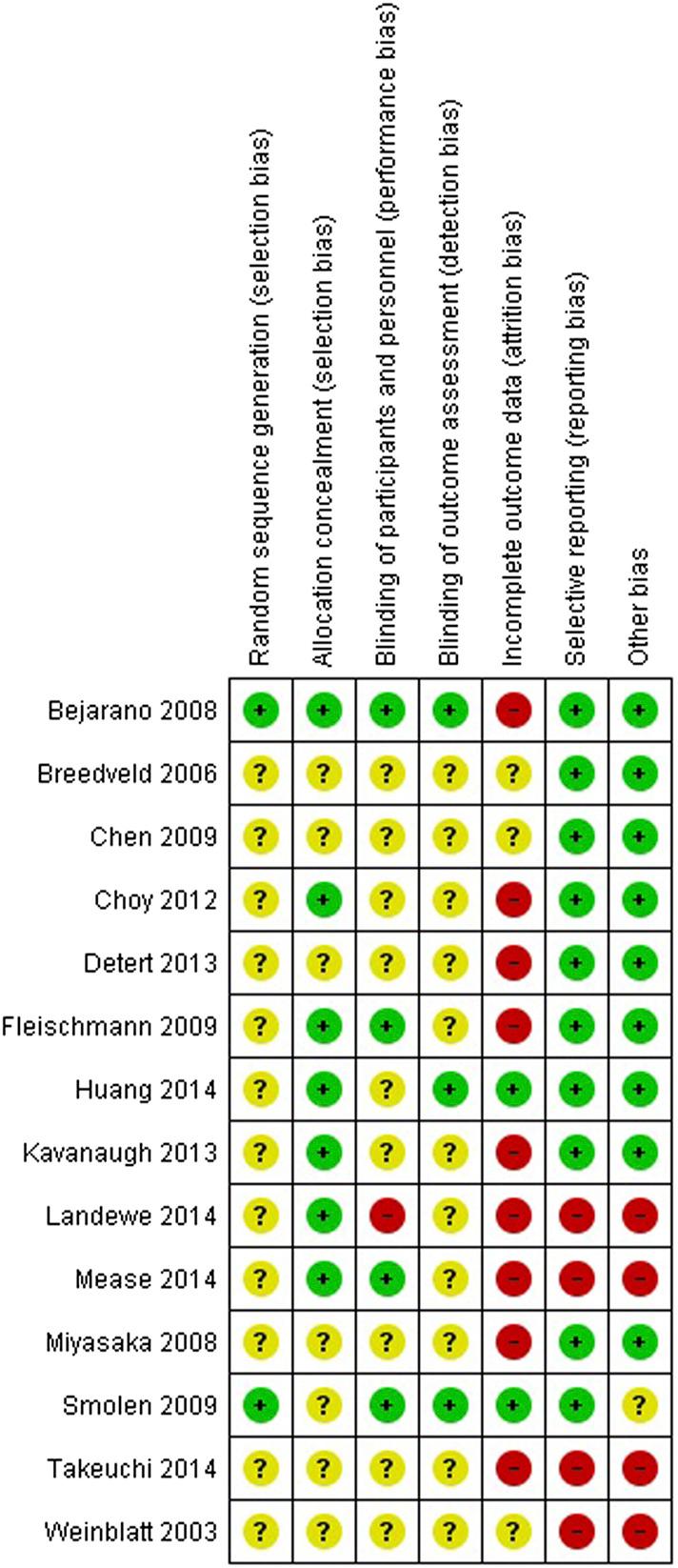
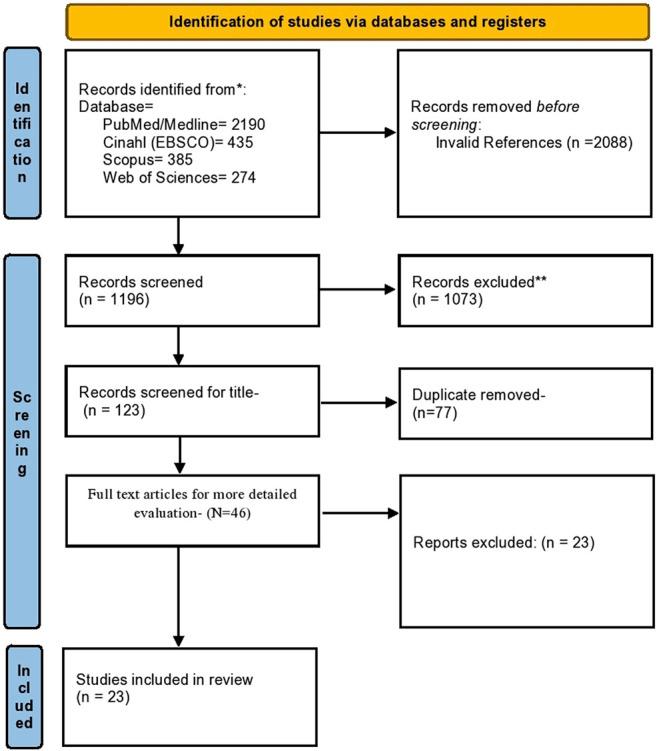
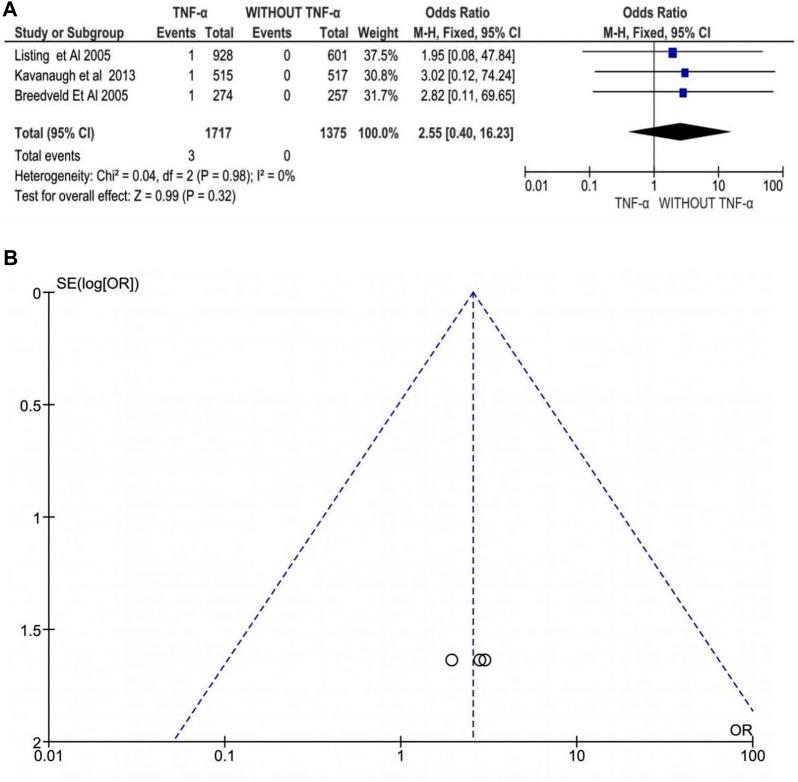
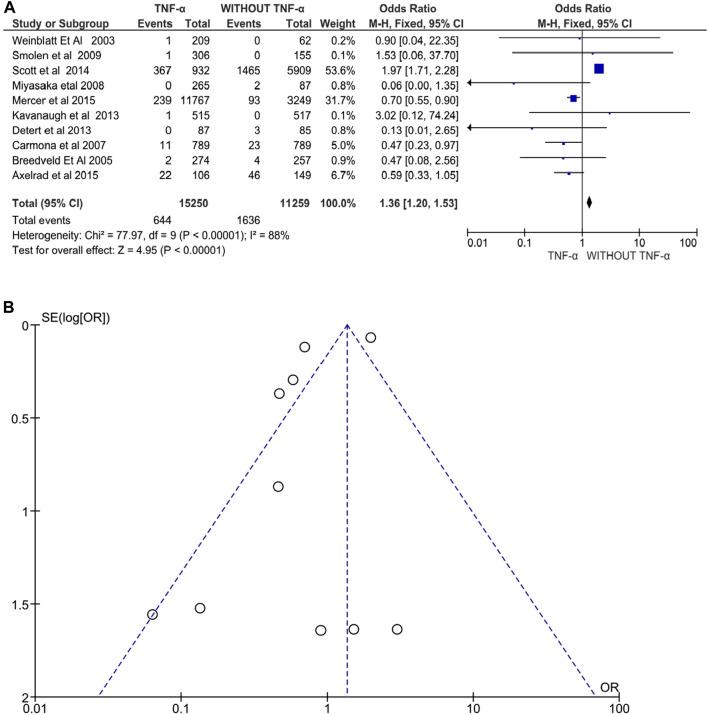
Adalimumab, golimumab, infliximab, certolizumab, and etanercept are five anti-tumor necrosis factor (anti-TNF) medicines that have been approved for use in rheumatology. Apart from their well-established therapeutic usefulness, -it is unclear to what extent -they are linked to an increased risk of various side effects. The present meta-analysis was carried out to assess the risk of infection and other side effects after anti-TNF- α for the treatment of rheumatoid arthritis, psoriatic arthritis, and ankylosing spondylitis. We searched PubMed, Cinahl ( Ebsco), Scopus, and Web of Sciences databases for trials comparing anti-TNF medications to placebo or no therapy in adult patients with rheumatoid arthritis, psoriatic arthritis, or ankylosing spondylitis from August 2006 to August 2020. A total of 23 articles were used for meta-analysis. The Cochrane Collaboration's risk of bias tool was used to assess the methodological quality of the included studies. In addition, a random-effects model was used to calculate the pooled odds ratio, and Forest plots were constructed to determine the risk of infections and cancer following the use of anti-TNF treatment. Treatment with anti-TNFα agents resulted in an increase in the risk of serious infections (OR: 1.72, 95% CI: 1.56-1.90, < 0.00001) and an increase in cancer risk (OR: 1.36, 95% CI: 1.20-1.53, < 0.00001) whereas the risk of developing tuberculosis was not significantly different with anti-TNFα agents versus those without treatment with anti-TNFα agents (OR: 2.55, 95% CI: 0.40-16.23, = 0.32) although the number of studies is limited to make a definitive conclusion. The risk of bias of the included studies was unclear to high across most domains, and there was evidence of publication bias for most outcomes. The present meta-analysis suggests an increased risk of infectious adverse events, including overall adverse events and cancer following anti-TNFα treatment, whereas the risk of tuberculosis was not significantly different. Although anti-TNF agents have shown promise to treat inflammatory conditions, their use should be balanced by the risk-benefit ratio as suggested by the meta-analysis.
阿达木单抗、戈利木单抗、英夫利昔单抗、赛妥珠单抗和依那西普是五种已被批准用于风湿病治疗的抗肿瘤坏死因子(抗TNF)药物。除了其已确立的治疗效用外,目前尚不清楚它们在多大程度上与各种副作用风险的增加有关。开展本荟萃分析以评估抗TNF-α治疗类风湿关节炎、银屑病关节炎和强直性脊柱炎后感染及其他副作用的风险。我们在PubMed、Cinahl(Ebsco)、Scopus和Web of Sciences数据库中检索了2006年8月至2020年8月期间比较抗TNF药物与安慰剂或未治疗的针对类风湿关节炎、银屑病关节炎或强直性脊柱炎成年患者的试验。总共23篇文章用于荟萃分析。采用Cochrane协作网的偏倚风险工具评估纳入研究的方法学质量。此外,使用随机效应模型计算合并比值比,并绘制森林图以确定使用抗TNF治疗后感染和癌症的风险。抗TNFα药物治疗导致严重感染风险增加(比值比:1.72,95%置信区间:1.56 - 1.90,P < 0.00001)以及癌症风险增加(比值比:1.36,95%置信区间:1.20 - 1.53,P < 0.00001),而使用抗TNFα药物与未使用抗TNFα药物治疗相比,患结核病的风险无显著差异(比值比:2.55,95%置信区间:0.40 - 16.23,P = 0.32),尽管研究数量有限,无法得出确定性结论。纳入研究在大多数领域的偏倚风险不明确至高,并且大多数结局存在发表偏倚的证据。本荟萃分析表明,抗TNFα治疗后感染性不良事件风险增加,包括总体不良事件和癌症,而结核病风险无显著差异。尽管抗TNF药物已显示出治疗炎症性疾病的前景,但正如荟萃分析所建议的,其使用应通过风险效益比来权衡。


 Zotero 插件