
英国抗血管内皮生长因子治疗糖尿病黄斑水肿的治疗模式和持续率:一项真实世界研究。
Treatment patterns and persistence rates with anti-vascular endothelial growth factor treatment for diabetic macular oedema in the UK: A real-world study.
机构信息
Centre for Public Health, Queen's University Belfast, Belfast, UK.
Hinchingbrooke Hospital, Huntingdon, UK.
出版信息
Diabet Med. 2022 Apr;39(4):e14746. doi: 10.1111/dme.14746. Epub 2021 Dec 15.
INTRODUCTION
Anti-vascular endothelial growth factors (anti-VEGFs) are considered standard of care therapy for diabetic macular oedema (DME). This study examined treatment patterns and outcomes in patients with DME treated with anti-VEGF therapy.
METHODS
Using anonymized electronic medical record data collected from three UK sites, this retrospective cohort study assessed rates of anti-VEGF intravitreal injections in adults with treatment-naïve DME who received their first treatment between 1 September 2010 and 31 July 2018. The proportion of patients with at least one interval of at least 12 weeks between injections; the distribution of injection intervals; the discontinuation rates; and the number of anti-VEGF injection-, injection-free- and total visits were assessed during the first and second years of treatment.
RESULTS
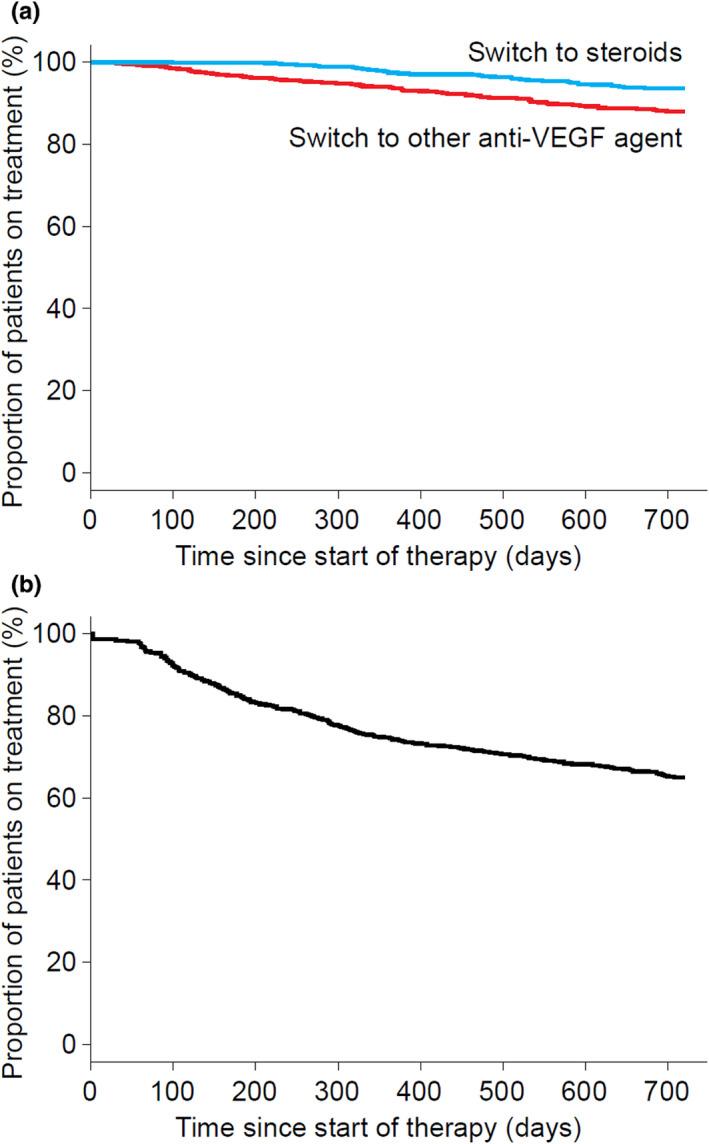
Overall, 1606 patient eyes with DME were included, with no minimum follow-up. During the first and second year of treatment, 63.2% and 73.1% of eyes had at least one anti-VEGF injection interval of at least 12 weeks, respectively. In the first and second years of treatment, the mean (standard deviation) numbers of injections were 7.7 (1.9) and 5.6 (2.2), with 14.2 (5.7) and 13.4 (6.4) total clinic visits, and 6.6 (5.0) and 7.8 (5.8) injection-free visits, respectively. In total, 27.8% of patient eyes discontinued treatment during the first 2 years.
CONCLUSIONS
The high number of clinic visits and high discontinuation rates demonstrate a significant unmet need for a treatment to enable sustainable extended injection intervals, while maintaining visual acuity. This could improve patient adherence and health-related quality of life for patients with DME.
简介
抗血管内皮生长因子(anti-VEGFs)被认为是糖尿病黄斑水肿(DME)的标准治疗方法。本研究考察了接受抗 VEGF 治疗的 DME 患者的治疗模式和结局。
方法
本回顾性队列研究使用来自英国三个地点的匿名电子病历数据,评估了 2010 年 9 月 1 日至 2018 年 7 月 31 日期间首次接受治疗的治疗初治 DME 成年患者接受抗 VEGF 玻璃体内注射的比率。评估了至少 12 周注射间隔的患者比例、注射间隔分布、停药率以及治疗的第一年和第二年的抗 VEGF 注射次数、无注射次数和总就诊次数。
结果
总体而言,纳入了 1606 只 DME 患者眼,无最低随访。在治疗的第一年和第二年,分别有 63.2%和 73.1%的眼至少有一次 12 周以上的抗 VEGF 注射间隔。在治疗的第一年和第二年,平均(标准差)注射次数分别为 7.7(1.9)和 5.6(2.2),总就诊次数分别为 14.2(5.7)和 13.4(6.4),无注射就诊次数分别为 6.6(5.0)和 7.8(5.8)。在总患者眼中,有 27.8%在治疗的前 2 年内停止了治疗。
结论
就诊次数多和高停药率表明,需要一种治疗方法来实现可持续的延长注射间隔,同时保持视力,这方面存在巨大的未满足需求。这可能会提高 DME 患者的依从性和健康相关生活质量。

 Zotero 插件