
长新冠疫情对压力韧性和心理健康的影响:跨越波次的批判性综述。
The impact of the prolonged COVID-19 pandemic on stress resilience and mental health: A critical review across waves.
机构信息
Section of Psychiatry, Department of Medical Sciences and Public Health, University of Cagliari, Cagliari, Italy; Unit of Clinical Psychiatry, University Hospital Agency of Cagliari, Cagliari, Italy; Department of Pharmacology, Dalhousie University, Halifax, NS, Abbreviation.
Department of Psychiatry (GGZ inGeest), Amsterdam UMC (location VUmc), Vrije University, Amsterdam Public Health and Amsterdam Neuroscience research institutes, Amsterdam, Netherlands.
出版信息
Eur Neuropsychopharmacol. 2022 Feb;55:22-83. doi: 10.1016/j.euroneuro.2021.10.864. Epub 2021 Oct 29.
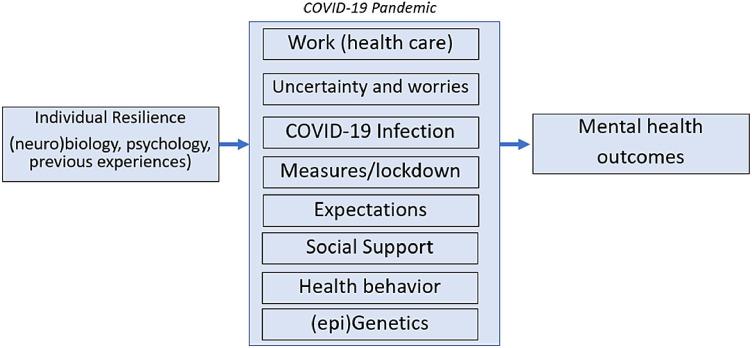
The global public health crisis caused by COVID-19 has lasted longer than many of us would have hoped and expected. With its high uncertainty and limited control, the COVID-19 pandemic has undoubtedly asked a lot from all of us. One important central question is: how resilient have we proved in face of the unprecedented and prolonged coronavirus pandemic? There is a vast and rapidly growing literature that has examined the impact of the pandemic on mental health both on the shorter (2020) and longer (2021) term. This not only concerns pandemic-related effects on resilience in the general population, but also how the pandemic has challenged stress resilience and mental health outcomes across more specific vulnerable population groups: patients with a psychiatric disorder, COVID-19 diagnosed patients, health care workers, children and adolescents, pregnant women, and elderly people. It is challenging to keep up to date with, and interpret, this rapidly increasing scientific literature. In this review, we provide a critical overview on how the COVID-19 pandemic has impacted mental health and how human stress resilience has been shaped by the pandemic on the shorter and longer term. The vast literature is dominated by a wealth of data which are, however, not always of the highest quality and heavily depend on online and self-report surveys. Nevertheless, it appears that we have proven surprisingly resilient over time, with fast recovery from COVID-19 measures. Still, vulnerable groups such as adolescents and health care personnel that have been severely impacted by the COVID-19 pandemic do exist. Large interindividual differences exist, and for future pandemics there is a clear need to comprehensively and integratively assess resilience from the start to provide personalized help and interventions tailored to the specific needs for vulnerable groups.
由 COVID-19 引发的全球公共卫生危机持续时间之长,超出了我们许多人的预期。由于其高度的不确定性和有限的控制,COVID-19 大流行无疑给我们所有人带来了很大的挑战。一个重要的核心问题是:面对前所未有的、长期的冠状病毒大流行,我们的适应能力如何?有大量且快速增长的文献研究了大流行对短期(2020 年)和长期(2021 年)心理健康的影响。这不仅涉及大流行对普通人群适应力的影响,还涉及大流行如何挑战更具体的弱势群体的抗压能力和心理健康结果:患有精神疾病的患者、COVID-19 确诊患者、医护人员、儿童和青少年、孕妇和老年人。要跟上并解释这些快速增长的科学文献是具有挑战性的。在这篇综述中,我们批判性地概述了 COVID-19 大流行如何影响心理健康,以及人类的抗压能力如何在短期和长期内受到大流行的影响。大量文献主要由大量数据组成,但这些数据并不总是质量最高的,并且严重依赖在线和自我报告调查。然而,随着 COVID-19 措施的快速实施,我们的适应能力似乎在逐渐增强,这令人惊讶。尽管如此,仍然存在一些弱势群体,如青少年和深受 COVID-19 大流行影响的医护人员。个体之间存在很大差异,对于未来的大流行,显然需要从一开始就全面、综合地评估适应能力,为弱势群体提供个性化的帮助和干预措施,以满足其特定需求。
 Zotero 插件