
高温热处理中微生物失活及丙烯酰胺生成的动力学
Dynamics of Microbial Inactivation and Acrylamide Production in High-Temperature Heat Treatments.
作者信息
Peñalver-Soto Jose Lucas, Garre Alberto, Aznar Arantxa, Fernández Pablo S, Egea Jose A
机构信息
Departamento de Ingeniería Agronómica, Instituto de Biotecnología Vegetal, Universidad Politécnica de Cartagena (ETSIA), Paseo Alfonso XIII, 48, 30203 Cartagena, Spain.
Centro de Edafología y Biología Aplicada del Segura (CEBAS-CSIC), Campus Universitario de Espinardo, 30100 Murcia, Spain.
出版信息
Foods. 2021 Oct 21;10(11):2535. doi: 10.3390/foods10112535.
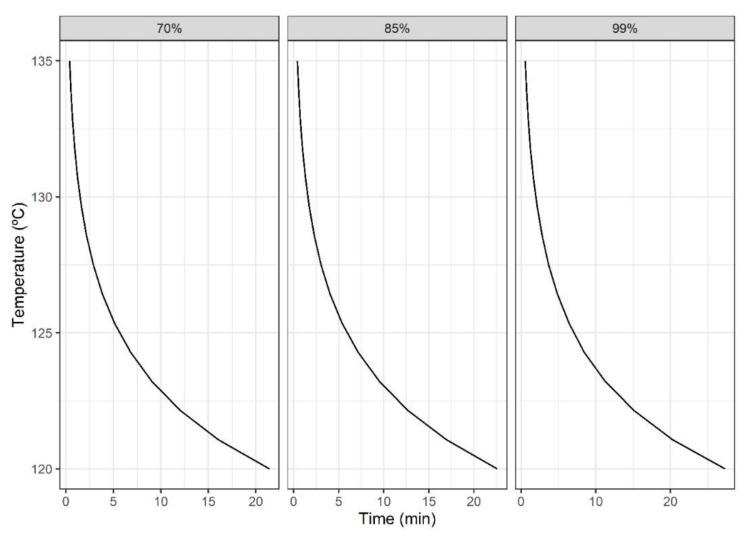
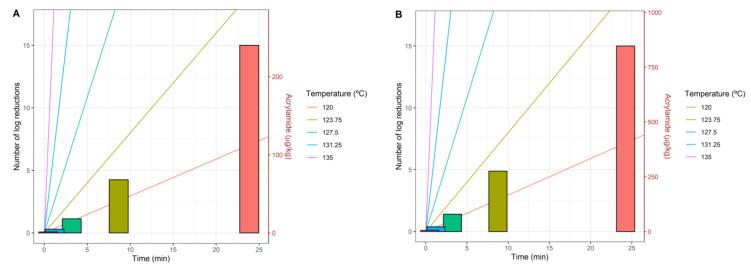
In food processes, optimizing processing parameters is crucial to ensure food safety, maximize food quality, and minimize the formation of potentially toxigenic compounds. This research focuses on the simultaneous impacts that severe heat treatments applied to food may have on the formation of harmful chemicals and on microbiological safety. The case studies analysed consider the appearance/synthesis of acrylamide after a sterilization heat treatment for two different foods: pureed potato and prune juice, using as an indicator. It presents two contradictory situations: on the one hand, the application of a high-temperature treatment to a low acid food with spores causes their inactivation, reaching food safety and stability from a microbiological point of view. On the other hand, high temperatures favour the appearance of acrylamide. In this way, the two objectives (microbiological safety and acrylamide production) are opposed. In this work, we analyse the effects of high-temperature thermal treatments (isothermal conditions between 120 and 135 °C) in food from two perspectives: microbiological safety/stability and acrylamide production. After analysing both objectives simultaneously, it is concluded that, contrary to what is expected, heat treatments at higher temperatures result in lower acrylamide production for the same level of microbial inactivation. This is due to the different dynamics and sensitivities of the processes at high temperatures. These results, as well as the presented methodology, can be a basis of analysis for decision makers to design heat treatments that ensure food safety while minimizing the amount of acrylamide (or other harmful substances) produced.
在食品加工过程中,优化加工参数对于确保食品安全、最大化食品质量以及最小化潜在产毒化合物的形成至关重要。本研究聚焦于对食品进行的严苛热处理可能对有害化学物质形成和微生物安全性产生的同时影响。所分析的案例研究以两种不同食品(土豆泥和西梅汁)经过杀菌热处理后丙烯酰胺的出现/合成为指标。它呈现出两种相互矛盾的情况:一方面,对含有芽孢的低酸食品进行高温处理会使芽孢失活,从微生物学角度实现食品安全和稳定性。另一方面,高温有利于丙烯酰胺的出现。这样一来,两个目标(微生物安全性和丙烯酰胺产生)相互对立。在这项工作中,我们从微生物安全性/稳定性和丙烯酰胺产生这两个角度分析高温热处理(120至135°C等温条件)对食品的影响。同时分析这两个目标后得出结论,与预期相反,在相同程度的微生物失活情况下,较高温度的热处理会导致丙烯酰胺产生量更低。这是由于高温下各过程的动态变化和敏感性不同。这些结果以及所呈现的方法可为决策者设计既能确保食品安全又能使丙烯酰胺(或其他有害物质)产生量最小化的热处理提供分析依据。




 Zotero 插件