
胸外科手术患者的应对方式、焦虑及疼痛强度
Coping, Anxiety, and Pain Intensity in Patients Requiring Thoracic Surgery.
作者信息
Hasan Elisei Moise, Calma Crenguta Livia, Tudor Anca, Oancea Cristian, Tudorache Voicu, Petrache Ioan Adrian, Tudorache Emanuela, Papava Ion
机构信息
Clinic of Thoracic Surgery, Emergency Clinical Municipal Hospital Timișoara, Gheorghe Dima Street No. 5, 300079 Timișoara, Romania.
University of Medicine and Pharmacy Timișoara, Eftimie Murgu Square No. 2, 300041 Timișoara, Romania.
出版信息
J Pers Med. 2021 Nov 18;11(11):1221. doi: 10.3390/jpm11111221.
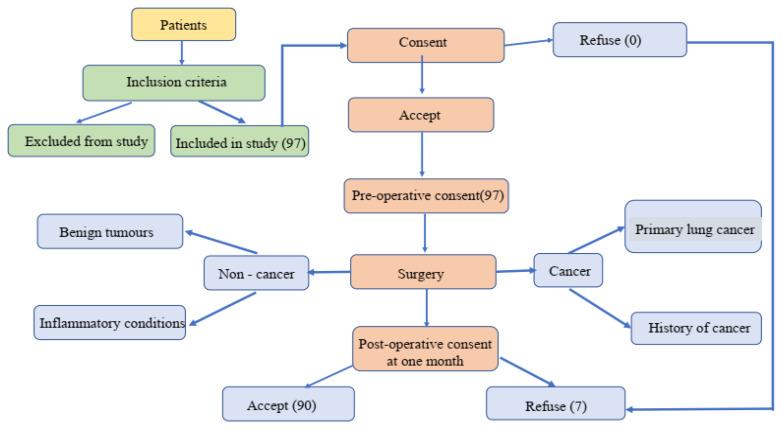
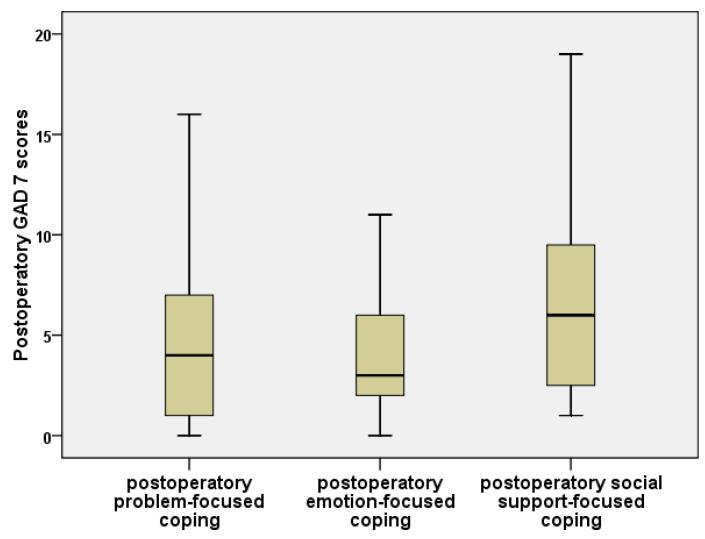
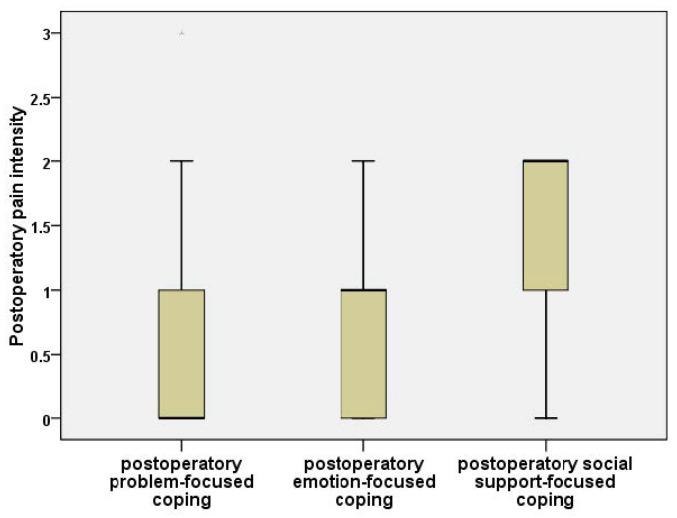
Stress, anxiety, and post-surgical chest pain are common problems among patients with thoracic surgical pathology. The way in which psychological distress is managed-the coping style-can influence the postsurgical evolution and quality of life of patients. In our study, we monitored the influence of coping style on patients' anxiety and the intensity of post-operative chest pain. We conducted a cross-sectional study on 90 subjects with thoracic surgical pathology. One month after their surgeries, patients completed the following scales and questionnaires, translated, adapted, and validated for the Romanian population: COPE scale inventory, Generalized Anxiety Disorder-7 Questionnaire, McGill Pain Questionnaire, and Numeric Pain Rating Scale. Anxiety (evaluated using the Generalized Anxiety Disorder-7 Questionnaire) and postoperative thoracic pain intensity (evaluated by means of the Numeric Pain Rating Scale, Number of Words Chosen, and McGill Pain Questionnaire) were significantly higher in patients exhibiting social-focused coping than in patients presenting emotion-focused or problem-focused coping as their main coping style (Kruskal-Wallis, = 0.028, = 0.022, = 0.042, = 0.007). In our study, there were no differences observed in pain intensity relative to level of anxiety. Coping style is an important concept in the management of anxiety and pain experienced by patients undergoing chest surgery. Therefore, a multidisciplinary approach should be considered in clinical practice.
压力、焦虑和术后胸痛是胸外科病理患者常见的问题。心理困扰的应对方式——即应对风格——会影响患者的术后恢复进程和生活质量。在我们的研究中,我们监测了应对风格对患者焦虑及术后胸痛强度的影响。我们对90名胸外科病理患者进行了一项横断面研究。术后一个月,患者完成了以下经翻译、改编并针对罗马尼亚人群验证的量表和问卷:应对方式量表、广泛性焦虑障碍-7问卷、麦吉尔疼痛问卷和数字疼痛评分量表。与以情绪聚焦或问题聚焦作为主要应对风格的患者相比,以社交聚焦应对为主的患者焦虑(使用广泛性焦虑障碍-7问卷评估)及术后胸痛强度(通过数字疼痛评分量表、所选词汇数量和麦吉尔疼痛问卷评估)显著更高(Kruskal-Wallis检验,P = 0.028,P = 0.022,P = 0.042,P = 0.007)。在我们的研究中,未观察到疼痛强度与焦虑水平之间存在差异。应对风格是胸部手术患者焦虑和疼痛管理中的一个重要概念。因此,临床实践中应考虑采用多学科方法。

 Zotero 插件