
高强度间歇训练可改善脑缺血小鼠的身体机能、防止肌肉损失,并调节肌肉组织中巨噬细胞介导致炎作用。
High-Intensity Interval Training Improves Physical Function, Prevents Muscle Loss, and Modulates Macrophage-Mediated Inflammation in Skeletal Muscle of Cerebral Ischemic Mice.
机构信息
Department of Rehabilitation Medicine, Huashan Hospital, Fudan University, Shanghai, China.
出版信息
Mediators Inflamm. 2021 Nov 20;2021:1849428. doi: 10.1155/2021/1849428. eCollection 2021.
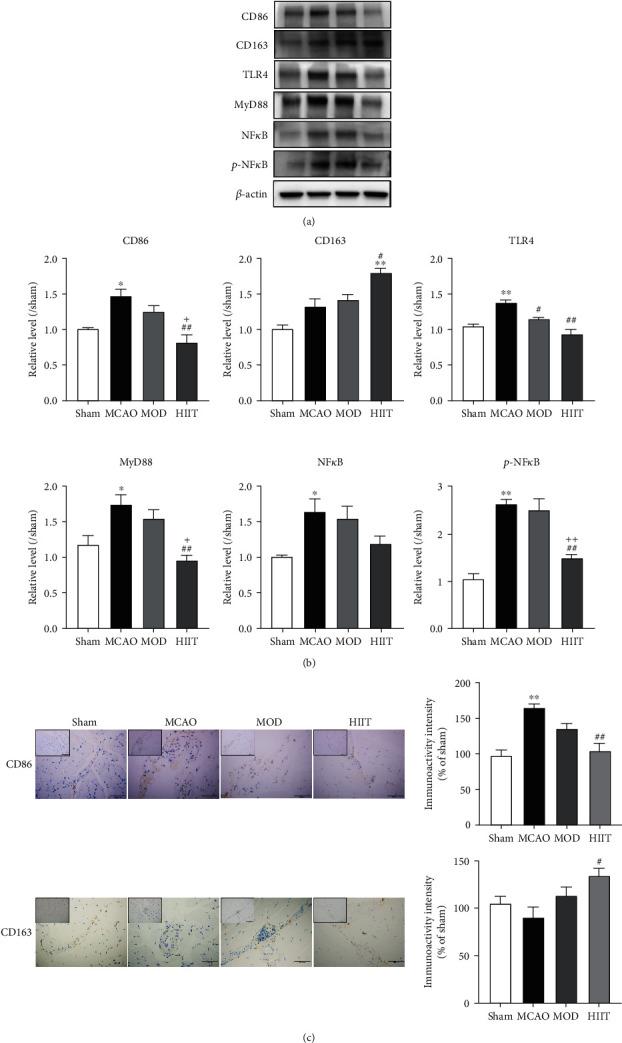
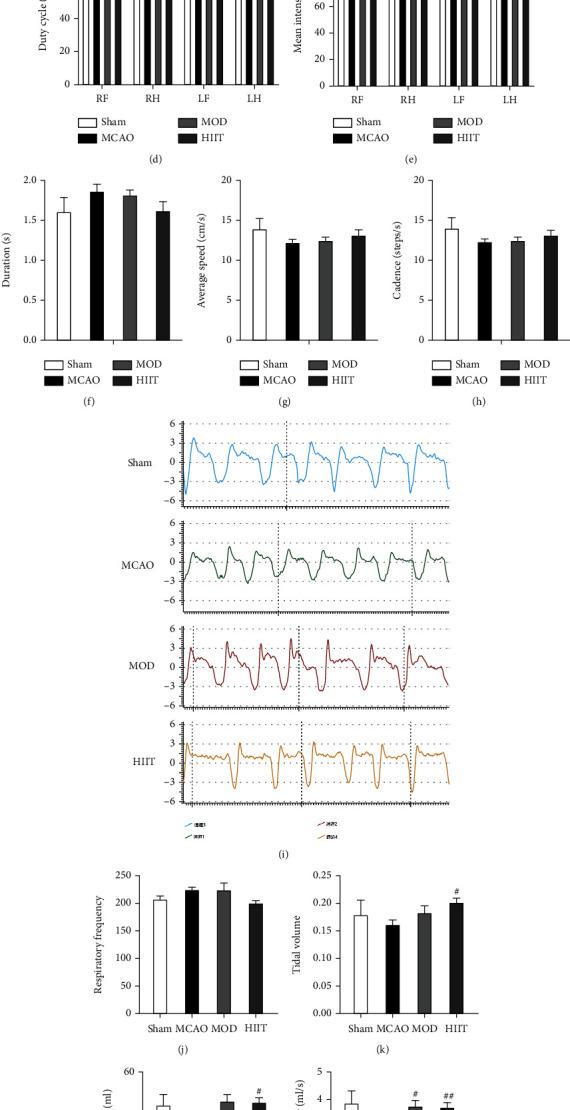
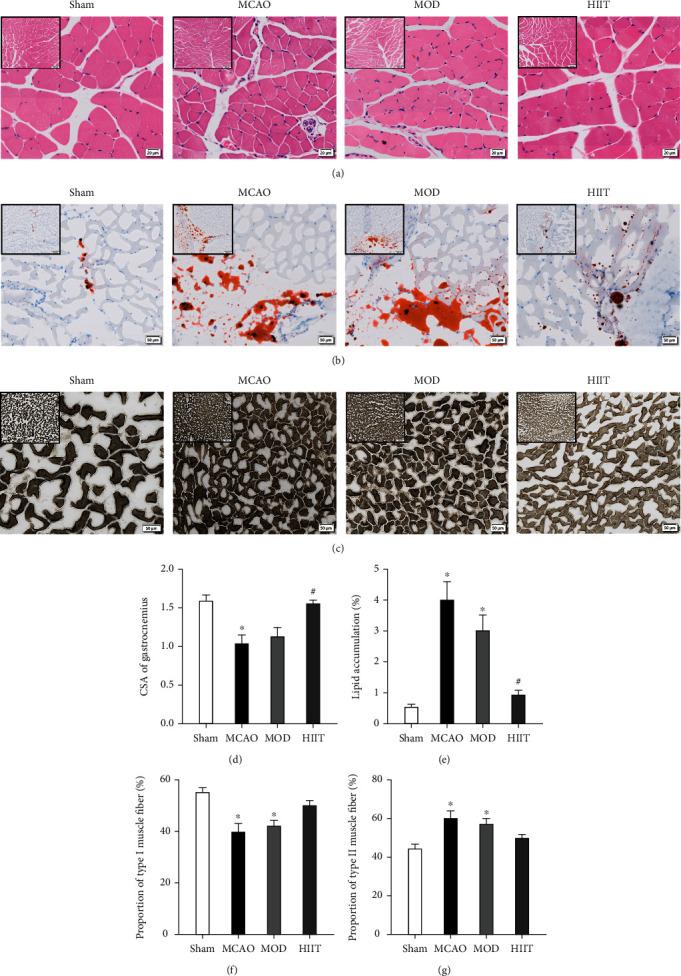
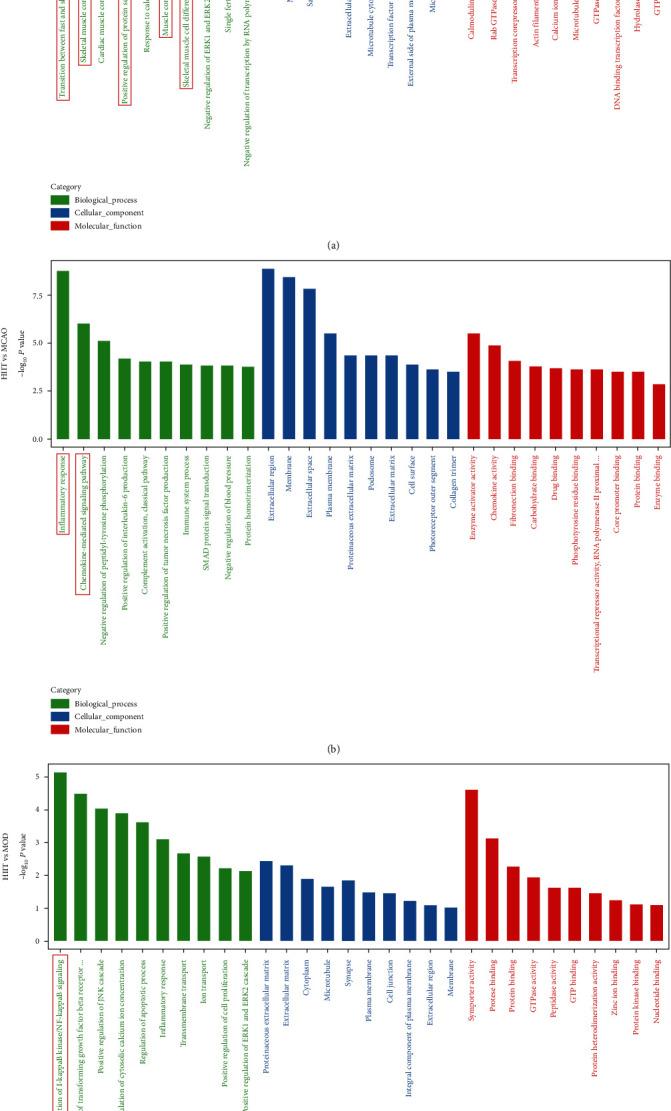
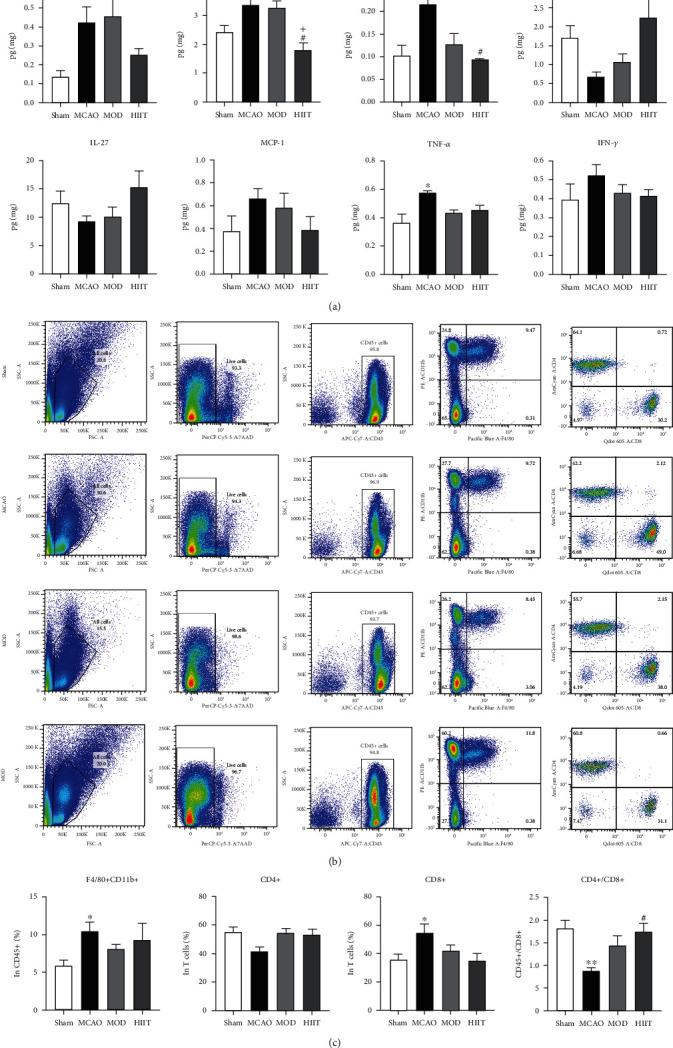
Although skeletal muscle is the main effector organ largely accounting for disability after stroke, considerably less attention is paid to the secondary abnormalities of stroke-related skeletal muscle loss. It is necessary to explore the mechanism of muscle atrophy after stroke and further develop effective rehabilitation strategy. Here, we evaluated the effects of high-intensity interval (HIIT) versus moderate-intensity aerobic training (MOD) on physical function, muscle mass, and stroke-related gene expression profile of skeletal muscle. After the model of middle cerebral artery occlusion (MCAO) was successfully made, the blood lactate threshold corresponding speed ( ) and maximum speed ( ) were measured. Different intensity training protocols (MOD < ; < HIIT < ) were carried out for 3 weeks beginning at 7 days after MCAO in the MOD and HIIT groups, respectively. We found that both HIIT and MOD prevented stroke-related gastrocnemius muscle mass loss in MCAO mice. HIIT was more beneficial than MOD for improvements in muscle strength, motor coordination, walking competency, and cardiorespiratory fitness. Furthermore, HIIT was superior to MOD in terms of reducing lipid accumulation, levels of IL-1 and IL-6 in paretic gastrocnemius, and improving peripheral blood CD4+/CD8+ T cell ratio, level of IL-10. Additionally, RNA-seq analysis revealed that the differentially expressed genes among HIIT, MOD, and MCAO groups were highly associated with signaling pathways involved in inflammatory response, more specifically the I-kappaB kinase/NF-kappaB signaling. Following the outcome, we further investigated the infiltrating immune cells abundant in paretic muscles. The results showed that HIIT modulated macrophage activation by downregulating CD86+ (M1 type) macrophages and upregulating CD163+ (M2 type) macrophages via inhibiting the TLR4/MyD88/NFB signaling pathway and exerting an anti-inflammatory effect in paretic skeletal muscle. It is expected that these data will provide novel insights into the mechanisms and potential targets underlying muscle wasting in stroke.
尽管骨骼肌是导致中风后残疾的主要效应器官,但人们对与中风相关的骨骼肌丢失的次要异常关注较少。有必要探索中风后肌肉萎缩的机制,并进一步开发有效的康复策略。在这里,我们评估了高强度间歇训练(HIIT)与中等强度有氧运动(MOD)对骨骼肌物理功能、肌肉质量和与中风相关的基因表达谱的影响。成功建立大脑中动脉闭塞(MCAO)模型后,测量了相应的血乳酸阈速度()和最大速度()。在 MCAO 后 7 天,MOD 和 HIIT 组分别开始进行 3 周不同强度的训练方案(MOD < ; < HIIT < )。结果发现,HIIT 和 MOD 均可防止 MCAO 小鼠与中风相关的比目鱼肌质量损失。与 MOD 相比,HIIT 更有利于改善肌肉力量、运动协调、行走能力和心肺功能。此外,HIIT 在减少脂肪堆积、瘫痪比目鱼肌中 IL-1 和 IL-6 水平以及改善外周血 CD4+/CD8+T 细胞比值、IL-10 水平方面优于 MOD。此外,RNA-seq 分析表明,HIIT、MOD 和 MCAO 组之间差异表达的基因与参与炎症反应的信号通路高度相关,更具体地说,与 I-kappaB 激酶/NF-kappaB 信号通路相关。根据结果,我们进一步研究了富含瘫痪肌肉的浸润免疫细胞。结果表明,HIIT 通过抑制 TLR4/MyD88/NFB 信号通路,下调 CD86+(M1 型)巨噬细胞,上调 CD163+(M2 型)巨噬细胞,调节巨噬细胞的激活,发挥抗炎症作用。这预计将为中风后肌肉减少的机制和潜在靶点提供新的见解。



 Zotero 插件