
基于证据的网络建模,用于模拟不同营养和促炎环境下髓核多细胞活性
Evidence-Based Network Modelling to Simulate Nucleus Pulposus Multicellular Activity in Different Nutritional and Pro-Inflammatory Environments.
作者信息
Baumgartner L, Sadowska A, Tío L, González Ballester M A, Wuertz-Kozak K, Noailly J
机构信息
BCN MedTech, Department of Information and Communication Technologies, Universitat Pompeu Fabra, Barcelona, Spain.
Department of Health Sciences and Technology, Institute for Biomechanics, ETH Zurich, Zurich, Switzerland.
出版信息
Front Bioeng Biotechnol. 2021 Nov 10;9:734258. doi: 10.3389/fbioe.2021.734258. eCollection 2021.
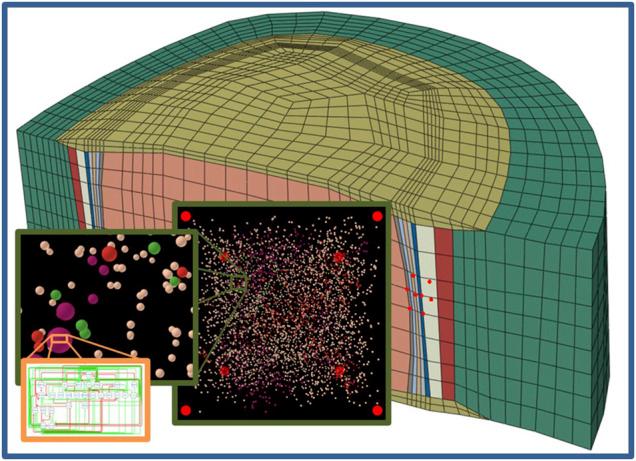
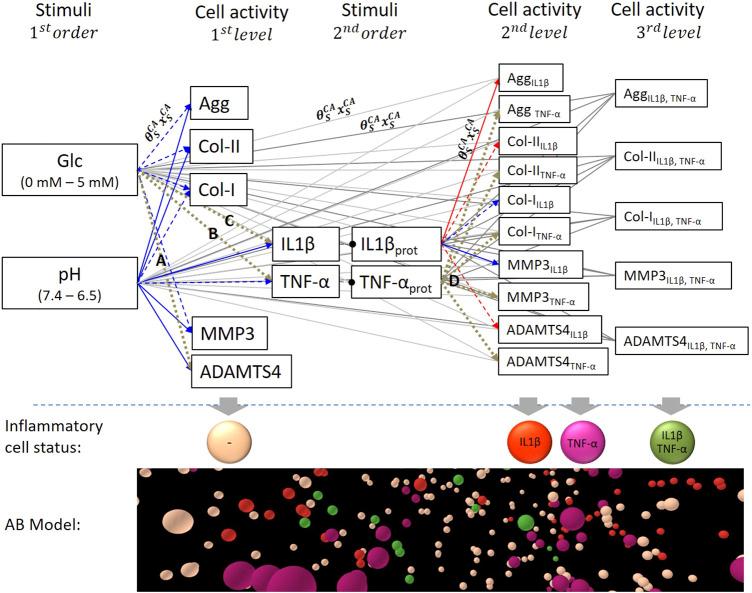
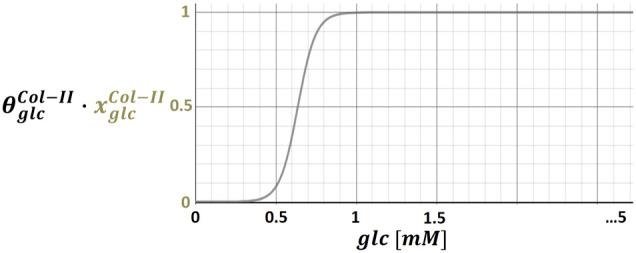
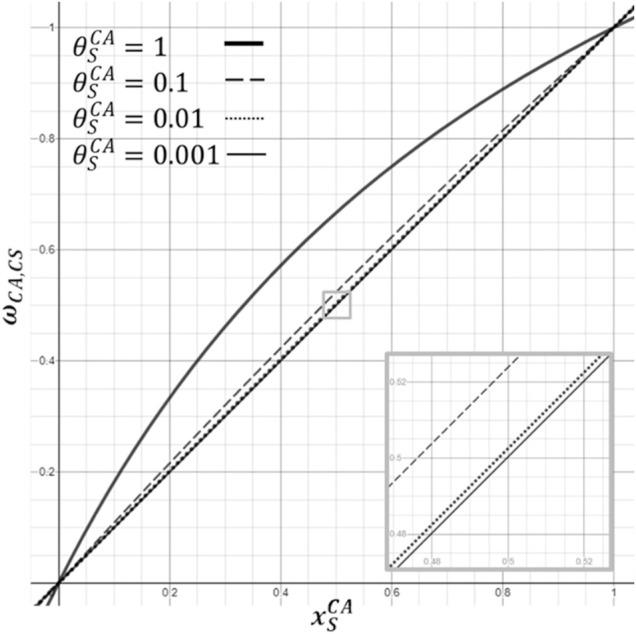
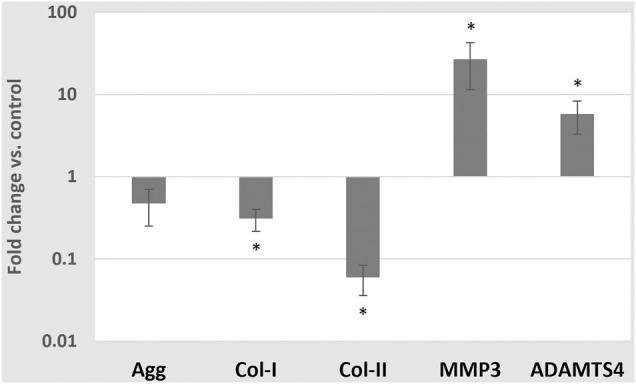
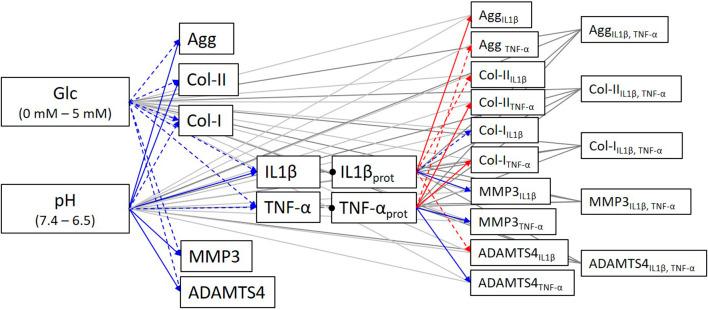
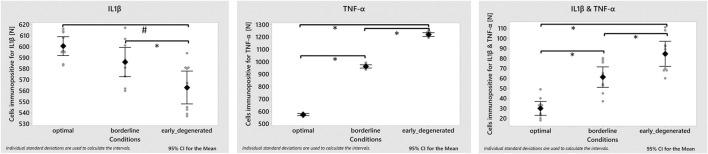
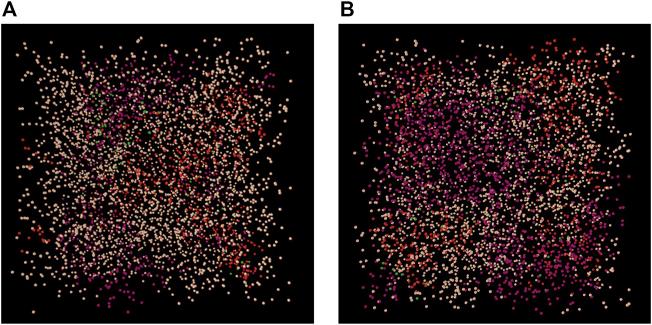
Initiation of intervertebral disc degeneration is thought to be biologically driven. This reflects a process, where biochemical and mechanical stimuli affect cell activity (CA) that compromise the tissue strength over time. Experimental research enhanced our understanding about the effect of such stimuli on different CA, such as protein synthesis or mRNA expression. However, it is still unclear how cells respond to their native environment that consists of a "cocktail" of different stimuli that might locally vary. This work presents an interdisciplinary approach of experimental and research to approximate Nucleus Pulposus CA within multifactorial biochemical environments. Thereby, the biochemical key stimuli glucose, pH, and the proinflammatory cytokines TNF-α and IL1β were considered that were experimentally shown to critically affect CA. To this end, a Nucleus Pulposus multicellular system was modelled. It integrated experimental findings from studies of human or bovine Nucleus Pulposus cells, to relate the individual effects of targeted stimuli to alterations in CA. Unknown stimulus-CA relationships were obtained through own experimental 3D cultures of bovine Nucleus Pulposus cells in alginate beads. Translation of experimental findings into suitable parameters for network modelling approaches was achieved thanks to a new numerical approach to estimate the individual sensitivity of a CA to each stimulus type. Hence, the effect of each stimulus type on a specific CA was assessed and integrated to approximate a multifactorial stimulus environment. Tackled CA were the mRNA expressions of Aggrecan, Collagen types I & II, MMP3, and ADAMTS4. CA was assessed for four different proinflammatory cell states; non-inflamed and inflamed for IL1β, TNF-α or both IL1β&TNF-α. Inflamed cell clusters were eventually predicted in a multicellular 3D agent-based model. Experimental results showed that glucose had no significant impact on proinflammatory cytokine or ADAMTS4 mRNA expression, whereas TNF-α caused a significant catabolic shift in most explored CA. results showed that the presented methodology to estimate the sensitivity of a CA to a stimulus type importantly improved qualitative model predictions. However, more stimuli and/or further experimental knowledge need to be integrated, especially regarding predictions about the possible progression of inflammatory environments under adverse nutritional conditions. Tackling the multicellular level is a new and promising approach to estimate manifold responses of intervertebral disc cells. Such a top-down high-level network modelling approach allows to obtain information about relevant stimulus environments for a specific CA and could be shown to be suitable to tackle complex biological systems, including different proinflammatory cell states. The development of this methodology required a close interaction with experimental research. Thereby, specific experimental needs were derived from systematic approaches and obtained results were directly used to enhance model predictions, which reflects a novelty in this research field. Eventually, the presented methodology provides modelling solutions suitable for multiscale approaches to contribute to a better understanding about dynamics over multiple spatial scales. Future work should focus on an amplification of the stimulus environment by integrating more key relevant stimuli, such as mechanical loading parameters, in order to better approximate native physiological environments.
椎间盘退变的起始被认为是由生物学因素驱动的。这反映了一个过程,即生化和机械刺激会影响细胞活性(CA),随着时间的推移,这种影响会损害组织强度。实验研究增进了我们对这类刺激对不同细胞活性(如蛋白质合成或mRNA表达)影响的理解。然而,目前仍不清楚细胞如何应对由多种可能局部变化的刺激组成的“混合”天然环境。这项工作提出了一种跨学科的实验和研究方法,以在多因素生化环境中近似髓核细胞活性。因此,考虑了生化关键刺激因素葡萄糖、pH值以及促炎细胞因子TNF-α和IL1β,实验表明这些因素会对细胞活性产生关键影响。为此,建立了一个髓核多细胞系统模型。该模型整合了来自人类或牛髓核细胞研究的实验结果,以将靶向刺激的个体效应与细胞活性的变化联系起来。通过在藻酸盐珠中对牛髓核细胞进行新的实验性三维培养,获得了未知的刺激-细胞活性关系。由于一种新的数值方法能够估计细胞活性对每种刺激类型的个体敏感性,从而将实验结果转化为适用于网络建模方法的合适参数。因此,评估并整合了每种刺激类型对特定细胞活性的影响,以近似多因素刺激环境。所研究的细胞活性包括聚集蛋白聚糖、I型和II型胶原蛋白、MMP3和ADAMTS4的mRNA表达。针对四种不同的促炎细胞状态评估细胞活性;未发炎以及IL1β、TNF-α或IL1β和TNF-α两者引发的炎症状态。最终在基于多细胞三维智能体的模型中预测了炎症细胞簇。实验结果表明,葡萄糖对促炎细胞因子或ADAMTS4的mRNA表达没有显著影响,而TNF-α在大多数所研究的细胞活性中引起了显著的分解代谢转变。结果表明,所提出的估计细胞活性对刺激类型敏感性的方法显著改善了定性模型预测。然而,需要整合更多的刺激因素和/或进一步的实验知识,特别是关于在不良营养条件下炎症环境可能进展的预测。研究多细胞水平是估计椎间盘细胞多种反应的一种新的有前景的方法。这种自上而下的高级网络建模方法能够获取特定细胞活性相关刺激环境的信息,并且已证明适用于处理包括不同促炎细胞状态在内的复杂生物系统。该方法的开发需要与实验研究密切互动。由此,从系统方法中得出了特定的实验需求,并且所获得的结果直接用于增强模型预测,这体现了该研究领域的创新性。最终,所提出的方法提供了适用于多尺度方法的建模解决方案,有助于更好地理解多个空间尺度上的动态变化。未来的工作应集中于通过整合更多关键相关刺激因素(如机械负荷参数)来扩展刺激环境,以便更好地近似天然生理环境。




 Zotero 插件