
癌症研究中使用的临床前体外模型:一项全球调查的结果。
Pre-Clinical In Vitro Models Used in Cancer Research: Results of a Worldwide Survey.
作者信息
Martinez-Pacheco Sarai, O'Driscoll Lorraine
机构信息
School of Pharmacy and Pharmaceutical Sciences, Panoz Institute, Trinity College Dublin, D02 PN40 Dublin, Ireland.
Trinity Biomedical Sciences Institute, Trinity College Dublin, D02 R590 Dublin, Ireland.
出版信息
Cancers (Basel). 2021 Nov 30;13(23):6033. doi: 10.3390/cancers13236033.
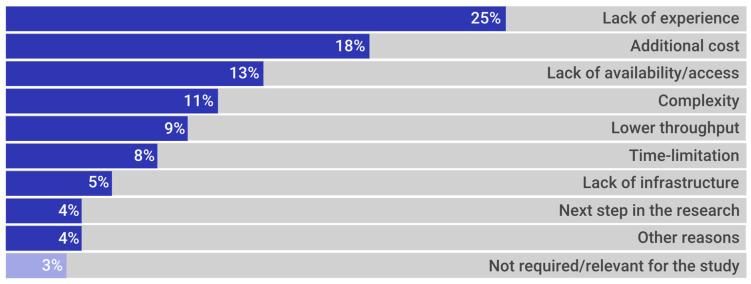
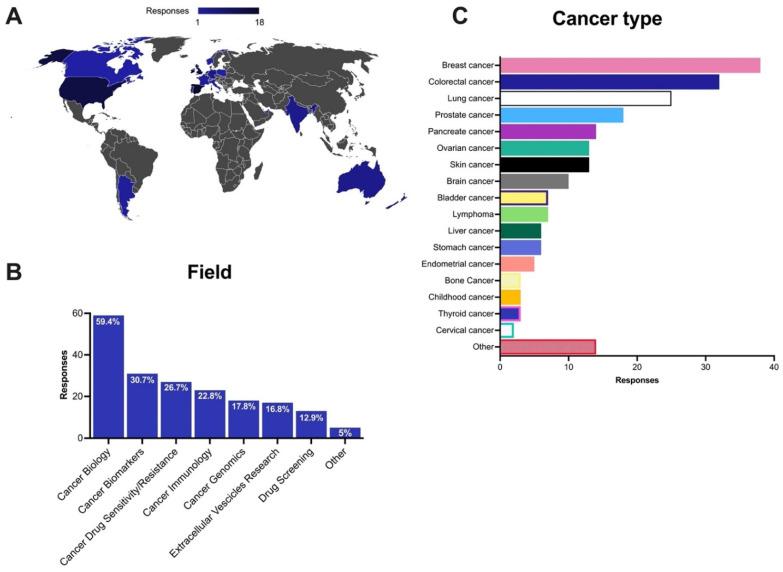
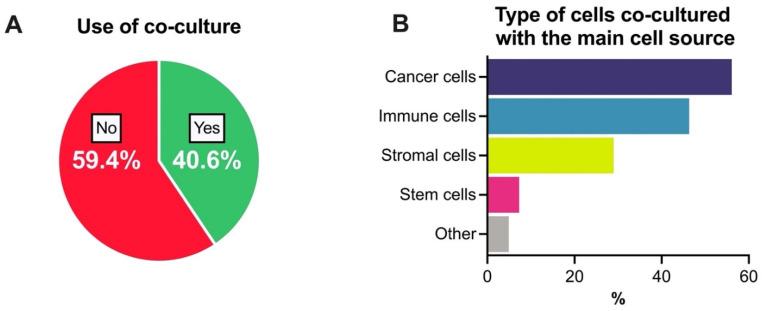
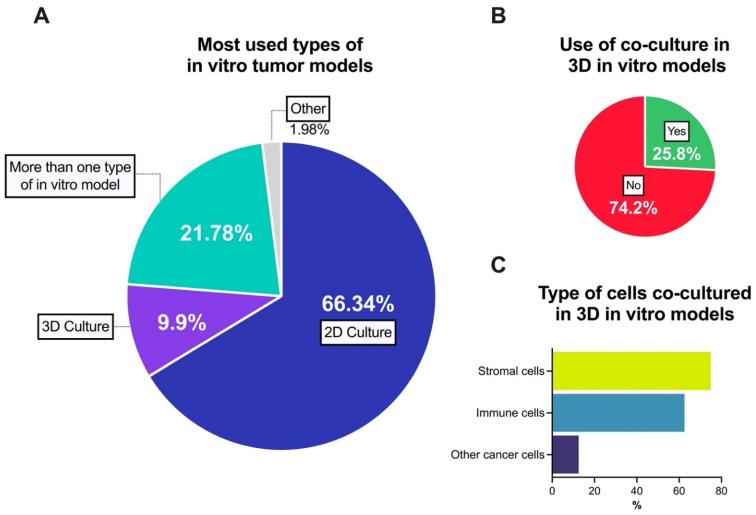
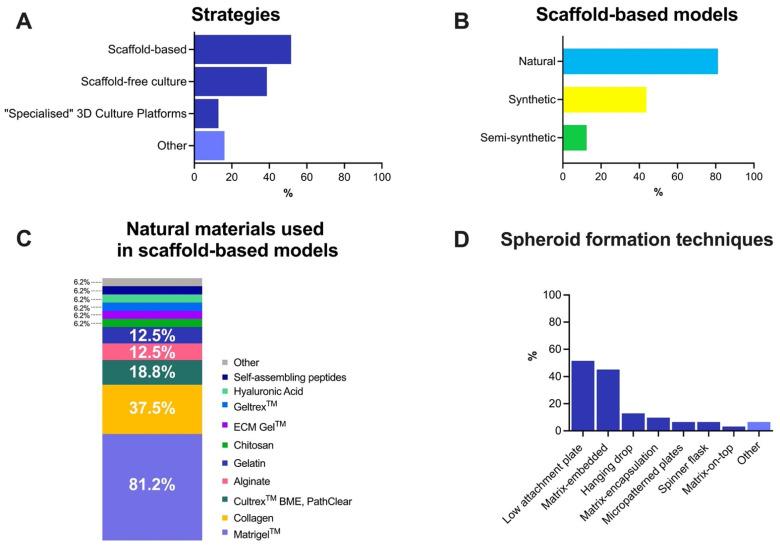
To develop and subsequently get cancer researchers to use organotypic three-dimensional (3D) models that can recapitulate the complexity of human in vivo tumors in an in vitro setting, it is important to establish what in vitro model(s) researchers are currently using and the reasons why. Thus, we developed a survey on this topic, obtained ethics approval, and circulated it throughout the world. The survey was completed by 101 researchers, across all career stages, in academia, clinical or industry settings. It included 40 questions, many with multiple options. Respondents reported on their field of cancer research; type of cancers studied; use of two-dimensional (2D)/monolayer, 2.5D and/or 3D cultures; if using co-cultures, the cell types(s) they co-culture; if using 3D cultures, whether these involve culturing the cells in a particular way to generate spheroids, or if they use additional supports/scaffolds; techniques used to analyze the 2D/2.5D/3D; and their downstream applications. Most researchers (>66%) only use 2D cultures, mainly due to lack of experience and costs. Despite most cancer researchers currently not using the 3D format, >80% recognize their importance and would like to progress to using 3D models. This suggests an urgent need to standardize reliable, robust, reproducible methods for establishing cost-effective 3D cell culture models and their subsequent characterization.
为了开发并促使癌症研究人员使用能够在体外模拟人类体内肿瘤复杂性的器官型三维(3D)模型,了解研究人员目前正在使用的体外模型及其原因至关重要。因此,我们针对此主题开展了一项调查,获得了伦理批准,并在全球范围内进行了分发。该调查由101名处于不同职业阶段、来自学术界、临床或行业领域的研究人员完成。调查涵盖40个问题,其中许多问题有多个选项。受访者报告了他们的癌症研究领域;所研究的癌症类型;二维(2D)/单层、2.5D和/或3D培养的使用情况;如果使用共培养,他们共培养的细胞类型;如果使用3D培养,这些培养是否涉及以特定方式培养细胞以生成球体,或者他们是否使用额外的支持物/支架;用于分析2D/2.5D/3D的技术;以及它们的下游应用。大多数研究人员(>66%)仅使用2D培养,主要原因是缺乏经验和成本。尽管目前大多数癌症研究人员未使用3D形式,但>80%的人认识到其重要性,并希望逐步转向使用3D模型。这表明迫切需要标准化可靠、稳健、可重复的方法来建立具有成本效益的3D细胞培养模型及其后续表征。


 Zotero 插件