
由海杆菌合成的银纳米粒子对选定蚊种的杀卵、杀幼虫和杀蛹效果。
Ovicidal, larvicidal and pupicidal efficacy of silver nanoparticles synthesized by Bacillus marisflavi against the chosen mosquito species.
机构信息
Department of Zoology, Thiagarajar College, Madurai, Tamil Nadu, India.
出版信息
PLoS One. 2021 Dec 17;16(12):e0260253. doi: 10.1371/journal.pone.0260253. eCollection 2021.
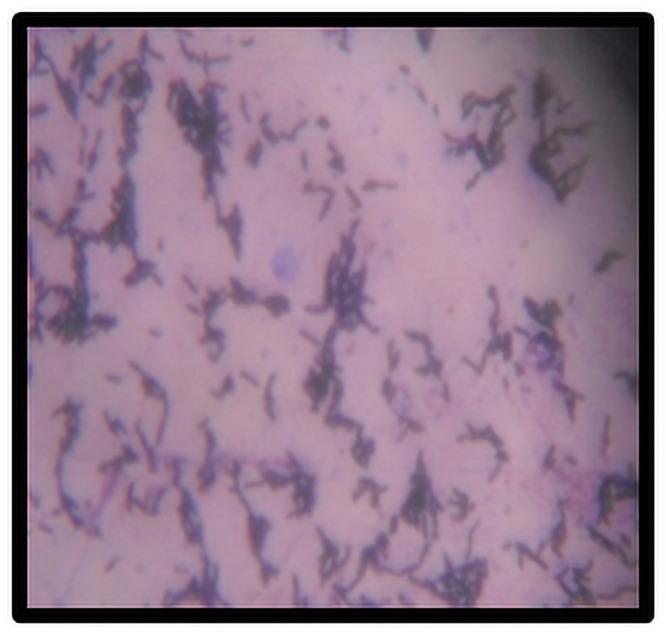
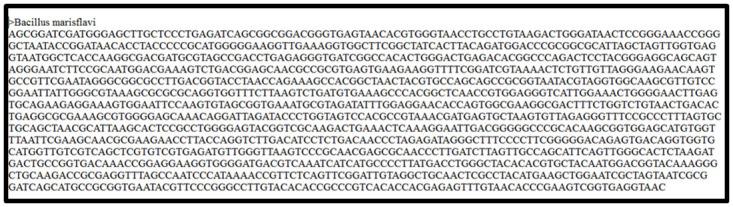
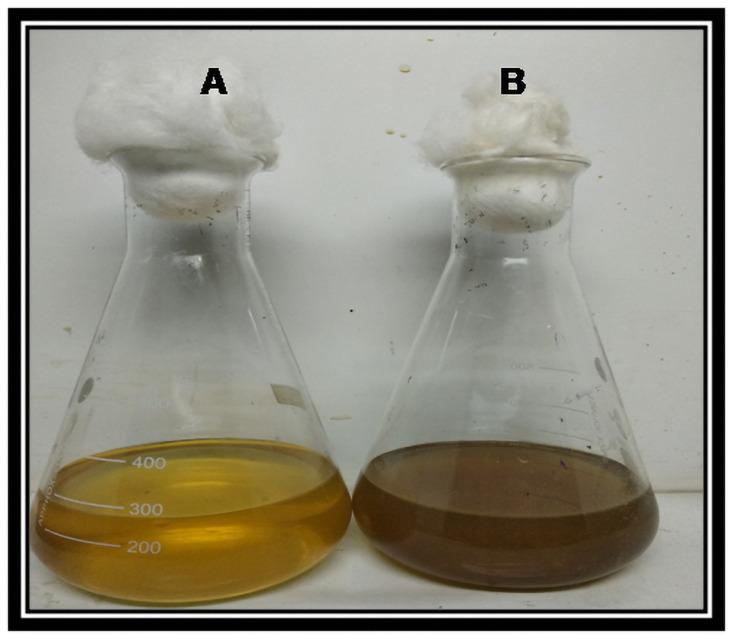
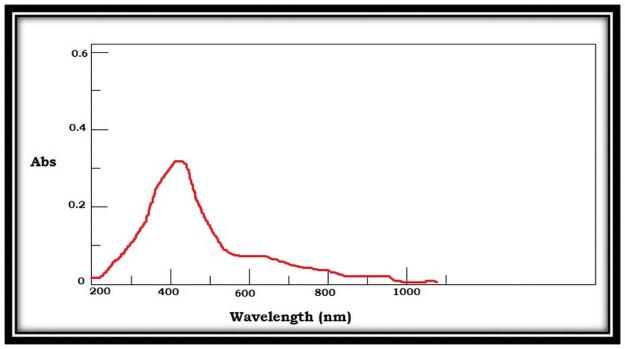
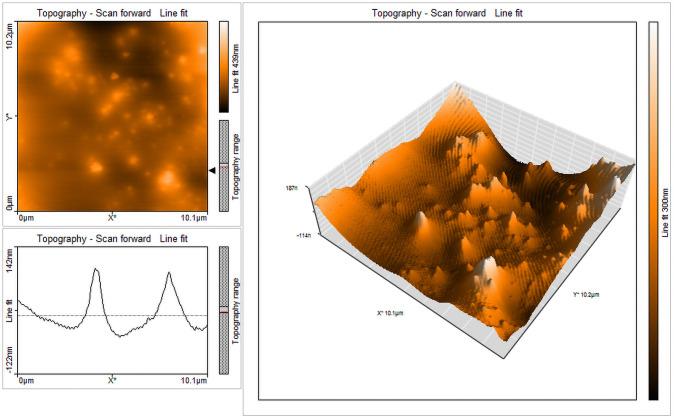
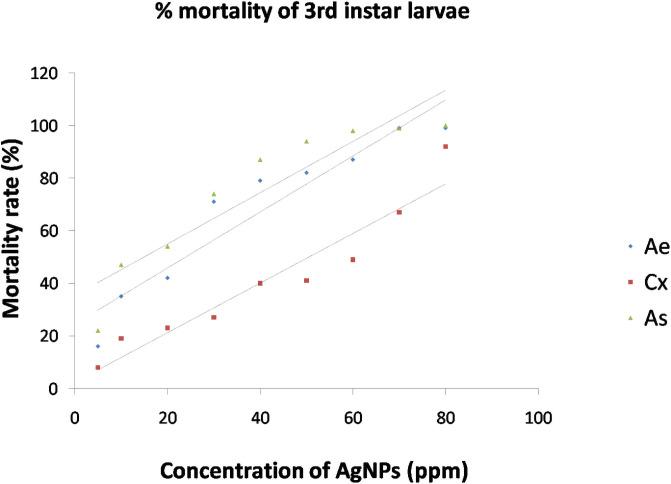
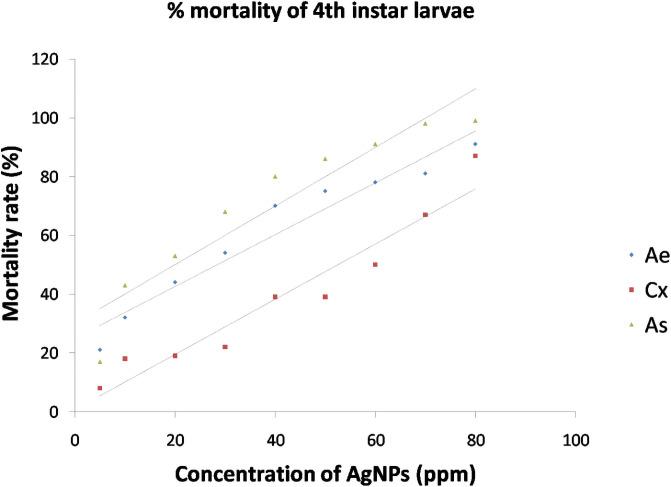
Microbial synthesis of silver nanoparticles is more advantageous and is eco-friendly to combat the various vectors that cause diseases in humans. Hence, in the present study a Bacillus strain is isolated from marine habitat and is evaluated for its ability to synthesize silver nanoparticles (AgNPs) and its efficacy evaluated against the immature stages of selected mosquito species. The effective candidate was confirmed to be Bacillus marisflavi after 16S rRNA sequencing. The synthesis of AgNPs was confirmed by UV-Vis spectrophotometer. Atomic Force Microscopic (AFM) analysis showed spherical nanoparticles. Size analysis using Scanning Electron Microscope (SEM) showed particles of nano size averaging 78.77 nm. The diameter of the particles analyzed by Dynamic Light Scattering (DLS) showed 101.6 nm with a poly-dispersive index of 0.3. Finally the elemental nature of the nanoparticles was identified by Fourier-transform infrared spectroscopy (FTIR). LC50 and LC90 values for the ovicidal, larvicidal and pupicidal efficacy of the AgNPs against the egg, larvae and pupae of Aedes aegypti, Culex quinquefasciatus and Anopheles stephensi respectively were evaluated. The present study revealed that the nanoparticles have an excellent toxic effect against the disease transmitting vector mosquitoes. Hence, the rapid synthesis of AgNPs would be an appropriate eco-friendly tool for biocontrol of vector mosquitoes.
微生物合成银纳米粒子更具优势,并且对环境友好,可以对抗引起人类疾病的各种病媒。因此,在本研究中,从海洋生境中分离出一株芽孢杆菌,并评估其合成银纳米粒子(AgNPs)的能力及其对选定蚊种的未成熟阶段的功效。16S rRNA 测序后,确认有效候选物为海栖芽孢杆菌(Bacillus marisflavi)。AgNPs 的合成通过紫外可见分光光度计进行了确认。原子力显微镜(AFM)分析显示为球形纳米粒子。使用扫描电子显微镜(SEM)进行的粒径分析显示,平均粒径为 78.77nm 的纳米级粒子。通过动态光散射(DLS)分析的粒子直径显示为 101.6nm,多分散指数为 0.3。最后,通过傅里叶变换红外光谱(FTIR)鉴定了纳米粒子的元素性质。评估了 AgNPs 对埃及伊蚊、致倦库蚊和致倦库蚊卵、幼虫和蛹的杀卵、杀幼虫和杀蛹效果的 LC50 和 LC90 值。本研究表明,纳米粒子对传播疾病的病媒蚊子具有极好的毒性作用。因此,AgNPs 的快速合成将是一种合适的环保型病媒控制工具。





 Zotero 插件