
低盐饮食通过影响固有免疫和适应性免疫机制来减轻 B 细胞和髓系细胞驱动的实验性关节炎。
Low-Salt Diet Attenuates B-Cell- and Myeloid-Cell-Driven Experimental Arthritides by Affecting Innate as Well as Adaptive Immune Mechanisms.
机构信息
Department of Rheumatology and Clinical Immunology, Medical Center-University of Freiburg, Faculty of Medicine, University of Freiburg, Freiburg, Germany.
Department of Medicine 3, Friedrich-Alexander-University of Erlangen-Nuremberg, Universitätsklinikum Erlangen, Erlangen, Germany.
出版信息
Front Immunol. 2021 Dec 3;12:765741. doi: 10.3389/fimmu.2021.765741. eCollection 2021.
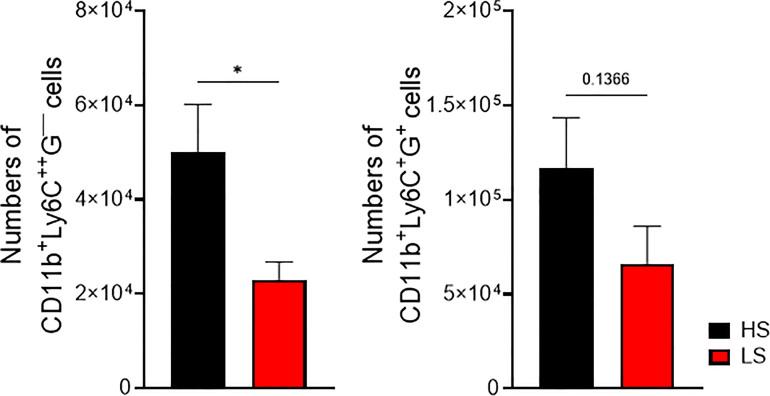
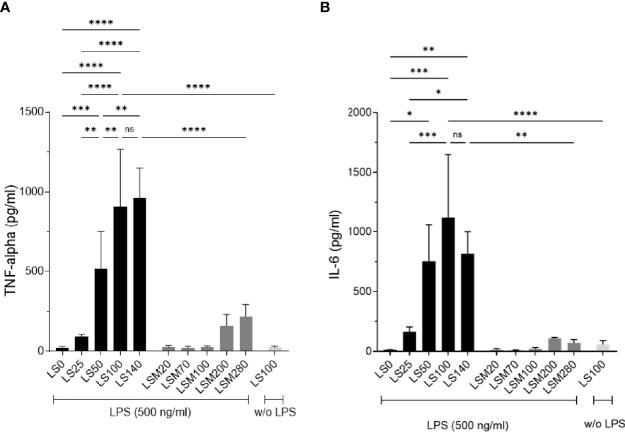
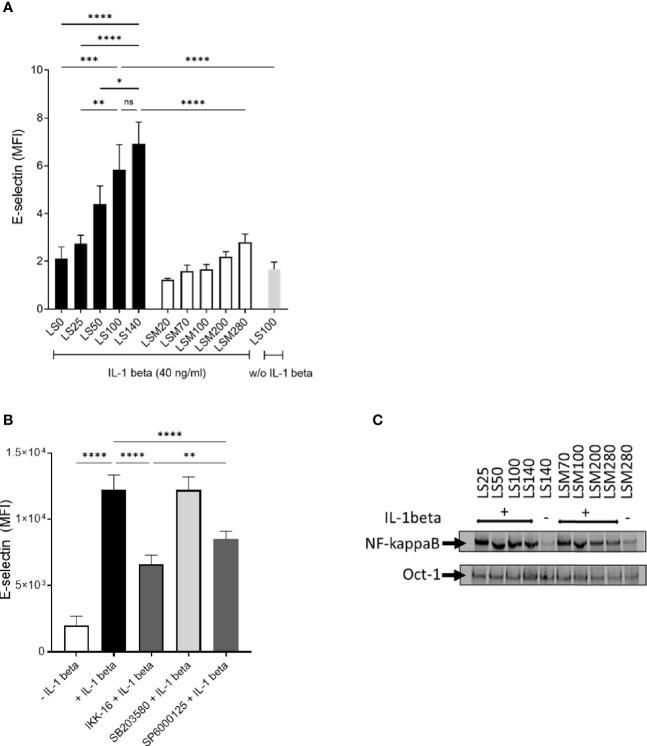
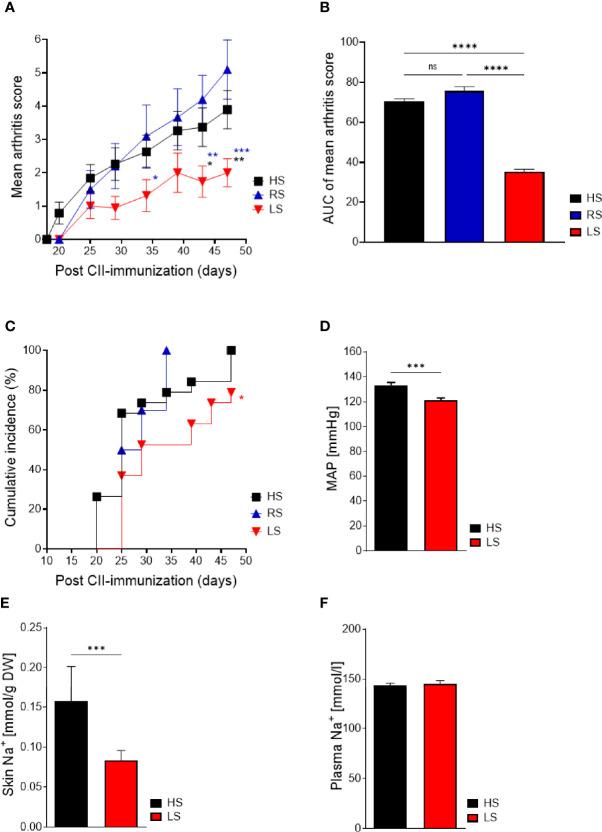
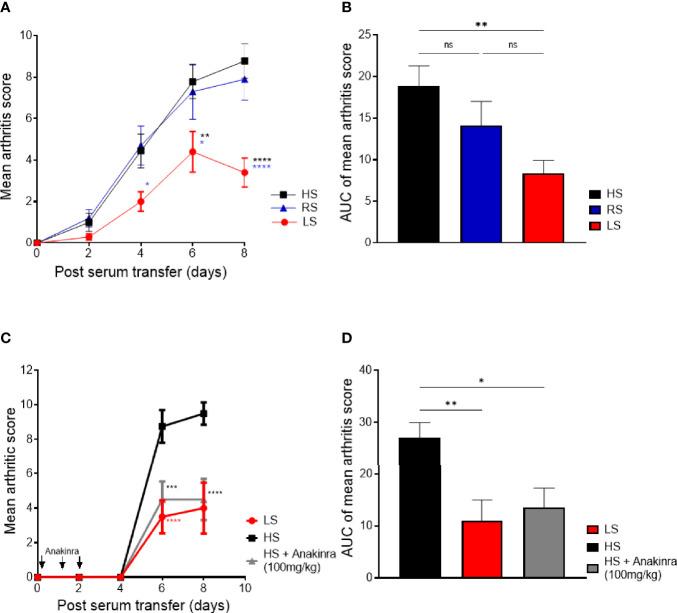
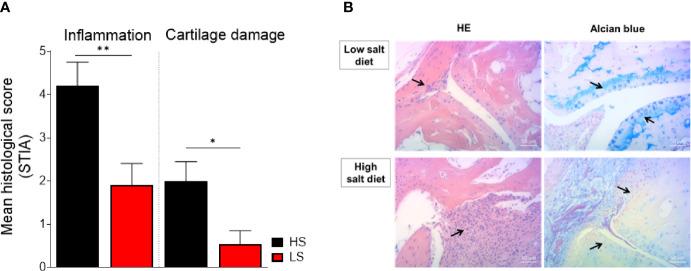
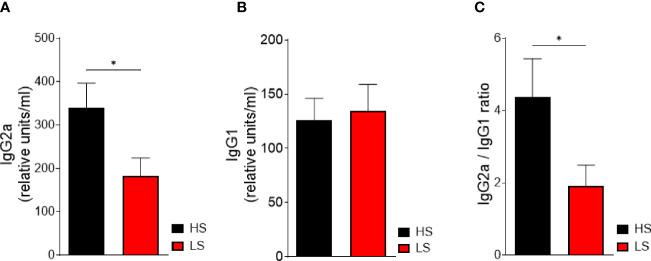
A link between high sodium chloride (salt) intake and the development of autoimmune diseases was previously reported. These earlier studies demonstrated exacerbation of experimental autoimmune encephalomyelitis and colitis by excess salt intake associated with Th17- and macrophage-mediated mechanisms. Little is known about the impact of dietary salt intake on experimental arthritides. Here, we investigated if salt restriction can exert beneficial effects on collagen-induced arthritis (CIA) and K/BxN serum transfer-induced arthritis (STIA). CIA depends on both adaptive and innate immunity, while STIA predominantly mimics the innate immune cell-driven effector phase of arthritis. In both models, low salt (LS) diet significantly decreased arthritis severity compared to regular salt (RS) and high salt (HS) diet. We did not observe an aggravation of arthritis with HS diet compared to RS diet. Remarkably, in STIA, LS diet was as effective as IL-1 receptor blocking treatment. Complement-fixing anti-CII IgG2a antibodies are associated with inflammatory cell infiltration and cartilage destruction. LS diet reduced anti-CII IgG2a levels in CIA and decreased the anti-CII IgG2a/IgG1 ratios pointing toward a more Th2-like response. Significantly less inflammatory joint infiltrates and cartilage breakdown associated with reduced protein concentrations of IL-1 beta (CIA and STIA), IL-17 (CIA), and the monocyte chemoattractant protein-1 (MCP-1) (CIA) were detected in mice receiving LS diet compared to HS diet. However, we did not find a reduced IL-17A expression in CD4 T cells upon salt restriction in CIA. Analysis of mRNA transcripts and immunoblots revealed a link between LS diet and inhibition of the p38 MAPK (mitogen-activated protein kinase)/NFAT5 (nuclear factor of activated T-cells 5) signaling axis in STIA. Further experiments indicated a decreased leukodiapedesis under LS conditions. In conclusion, dietary salt restriction ameliorates CIA and STIA, indicating a beneficial role of LS diet during both the immunization and effector phase of immune-mediated arthritides by predominantly modulating the humoral immunity and the activation status of myeloid lineage cells. Hence, salt restriction might represent a supportive dietary intervention not only to reduce cardiovascular risk, but also to improve human inflammatory joint diseases like rheumatoid arthritis.
先前有报道称,高氯化钠(盐)摄入与自身免疫性疾病的发展之间存在关联。这些早期研究表明,过量的盐摄入通过 Th17 和巨噬细胞介导的机制加剧了实验性自身免疫性脑脊髓炎和结肠炎。关于饮食盐摄入量对实验性关节炎的影响知之甚少。在这里,我们研究了盐限制是否对胶原诱导性关节炎(CIA)和 K/BxN 血清转移诱导性关节炎(STIA)有有益的影响。 CIA 既依赖于适应性免疫,也依赖于先天免疫,而 STIA 主要模拟关节炎的先天免疫细胞驱动的效应阶段。在这两种模型中,低盐(LS)饮食与常规盐(RS)和高盐(HS)饮食相比,关节炎严重程度显著降低。与 RS 饮食相比,我们没有观察到 HS 饮食会加重关节炎。值得注意的是,在 STIA 中,LS 饮食与 IL-1 受体阻断治疗一样有效。与炎症细胞浸润和软骨破坏相关的补体结合抗 CII IgG2a 抗体。 LS 饮食降低了 CIA 中的抗 CII IgG2a 水平,并降低了抗 CII IgG2a/IgG1 比值,表明更倾向于 Th2 样反应。与 HS 饮食相比,LS 饮食小鼠的关节浸润和软骨破坏明显减少,与 IL-1 beta(CIA 和 STIA)、IL-17(CIA)和单核细胞趋化蛋白-1(MCP-1)(CIA)的蛋白浓度降低有关。然而,我们没有发现 CIA 中盐限制时 CD4 T 细胞中 IL-17A 表达减少。mRNA 转录本和免疫印迹分析显示,LS 饮食与 STIA 中 p38 MAPK(丝裂原激活蛋白激酶)/NFAT5(激活 T 细胞的核因子 5)信号轴的抑制之间存在联系。进一步的实验表明,LS 条件下白细胞渗出减少。总之,饮食盐限制可改善 CIA 和 STIA,表明 LS 饮食在免疫和效应阶段对免疫介导的关节炎均具有有益作用,主要通过调节体液免疫和髓样细胞系的激活状态。因此,盐限制不仅可以降低心血管风险,还可以改善类风湿关节炎等人类炎症性关节疾病,因此可能是一种支持性的饮食干预措施。


 Zotero 插件