
肿瘤学中 LSD1 小分子抑制剂类别的全面表征
Comprehensive Characterization of the LSD1 Small Molecule Inhibitor Class in Oncology.
作者信息
Sacilotto Natalia, Dessanti Paola, Lufino Michele M P, Ortega Alberto, Rodríguez-Gimeno Alejandra, Salas Jordi, Maes Tamara, Buesa Carlos, Mascaró Cristina, Soliva Robert
机构信息
Oryzon Genomics S.A., Carrer Sant Ferran 74, Cornellà de Llobregat, 08940 Barcelona, Spain.
出版信息
ACS Pharmacol Transl Sci. 2021 Nov 12;4(6):1818-1834. doi: 10.1021/acsptsci.1c00223. eCollection 2021 Dec 10.
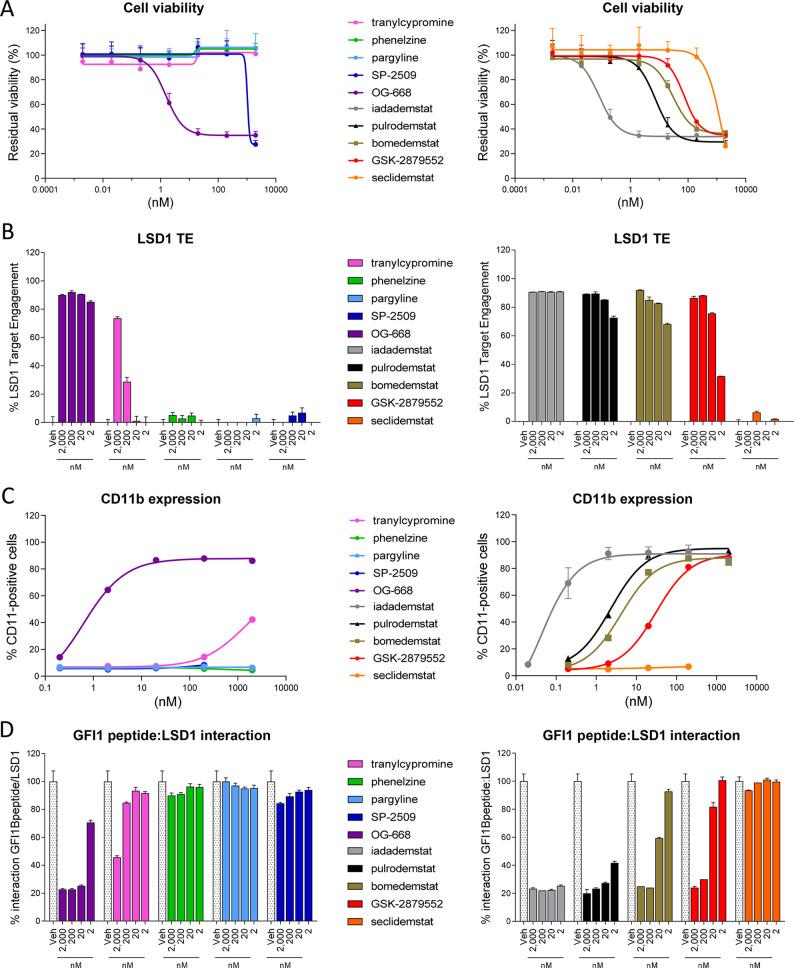
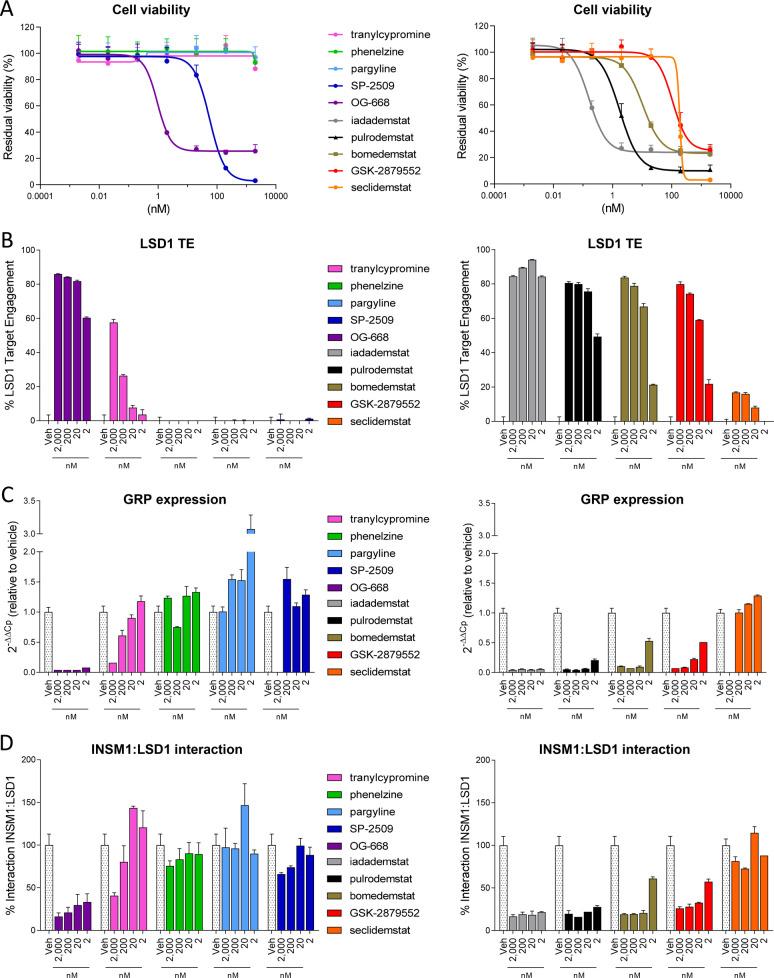
Lysine-specific demethylase 1 (LSD1 or KDM1A) is a chromatin modifying enzyme playing a key role in the cell cycle and cell differentiation and proliferation through the demethylation of histones and nonhistone substrates. In addition to its enzymatic activity, LSD1 plays a fundamental scaffolding role as part of transcription silencing complexes such as rest co-repressor (CoREST) and nucleosome remodeling and deacetylase (NuRD). A host of classical amine oxidase inhibitors such as tranylcypromine, pargyline, and phenelzine together with LSD1 tool compounds such as SP-2509 and GSK-LSD1 have been extensively utilized in LSD1 mechanistic cancer studies. Additionally, several optimized new chemical entities have reached clinical trials in oncology such as ORY-1001 (iadademstat), GSK2879552, SP-2577 (seclidemstat), IMG-7289 (bomedemstat), INCB059872, and CC-90011 (pulrodemstat). Despite this, no single study exists that characterizes them all under the same experimental conditions, preventing a clear interpretation of published results. Herein, we characterize the whole LSD1 small molecule compound class as inhibitors of LSD1 catalytic activity, disruptors of SNAIL/GFI1 (SNAG)-scaffolding protein-protein interactions, inducers of cell differentiation, and potential anticancer treatments for hematological and solid tumors to yield an updated, unified perspective of this field. Our results highlight significant differences in potency and selectivity among the clinical compounds with iadademstat being the most potent and reveal that most of the tool compounds have very low activity and selectivity, suggesting some conclusions derived from their use should be taken with caution.
赖氨酸特异性去甲基化酶1(LSD1或KDM1A)是一种染色质修饰酶,通过对组蛋白和非组蛋白底物进行去甲基化,在细胞周期以及细胞分化和增殖过程中发挥关键作用。除了其酶活性外,LSD1作为转录沉默复合物(如REST共抑制因子(CoREST)和核小体重塑与去乙酰化酶(NuRD))的一部分,还发挥着重要的支架作用。许多经典的胺氧化酶抑制剂,如反苯环丙胺、帕吉林和苯乙肼,以及LSD1工具化合物,如SP-2509和GSK-LSD1,已被广泛用于LSD1机制性癌症研究。此外,一些优化的新化学实体已进入肿瘤学临床试验,如ORY-1001(伊达司他)、GSK2879552、SP-2577(塞利司他)、IMG-7289(波美司他)、INCB059872和CC-90011(普尔罗司他)。尽管如此,尚无一项研究在相同实验条件下对它们进行全面表征,这使得已发表结果难以得到清晰解读。在此,我们将整个LSD1小分子化合物类别表征为LSD1催化活性的抑制剂、SNAIL/GFI1(SNAG)支架蛋白-蛋白相互作用的破坏剂、细胞分化诱导剂以及血液系统肿瘤和实体瘤的潜在抗癌治疗药物,以提供该领域最新的统一观点。我们的结果突出了临床化合物在效力和选择性上的显著差异,其中伊达司他效力最强,并表明大多数工具化合物的活性和选择性非常低,这表明从它们的使用中得出的一些结论应谨慎对待。


 Zotero 插件