
膜联蛋白 A2/钙结合蛋白 S100A10 复合物对致癌性纤溶酶原受体的调控作用。
The ANXA2/S100A10 Complex-Regulation of the Oncogenic Plasminogen Receptor.
机构信息
Departments of Pathology, Dalhousie University, Halifax, NS B3H 1X5, Canada.
Departments of Biochemistry and Molecular Biology, Dalhousie University, Halifax, NS B3H 1X5, Canada.
出版信息
Biomolecules. 2021 Nov 26;11(12):1772. doi: 10.3390/biom11121772.
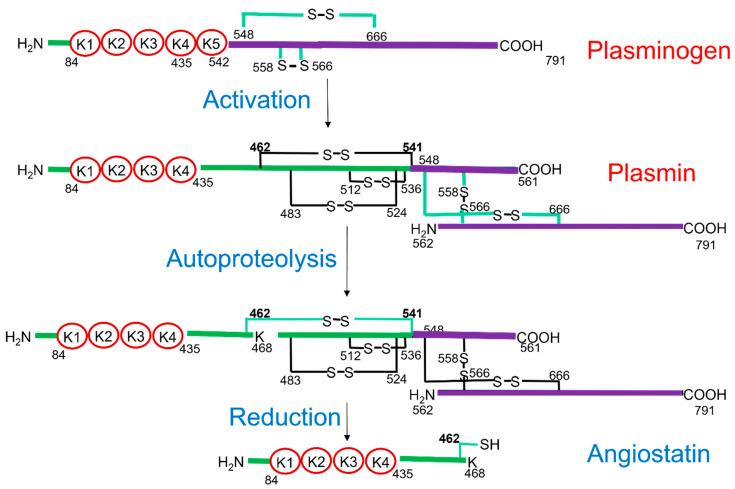
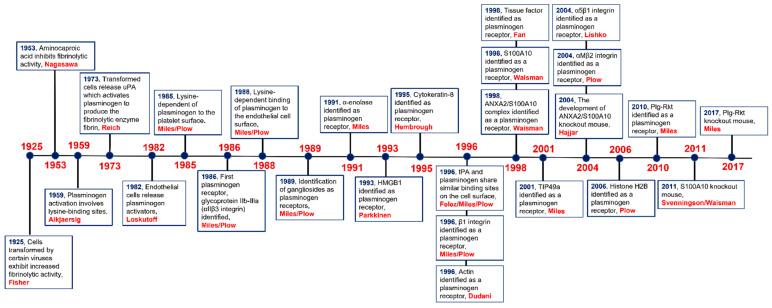
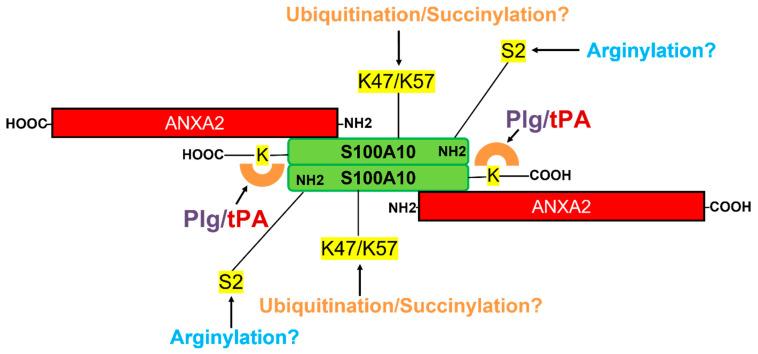
The generation of the serine protease plasmin is initiated by the binding of its zymogenic precursor, plasminogen, to cell surface receptors. The proteolytic activity of plasmin, generated at the cell surface, plays a crucial role in several physiological processes, including fibrinolysis, angiogenesis, wound healing, and the invasion of cells through both the basement membrane and extracellular matrix. The seminal observation by Albert Fischer that cancer cells, but not normal cells in culture, produce large amounts of plasmin formed the basis of current-day observations that plasmin generation can be hijacked by cancer cells to allow tumor development, progression, and metastasis. Thus, the cell surface plasminogen-binding receptor proteins are critical to generating plasmin proteolytic activity at the cell surface. This review focuses on one of the twelve well-described plasminogen receptors, S100A10, which, when in complex with its regulatory partner, annexin A2 (ANXA2), forms the ANXA2/S100A10 heterotetrameric complex referred to as AIIt. We present the theme that AIIt is the quintessential cellular plasminogen receptor since it regulates the formation and the destruction of plasmin. We also introduce the term to define those plasminogen receptors directly activated during cancer progression. We then discuss the research establishing AIIt as an oncogenic plasminogen receptor-regulated during EMT and activated by oncogenes such as SRC, RAS, HIF1α, and PML-RAR and epigenetically by DNA methylation. We further discuss the evidence derived from animal models supporting the role of S100A10 in tumor progression and oncogenesis. Lastly, we describe the potential of S100A10 as a biomarker for cancer diagnosis and prognosis.
丝氨酸蛋白酶纤溶酶原的生成始于其酶原前体纤溶酶原与细胞表面受体的结合。纤溶酶在细胞表面产生的蛋白水解活性在几种生理过程中起着至关重要的作用,包括纤维蛋白溶解、血管生成、伤口愈合以及细胞穿过基底膜和细胞外基质的侵袭。Albert Fischer 的开创性观察发现,癌细胞而非培养中的正常细胞会大量产生纤溶酶,这构成了当前观察到的纤溶酶生成可被癌细胞劫持以允许肿瘤发展、进展和转移的基础。因此,细胞表面纤溶酶原结合受体蛋白对于在细胞表面产生纤溶酶蛋白水解活性至关重要。本综述重点介绍了十二种描述明确的纤溶酶原受体之一,即 S100A10,当与其调节伴侣膜联蛋白 A2(ANXA2)形成称为 AIIt 的 ANXA2/S100A10 异四聚体复合物时。我们提出了主题,即 AIIt 是典型的细胞纤溶酶原受体,因为它调节纤溶酶的形成和破坏。我们还引入了一个术语 来定义那些在癌症进展过程中直接被激活的纤溶酶原受体。然后,我们讨论了研究确立 AIIt 作为一种致癌性纤溶酶原受体的研究,该受体在 EMT 期间受到调节,并被 SRC、RAS、HIF1α 和 PML-RAR 等癌基因以及 DNA 甲基化等表观遗传激活。我们进一步讨论了源自支持 S100A10 在肿瘤进展和致癌作用中的作用的动物模型的证据。最后,我们描述了 S100A10 作为癌症诊断和预后标志物的潜力。
 Zotero 插件