
苯并咪唑衍生物作为新型和选择性精氨酸酶抑制剂的研究 及其对前鞭毛体和无鞭毛体的生物活性。
Benzimidazole Derivatives as New and Selective Inhibitors of Arginase from with Biological Activity against Promastigotes and Amastigotes.
机构信息
Facultad de Medicina y Nutrición, Universidad Juárez del Estado de Durango, Av. Universidad y Fanny Anitúa S/N, Durango 34000, Mexico.
Departamento de Farmacia, Facultad de Química, Universidad Nacional Autónoma de México, Mexico City 04510, Mexico.
出版信息
Int J Mol Sci. 2021 Dec 19;22(24):13613. doi: 10.3390/ijms222413613.
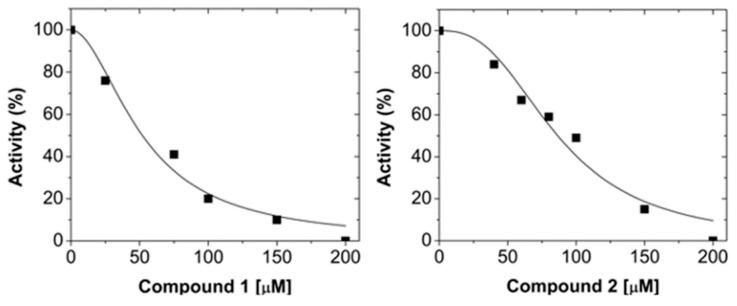
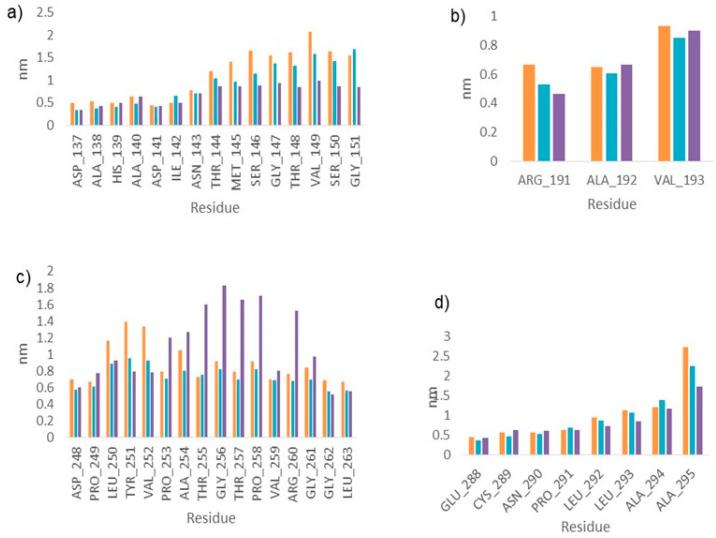
Leishmaniasis is a disease caused by parasites of the genus that affects 98 countries worldwide, 2 million of new cases occur each year and more than 350 million people are at risk. The use of the actual treatments is limited due to toxicity concerns and the apparition of resistance strains. Therefore, there is an urgent necessity to find new drugs for the treatment of this disease. In this context, enzymes from the polyamine biosynthesis pathway, such as arginase, have been considered a good target. In the present work, a chemical library of benzimidazole derivatives was studied performing computational, enzyme kinetics, biological activity, and cytotoxic effect characterization, as well as in silico ADME-Tox predictions, to find new inhibitors for arginase from (LmARG). The results show that the two most potent inhibitors (compounds and ) have an I values of 52 μM and 82 μM, respectively. Moreover, assays with human arginase 1 (HsARG) show that both compounds are selective for LmARG. According to molecular dynamics simulation studies these inhibitors interact with important residues for enzyme catalysis. Biological activity assays demonstrate that both compounds have activity against promastigote and amastigote, and low cytotoxic effect in murine macrophages. Finally, in silico prediction of their ADME-Tox properties suggest that these inhibitors support the characteristics to be considered drug candidates. Altogether, the results reported in our study suggest that the benzimidazole derivatives are an excellent starting point for design new drugs against leishmanisis.
利什曼病是一种由 属寄生虫引起的疾病,影响全球 98 个国家,每年新发病例达 200 万例,超过 3.5 亿人面临感染风险。由于毒性问题和耐药菌株的出现,实际治疗方法的应用受到限制。因此,迫切需要寻找治疗这种疾病的新药。在这种情况下,多胺生物合成途径中的酶,如精氨酸酶,已被认为是一个很好的靶标。在本工作中,对苯并咪唑衍生物的化学文库进行了研究,通过计算、酶动力学、生物活性和细胞毒性作用表征,以及计算机辅助药物代谢和毒理学预测,寻找来自 (LmARG)的新精氨酸酶抑制剂。结果表明,两种最有效的抑制剂(化合物 和 )的 I 值分别为 52 μM 和 82 μM。此外,与人精氨酸酶 1(HsARG)的测定表明,这两种化合物对 LmARG 具有选择性。根据分子动力学模拟研究,这些抑制剂与酶催化的重要残基相互作用。生物活性测定表明,这两种化合物对前鞭毛体和无鞭毛体均有活性,且对鼠巨噬细胞的细胞毒性作用较低。最后,对其 ADME-Tox 性质的计算机预测表明,这些抑制剂支持作为候选药物的特征。总之,我们的研究结果表明,苯并咪唑衍生物是设计治疗利什曼病新药的一个极好起点。





 Zotero 插件