
巴拿马采用口罩预防策略应对 SARS-CoV-2 的动态
Dynamics of Mask Use as a Prevention Strategy against SARS-CoV-2 in Panama.
机构信息
Centro de Biodiversidad y Descubrimiento de Drogas, Instituto de Investigaciones Científicas y Servicios de Alta Tecnología (INDICASAT AIP), Clayton 0843-01103, Panama.
Sistema Nacional de Investigación, Panamá 0816-02582, Panama.
出版信息
Int J Environ Res Public Health. 2021 Dec 9;18(24):12982. doi: 10.3390/ijerph182412982.
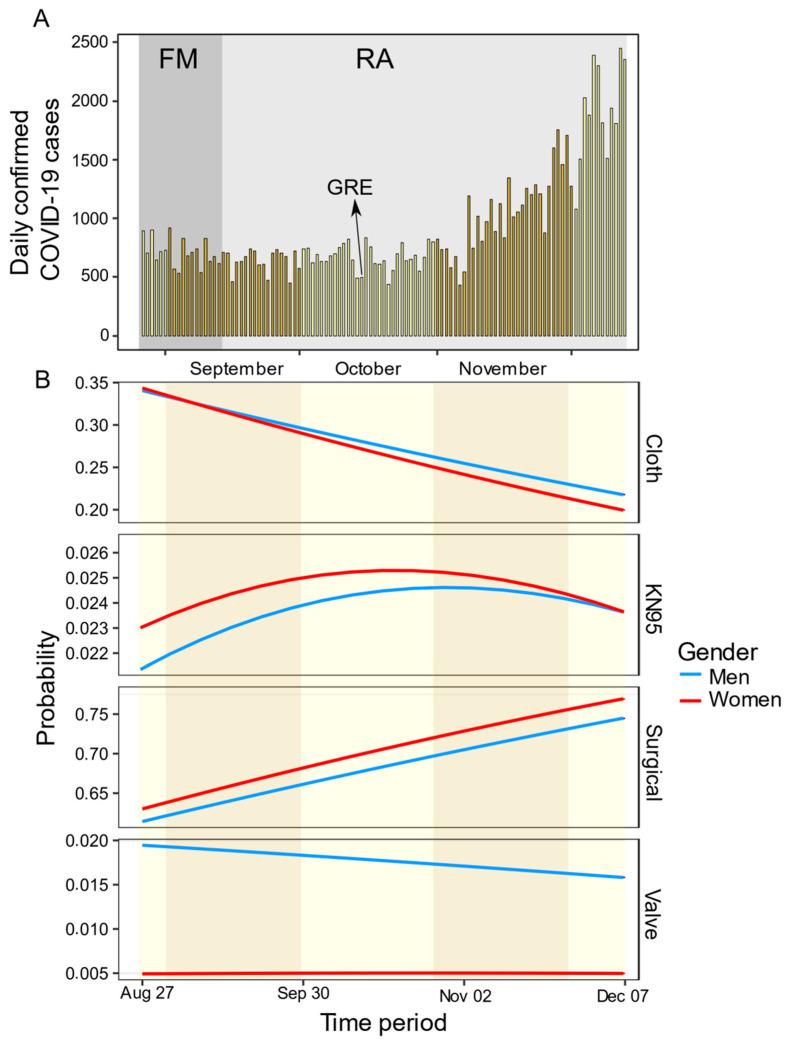
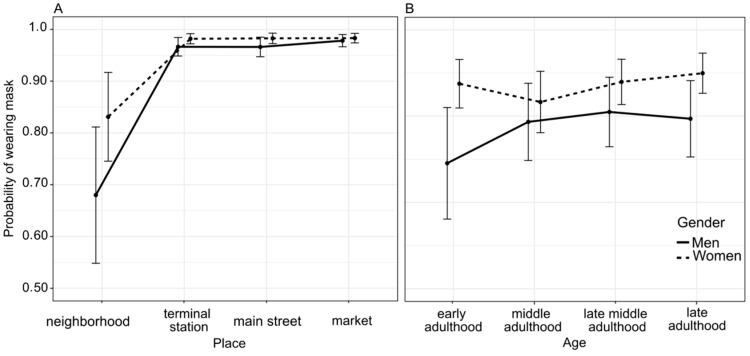
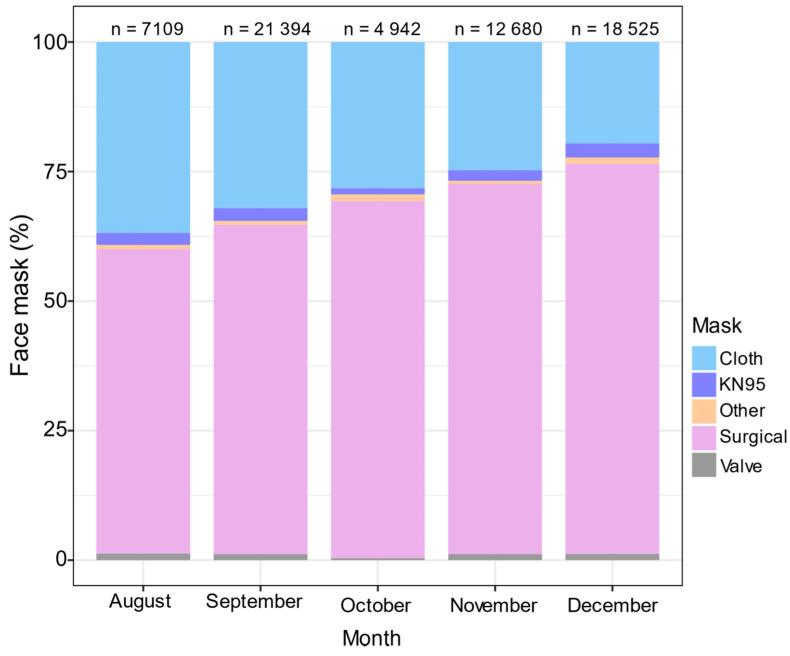
Early in the SARS-CoV-2 pandemic, many national public health authorities implemented non-pharmaceutical interventions to mitigate disease outbreaks. Panamá established mandatory mask use two months after its first documented case. Initial compliance was high, but diverse masks were used in public areas. We studied behavioral dynamics of mask use through the first two COVID-19 waves in Panama, to improve the implementation of effective, low-cost public health containment measures when populations are exposed to novel air-borne pathogens. Mask use behavior was recorded from pedestrians in four Panamanian populations (August to December 2020). We recorded facial coverings and if used, the type of mask, and gender and estimated age of the wearer. Our results showed that people were highly compliant (>95%) with mask mandates and demonstrated important population-level behaviors: (1) decreasing use of cloth masks over time, and increasing use of surgical masks; (2) mask use was 3-fold lower in suburban neighborhoods than other public areas and (3) young people were least likely to wear masks. Results help focus on highly effective, low-cost, public health interventions for managing and controlling a pandemic. Considerations of behavioral preferences for different masks, relative to pricing and availability, are essential for optimizing public health policies. Policies to increase the availability of effective masks, and behavioral nudges to increase acceptance, and to facilitate mask usage, during the ongoing SARS-CoV-2 pandemic, and for future pandemics of respiratory pathogens, are key tools, especially for nations lagging in access to expensive vaccines and pharmacological approaches.
在 SARS-CoV-2 大流行早期,许多国家公共卫生当局实施了非药物干预措施以减轻疾病爆发。巴拿马在首例确诊病例两个月后就强制要求使用口罩。最初的遵守率很高,但在公共场所使用的口罩种类繁多。我们通过巴拿马的前两波 COVID-19 研究了口罩使用的行为动态,以便在人群接触新型空气传播病原体时,改进实施有效、低成本的公共卫生控制措施。从 2020 年 8 月至 12 月,我们在巴拿马的四个人群中记录了行人的口罩使用情况。我们记录了面部覆盖物,如果使用了口罩,还记录了口罩类型以及佩戴者的性别和估计年龄。我们的研究结果表明,人们非常遵守口罩强制令(>95%),并表现出重要的人群行为:(1)随着时间的推移,布制口罩的使用逐渐减少,而外科口罩的使用逐渐增加;(2)在郊区社区,口罩的使用量比其他公共场所低 3 倍;(3)年轻人戴口罩的可能性最小。这些结果有助于集中精力采取高效、低成本的公共卫生干预措施来管理和控制大流行。考虑到不同口罩的行为偏好,相对于价格和可用性,对于优化公共卫生政策至关重要。在当前 SARS-CoV-2 大流行期间,以及未来呼吸道病原体大流行期间,增加有效口罩的供应、采取行为干预措施以提高接受度并促进口罩使用,是关键工具,尤其是对于那些难以获得昂贵疫苗和药物治疗的国家而言。

 Zotero 插件