
黄酮类化合物对抗归因于癌症起始、发展和进展-3PM途径的非生理性炎症。
Flavonoids against non-physiologic inflammation attributed to cancer initiation, development, and progression-3PM pathways.
作者信息
Kubatka Peter, Mazurakova Alena, Samec Marek, Koklesova Lenka, Zhai Kevin, Al-Ishaq Raghad, Kajo Karol, Biringer Kamil, Vybohova Desanka, Brockmueller Aranka, Pec Martin, Shakibaei Mehdi, Giordano Frank A, Büsselberg Dietrich, Golubnitschaja Olga
机构信息
Department of Medical Biology, Jessenius Faculty of Medicine, Comenius University in Bratislava, 03601 Martin, Slovakia.
Department of Obstetrics and Gynecology, Jessenius Faculty of Medicine, Comenius University in Bratislava, 03601 Martin, Slovakia.
出版信息
EPMA J. 2021 Oct 6;12(4):559-587. doi: 10.1007/s13167-021-00257-y. eCollection 2021 Dec.
UNLABELLED
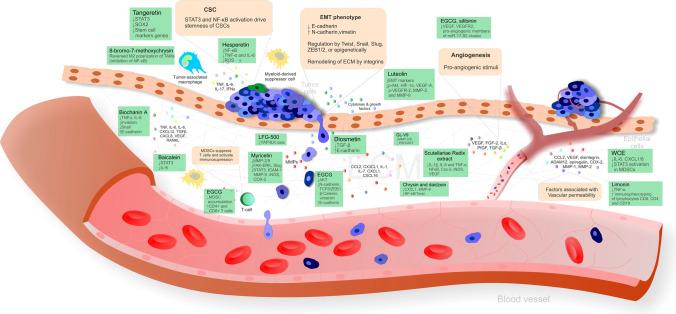
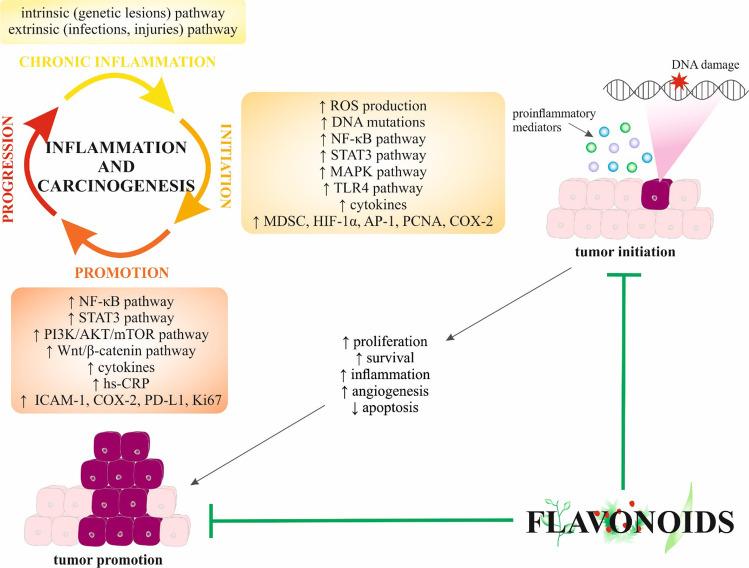
Inflammation is an essential pillar of the immune defense. On the other hand, chronic inflammation is considered a hallmark of cancer initiation and progression. Chronic inflammation demonstrates a potential to induce complex changes at molecular, cellular, and organ levels including but not restricted to the stagnation and impairment of healing processes, uncontrolled production of aggressive ROS/RNS, triggered DNA mutations and damage, compromised efficacy of the DNA repair machinery, significantly upregulated cytokine/chemokine release and associated patho-physiologic protein synthesis, activated signaling pathways involved in carcinogenesis and tumor progression, abnormal tissue remodeling, and created pre-metastatic niches, among others. The anti-inflammatory activities of flavonoids demonstrate clinically relevant potential as preventive and therapeutic agents to improve individual outcomes in diseases linked to the low-grade systemic and chronic inflammation, including cancers. To this end, flavonoids are potent modulators of pro-inflammatory gene expression being, therefore, of great interest as agents selectively suppressing molecular targets within pro-inflammatory pathways. This paper provides in-depth analysis of anti-inflammatory properties of flavonoids, highlights corresponding mechanisms and targeted molecular pathways, and proposes potential treatment models for multi-level cancer prevention in the framework of predictive, preventive, and personalized medicine (PPPM / 3PM). To this end, individualized profiling and patient stratification are essential for implementing targeted anti-inflammatory approaches. Most prominent examples are presented for the proposed application of flavonoid-conducted anti-inflammatory treatments in overall cancer management.
SUPPLEMENTARY INFORMATION
The online version contains supplementary material available at 10.1007/s13167-021-00257-y.
未标注
炎症是免疫防御的重要支柱。另一方面,慢性炎症被认为是癌症发生和发展的标志。慢性炎症显示出在分子、细胞和器官水平上引发复杂变化的潜力,包括但不限于愈合过程的停滞和受损、活性氧/氮自由基的无节制产生、引发的DNA突变和损伤、DNA修复机制的功效受损、细胞因子/趋化因子释放和相关病理生理蛋白质合成的显著上调、参与致癌作用和肿瘤进展的信号通路激活、异常的组织重塑以及形成的前转移微环境等。类黄酮的抗炎活性作为预防和治疗药物,在改善与低度全身慢性炎症相关疾病(包括癌症)的个体预后方面具有临床相关潜力。为此,类黄酮是促炎基因表达的有效调节剂,因此作为选择性抑制促炎途径内分子靶点的药物备受关注。本文深入分析了类黄酮的抗炎特性,突出了相应机制和靶向分子途径,并在预测、预防和个性化医学(PPPM/3PM)框架内提出了多层次癌症预防的潜在治疗模型。为此,个性化分析和患者分层对于实施靶向抗炎方法至关重要。文中列举了类黄酮抗炎治疗在整体癌症管理中应用的最突出实例。
补充信息
在线版本包含可在10.1007/s13167-021-00257-y获取的补充材料。
 Zotero 插件