
BNT162b2 新冠疫苗接种者的黏膜免疫应答。
Mucosal immune response in BNT162b2 COVID-19 vaccine recipients.
机构信息
Azienda Socio-Sanitaria Territoriale dei Sette Laghi, Department of Medicine and Surgery, University of Insubria, Varese, Italy.
Azienda Socio-Sanitaria Territoriale dei Sette Laghi, Department of Medicine and Surgery, University of Insubria, Varese, Italy.
出版信息
EBioMedicine. 2022 Jan;75:103788. doi: 10.1016/j.ebiom.2021.103788. Epub 2021 Dec 23.
BACKGROUND
Although the BNT162b2 COVID-19 vaccine is known to induce IgG neutralizing antibodies in serum protecting against COVID-19, it has not been studied in detail whether it could generate specific immunity at mucosal sites, which represent the primary route of entry of SARS-CoV-2.
METHODS
Samples of serum and saliva of 60 BNT162b2-vaccinated healthcare workers were collected at baseline, two weeks after the first dose and two weeks after the second dose. Anti-S1-protein IgG and IgA total antibodies titres and the presence of neutralizing antibodies against the Receptor Binding Domain in both serum and saliva were measured by quantitative and by competitive ELISA, respectively.
FINDINGS
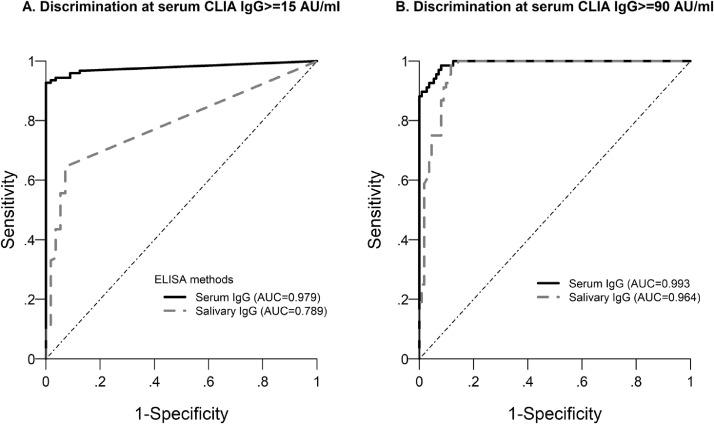
Complete vaccination cycle generates a high serum IgG antibody titre as a single dose in previously infected seropositive individuals. Serum IgA concentration reaches a plateau after a single dose in seropositive individuals and two vaccine doses in seronegative subjects. After the second dose IgA level was higher in seronegative than in seropositive subjects. In saliva, IgG level is almost two orders of magnitude lower than in serum, reaching the highest values after the second dose. IgA concentration remains low and increases significantly only in seropositive individuals after the second dose. Neutralizing antibody titres were much higher in serum than in saliva.
INTERPRETATION
The mRNA BNT162b2 vaccination elicits a strong systemic immune response by drastically boosting neutralizing antibodies development in serum, but not in saliva, indicating that at least oral mucosal immunity is poorly activated by this vaccination protocol, thus failing in limiting virus acquisition upon its entry through this route.
FUNDING
This work was funded by the Department of Medicine and Surgery, University of Insubria, and partially supported by Fondazione Umberto Veronesi (COVID-19 Insieme per la ricerca di tutti, 2020).
背景
已知 BNT162b2 COVID-19 疫苗可在血清中诱导 IgG 中和抗体,从而预防 COVID-19,但尚未详细研究其是否能在黏膜部位产生特异性免疫,而黏膜部位是 SARS-CoV-2 的主要进入途径。
方法
采集 60 名接受 BNT162b2 疫苗接种的医护人员的血清和唾液样本,分别在基线、第一剂后两周和第二剂后两周采集。通过定量和竞争 ELISA 分别检测血清和唾液中抗 S1 蛋白 IgG 和 IgA 总抗体滴度以及针对受体结合域的中和抗体的存在情况。
结果
在既往感染的血清阳性个体中,单次接种即可产生高血清 IgG 抗体滴度。在血清阳性个体中,单次接种后 IgA 浓度达到平台期,而在血清阴性个体中,两次接种后达到平台期。第二次接种后,IgA 水平在血清阴性个体中高于血清阳性个体。在唾液中,IgG 水平比血清低几乎两个数量级,在第二次接种后达到最高值。IgA 浓度在血清阳性个体中仍较低,第二次接种后显著升高。中和抗体滴度在血清中明显高于唾液。
结论
mRNA BNT162b2 疫苗接种通过大幅提高血清中中和抗体的产生,引起强烈的全身免疫反应,但在唾液中没有,这表明这种疫苗接种方案至少不能激活口腔黏膜免疫,从而不能限制病毒通过该途径进入时的获得。
资金
这项工作得到了因苏布里亚大学医学与外科学系的资助,并部分得到了翁贝托·韦罗内西基金会(COVID-19 Insieme per la ricerca di tutti,2020)的支持。


 Zotero 插件