
健康与疾病状态下口腔和肠道微生物碳水化合物活性酶概况
Oral and Gut Microbial Carbohydrate-Active Enzymes Landscape in Health and Disease.
作者信息
Onyango Stanley O, Juma John, De Paepe Kim, Van de Wiele Tom
机构信息
Center for Microbial Ecology and Technology (CMET), Ghent University, Ghent, Belgium.
International Livestock Research Institute (ILRI), Nairobi, Kenya.
出版信息
Front Microbiol. 2021 Dec 10;12:653448. doi: 10.3389/fmicb.2021.653448. eCollection 2021.
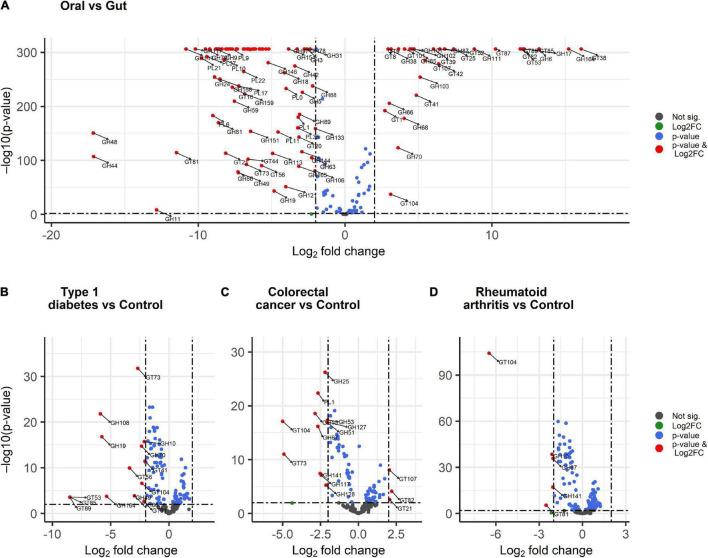
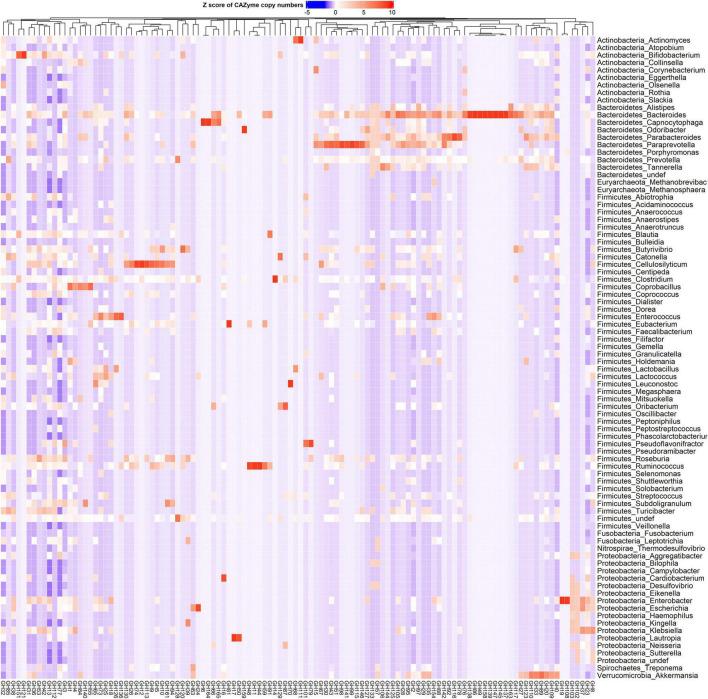
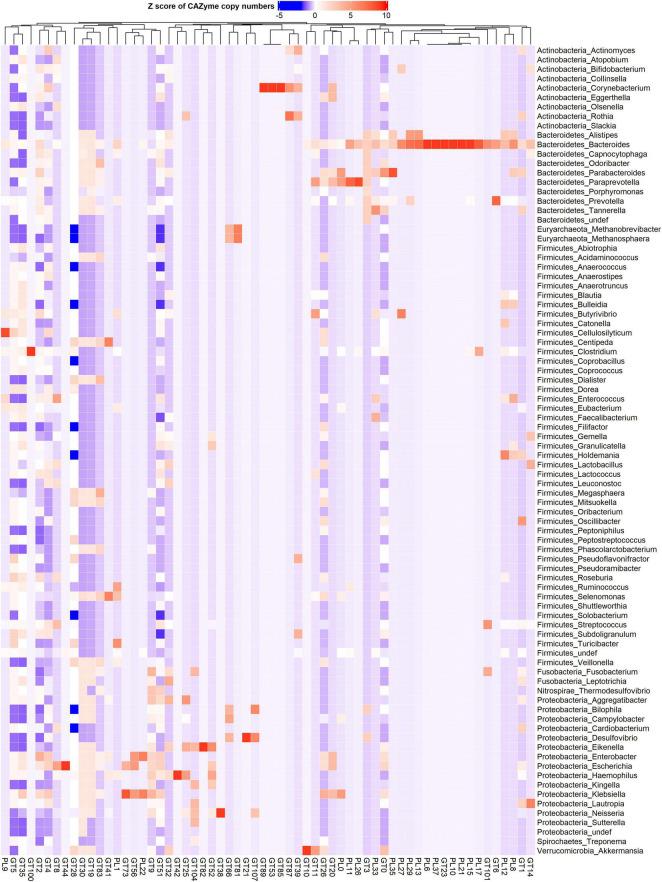
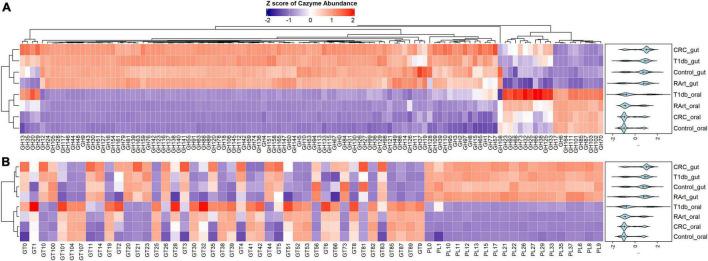
Inter-individual variability in the microbial gene complement encoding for carbohydrate-active enzymes (CAZymes) can profoundly regulate how the host interacts with diverse carbohydrate sources thereby influencing host health. CAZy-typing, characterizing the microbiota-associated CAZyme-coding genes within a host individual, can be a useful tool to predict carbohydrate pools that the host can metabolize, or identify which CAZyme families are underrepresented requiring supplementation via microbiota transplantation or probiotics. CAZy-typing, moreover, provides a novel framework to search for disease biomarkers. As a proof of concept, we used publicly available metagenomes (935) representing 310 type strain bacterial genomes to establish the link between disease status and CAZymes in the oral and gut microbial ecosystem. The abundance and distribution of 220 recovered CAZyme families in saliva and stool samples from patients with colorectal cancer, rheumatoid arthritis, and type 1 diabetes were compared with healthy subjects. Based on the multivariate discriminant analysis, the disease phenotype did not alter the CAZyme profile suggesting a functional conservation in carbohydrate metabolism in a disease state. When disease and healthy CAZyme profiles were contrasted in differential analysis, CAZyme markers that were underrepresented in type 1 diabetes (15), colorectal cancer (12), and rheumatoid arthritis (5) were identified. Of interest, are the glycosyltransferase which can catalyze the synthesis of glycoconjugates including lipopolysaccharides with the potential to trigger inflammation, a common feature in many diseases. Our analysis has also confirmed the expansive carbohydrate metabolism in the gut as evidenced by the overrepresentation of CAZyme families in the gut compared to the oral site. Nevertheless, each site exhibited specific CAZyme markers. Taken together, our analysis provides an insight into the CAZyme landscape in health and disease and has demonstrated the diversity in carbohydrate metabolism in host-microbiota which can be a sound basis for optimizing the selection of pre, pro, and syn-biotic candidate products.
编码碳水化合物活性酶(CAZymes)的微生物基因互补的个体间变异性可深刻调节宿主与多种碳水化合物来源的相互作用,从而影响宿主健康。CAZy分型,即表征宿主个体内与微生物群相关的CAZyme编码基因,可成为预测宿主可代谢的碳水化合物库,或识别哪些CAZyme家族代表性不足,需要通过微生物群移植或益生菌进行补充的有用工具。此外,CAZy分型为寻找疾病生物标志物提供了一个新框架。作为概念验证,我们使用了代表310个型菌株细菌基因组的公开宏基因组(935个)来建立口腔和肠道微生物生态系统中疾病状态与CAZymes之间的联系。将结直肠癌、类风湿性关节炎和1型糖尿病患者唾液和粪便样本中回收的220个CAZyme家族的丰度和分布与健康受试者进行了比较。基于多变量判别分析,疾病表型并未改变CAZyme谱,表明疾病状态下碳水化合物代谢具有功能保守性。在差异分析中对比疾病和健康CAZyme谱时,鉴定出了在1型糖尿病(15个)、结直肠癌(12个)和类风湿性关节炎(5个)中代表性不足的CAZyme标志物。有趣的是,糖基转移酶可以催化包括脂多糖在内的糖缀合物的合成,脂多糖有可能引发炎症,这是许多疾病的一个共同特征。我们的分析还证实了肠道中广泛的碳水化合物代谢,与口腔部位相比,肠道中CAZyme家族的过度代表性证明了这一点。然而,每个部位都表现出特定的CAZyme标志物。综上所述,我们的分析深入了解了健康和疾病中的CAZyme格局,并证明了宿主-微生物群中碳水化合物代谢的多样性,这可为优化益生元、益生菌和合生元候选产品的选择提供坚实基础。



 Zotero 插件