
丙泊酚通过 miR-141-3p/BRD4 轴抑制 SHH 和 PI3K/AKT 信号通路抑制甲状腺癌细胞增殖、迁移和侵袭。
Propofol Inhibits Thyroid Cancer Cell Proliferation, Migration, and Invasion by Suppressing SHH and PI3K/AKT Signaling Pathways via the miR-141-3p/BRD4 Axis.
机构信息
Department of Anesthesia Surgery, Jinan Seventh People's Hospital, Jinan 250101, Shandong Province, China.
Department of Anesthesiology, Zibo Central Hospital, Zibo 255036, Shandong Province, China.
出版信息
J Healthc Eng. 2021 Dec 16;2021:2704753. doi: 10.1155/2021/2704753. eCollection 2021.
OBJECTIVE
This study explores the effect and mechanism of propofol for thyroid tumor.
METHODS
Culture human normal thyroid cells Nthy-ori 3-1 and thyroid cancer cell line TPC-1. TPC-1 cells were divided into the propofol group (treated with propofol), miR-141-3p group (transfected with the miR-141-3p mimic), negative control group (transfected with miR-NC), miR-141-3p + pcDNA-BRD4 group (transfected with the miR-141-3p mimic and pcDNA-BRD4), miR-141-3p + pcDNA group (transfected with the miR-141-3p mimic and pcDNA), siBRD4 group (transfected with siBRD4), and si-control group (transfected with si-control). The detection of miR-141-3p and BRD4 expression in cells was done by RT-qPCR, and the dual-luciferase reporter gene method and western blotting were used to verify the targeting relationship between miR-141-3p and BRD4. MTT method was used to test cell proliferation, transwell method was used to test cell migration and invasion, and western blotting was used to test SHH, GLI1, p-PI3K, and p-AKT protein expression.
RESULTS
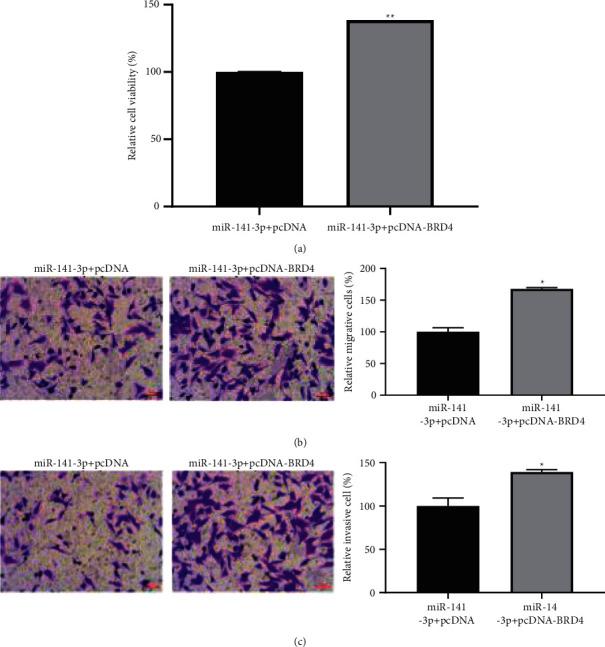
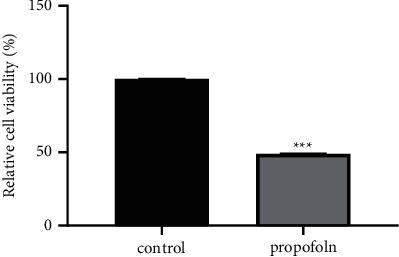
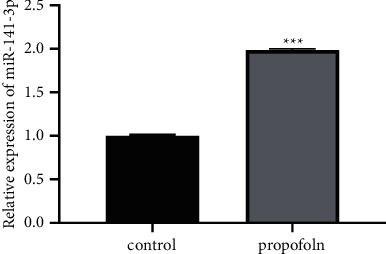
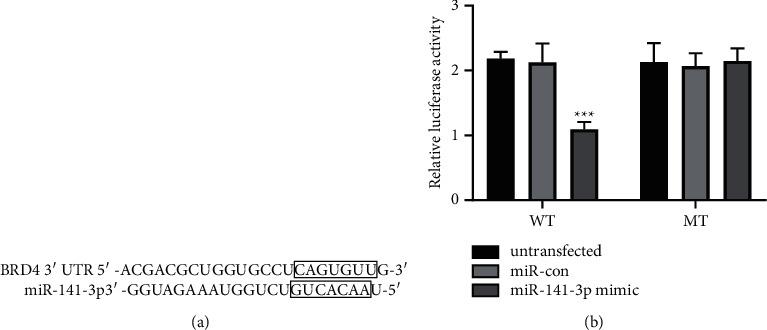
Compared with Nthy-ori 3-1 cells, the expression of miR-141-3p in TPC-1 cells was markedly decreased. Propofol treatment and excessive expression of miR-141-3p could influence the phenotype of TPC-1 cells. BRD4 is one of the target genes of miR-141-3p, and its expression is negatively regulated by miR-141-3p. Overexpression of BRD4 can partially reverse the restraining effect of miR-141-3p on the TPC-1 cell phenotype. Both miR-141-3p and BRD4 can regulate the activity of SHH and PI3K/AKT signaling pathways.
CONCLUSION
Propofol can inhibit the activity of SHH and PI3K/AKT pathways by targeting downregulating BRD4 through miR-141-3p, thereby inhibiting the phenotype of TPC-1 cells.
目的
本研究探讨丙泊酚对甲状腺肿瘤的作用及机制。
方法
培养人正常甲状腺细胞 Nthy-ori 3-1 和甲状腺癌细胞株 TPC-1。将 TPC-1 细胞分为丙泊酚组(用丙泊酚处理)、miR-141-3p 组(转染 miR-141-3p 模拟物)、阴性对照组(转染 miR-NC)、miR-141-3p+pcDNA-BRD4 组(转染 miR-141-3p 模拟物和 pcDNA-BRD4)、miR-141-3p+pcDNA 组(转染 miR-141-3p 模拟物和 pcDNA)、siBRD4 组(转染 siBRD4)和 si-control 组(转染 si-control)。采用 RT-qPCR 检测细胞中 miR-141-3p 和 BRD4 的表达,采用双荧光素酶报告基因法和 Western blot 验证 miR-141-3p 与 BRD4 的靶向关系。MTT 法检测细胞增殖,Transwell 法检测细胞迁移和侵袭,Western blot 法检测 SHH、GLI1、p-PI3K 和 p-AKT 蛋白表达。
结果
与 Nthy-ori 3-1 细胞相比,TPC-1 细胞中 miR-141-3p 的表达明显降低。丙泊酚处理和 miR-141-3p 过表达均可影响 TPC-1 细胞的表型。BRD4 是 miR-141-3p 的靶基因之一,其表达受 miR-141-3p 负调控。BRD4 过表达可部分逆转 miR-141-3p 对 TPC-1 细胞表型的抑制作用。miR-141-3p 和 BRD4 均可调节 SHH 和 PI3K/AKT 信号通路的活性。
结论
丙泊酚通过 miR-141-3p 靶向下调 BRD4 抑制 SHH 和 PI3K/AKT 通路的活性,从而抑制 TPC-1 细胞的表型。



 Zotero 插件