
基于铁死亡相关基因的新型预后标志物预测晚期膀胱尿路上皮癌患者的预后
A Novel Prognostic Signature Based on Ferroptosis-Related Genes Predicts the Prognosis of Patients With Advanced Bladder Urothelial Carcinoma.
作者信息
Li Xiaoqi, Huang Junting, Chen Ji, Zhan Yating, Zhang Rongrong, Lu Enze, Li Chunxue, Zhang Yuxiao, Wang Yajing, Li Yeping, Zheng Jianjian, Geng Wujun
机构信息
Key Laboratory of Diagnosis and Treatment of Severe Hepato-Pancreatic Diseases of Zhejiang Province, The First Affiliated Hospital of Wenzhou Medical University, Wenzhou, China.
Department of Urology, The First Affiliated Hospital of Wenzhou Medical University, Wenzhou, China.
出版信息
Front Oncol. 2021 Dec 13;11:726486. doi: 10.3389/fonc.2021.726486. eCollection 2021.
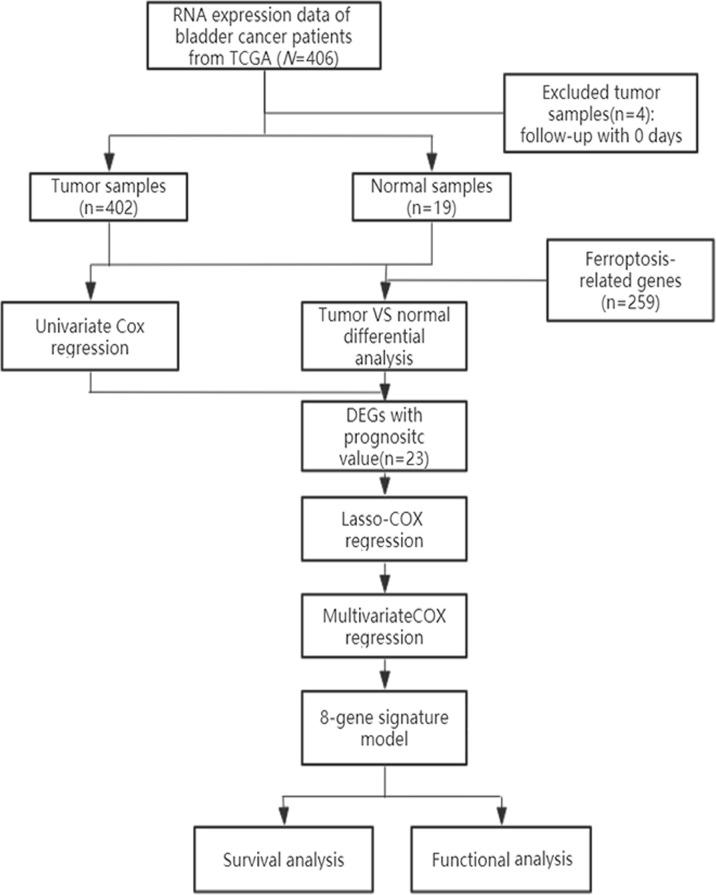
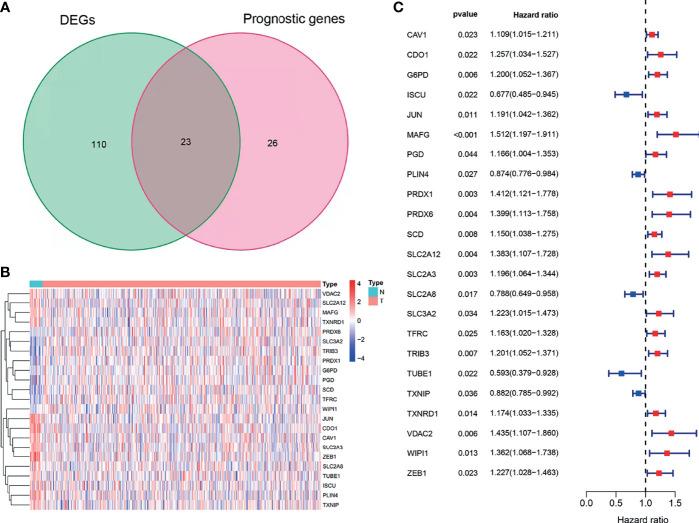
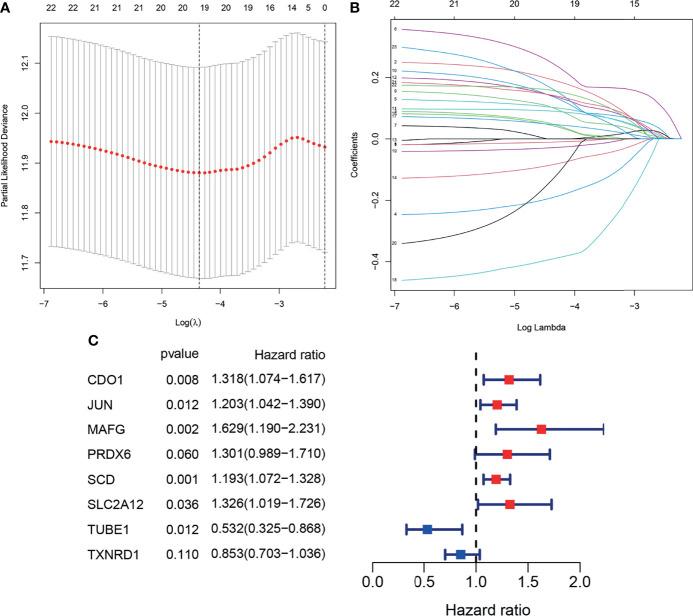
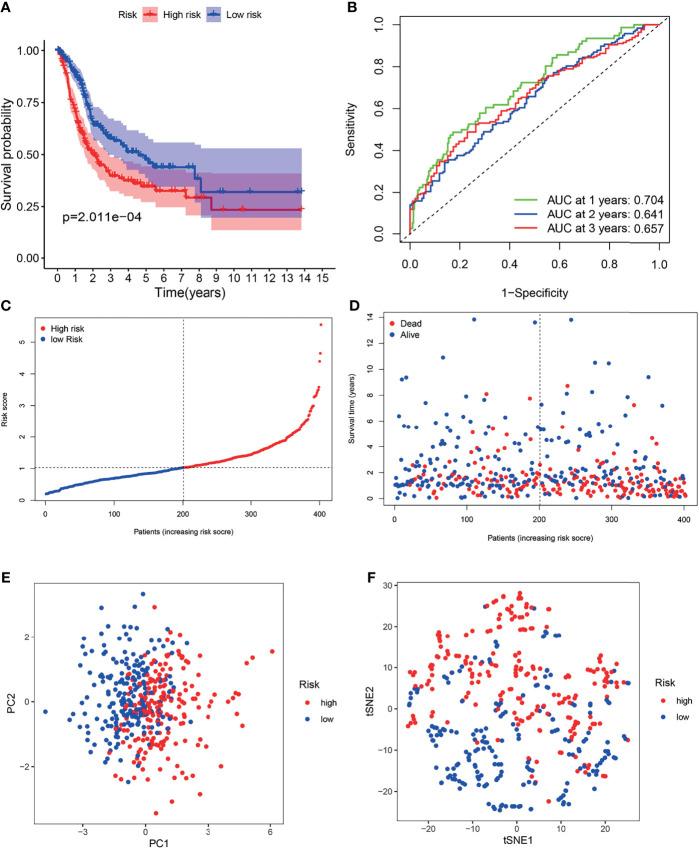
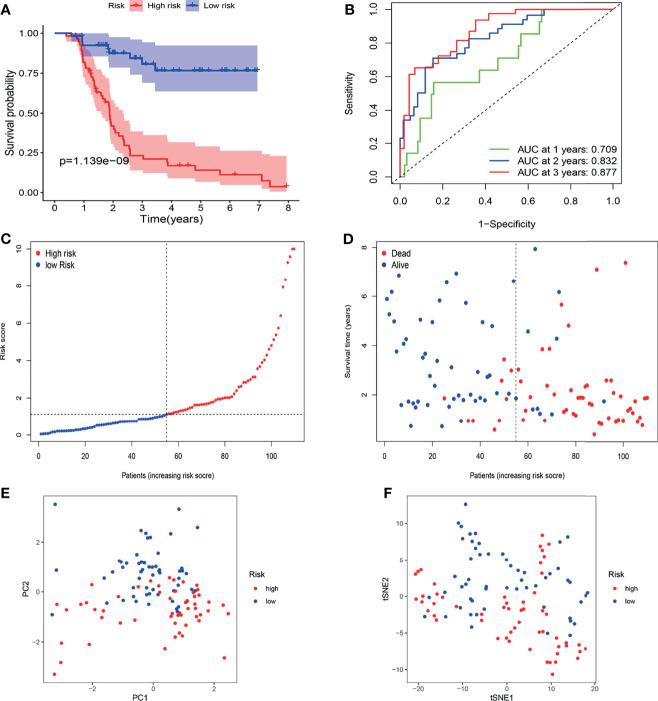
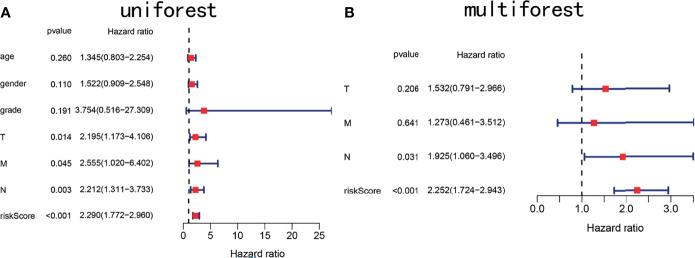
Bladder Urothelial Carcinoma (BLCA) is the major subtype of bladder cancer, and the prognosis prediction of BLCA is difficult. Ferroptosis is a newly discovered iron-dependent cell death pathway. However, the clinical value of ferroptosis-related genes (FRGs) on the prediction of BLCA prognosis is still uncertain. In this study, we aimed to construct a novel prognostic signature to improve the prognosis prediction of advanced BLCA based on FRGs. In the TCGA cohort, we identified 23 differentially expressed genes (DEGs) associated with overall survival (OS) univariate Cox analysis (all < 0.05). 8 optimal DEGs were finally screened to generate the prognostic risk signature through LASSO regression analysis. Patients were divided into two risk groups based on the median risk score. Survival analyses revealed that the OS rate in the high-risk group was significantly lower than that in the low-risk group. Moreover, the risk score was determined as an independent predictor of OS by the multivariate Cox regression analysis (Hazard ratio > 1, 95% CI = 1.724-2.943, < 0.05). Many potential ferroptosis-related pathways were identified in the enrichment analysis in BLCA. With the aid of an external FAHWMU cohort (n = 180), the clinical predication value of the signature was further verified. In conclusion, the prognosis of advanced BLCA could be accurately predicted by this novel FRG-signature.
膀胱尿路上皮癌(BLCA)是膀胱癌的主要亚型,且BLCA的预后预测较为困难。铁死亡是一种新发现的铁依赖性细胞死亡途径。然而,铁死亡相关基因(FRGs)在预测BLCA预后方面的临床价值仍不明确。在本研究中,我们旨在基于FRGs构建一种新的预后特征,以改善晚期BLCA的预后预测。在TCGA队列中,通过单变量Cox分析,我们鉴定出23个与总生存期(OS)相关的差异表达基因(DEGs)(均P<0.05)。最终通过LASSO回归分析筛选出8个最佳DEGs以生成预后风险特征。根据中位风险评分将患者分为两个风险组。生存分析显示,高风险组的OS率显著低于低风险组。此外,多变量Cox回归分析确定风险评分为OS的独立预测因子(风险比>1,95%置信区间=1.724 - 2.943,P<0.05)。在BLCA的富集分析中鉴定出许多潜在的铁死亡相关途径。借助外部FAHWMU队列(n = 180),进一步验证了该特征的临床预测价值。总之,这种新的FRG特征可以准确预测晚期BLCA的预后。
 Zotero 插件