
循环外泌体miR-101和miR-125b组合作为肝细胞癌潜在生物标志物的鉴定
Identification of Circulating Exosomal miR-101 and miR-125b Panel Act as a Potential Biomarker for Hepatocellular Carcinoma.
作者信息
Sun Li, Xu Mu, Zhang Guoying, Dong Lin, Wu Jie, Wei Chenchen, Xu Kexin, Zhang Lu
机构信息
Laboratory Medicine Center, the Second Affiliated Hospital, Nanjing Medical University, Nanjing, Jiangsu, China.
Department of Clinical Laboratory, Nanjing First Hospital, Nanjing Medical University, Nanjing, Jiangsu, China.
出版信息
Int J Genomics. 2021 Dec 27;2021:1326463. doi: 10.1155/2021/1326463. eCollection 2021.
BACKGROUND
Hepatocellular carcinoma (HCC) is one of the most common cancers worldwide with high mortality, and there is an urgent need of new diagnosis measures. This study is aimed at investigating whether circulating exosomal miRNAs could act as biomarkers for the diagnosis of HCC.
METHODS
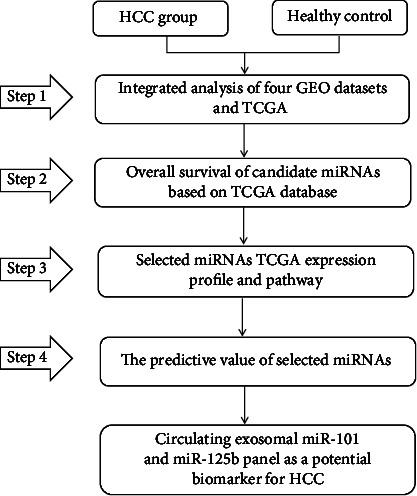
A four-stage strategy was adopted in this study. Candidate miRNA was selected by comprehensive analysis of four GEO datasets and TCGA database. The expression of candidate miRNAs in serum exosomal samples were examined through qRT-PCR. The diagnostic utility of the final validated miRNAs was examined by receiver operating characteristic (ROC) curve analysis.
RESULTS
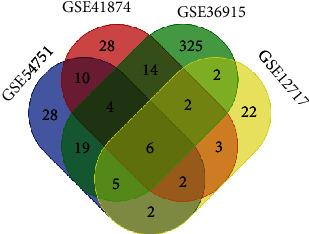
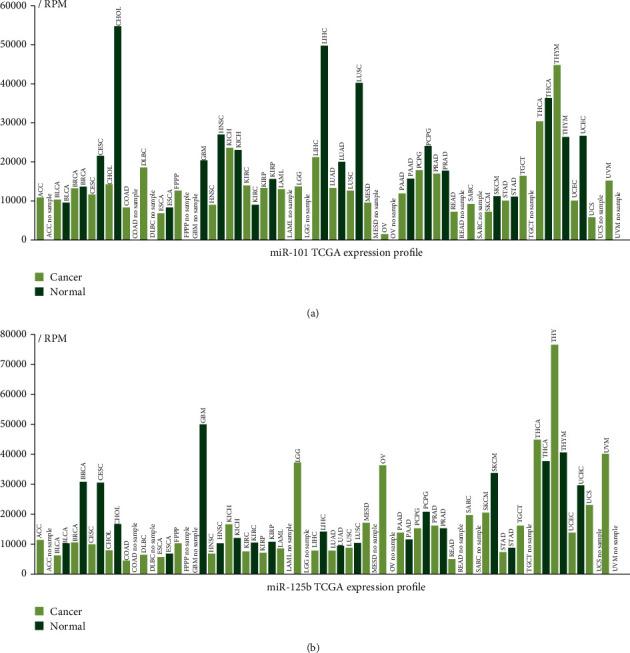
After synthetical analysis of four GEO datasets, six miRNAs were selected as candidates due to their higher differential fold change. miR-101 and miR-125b were selected as candidate miRNAs to further investigate their potential as biomarkers for HCC due to their differential fold change and their influence on overall survival based on the TCGA database. As a result, miR-101 and miR-125b expressions were remarkably downregulated in both tissues and serum exosomes of patients with HCC. The area under the ROC curves (AUCs) of circulating exosomal miR-101 and miR-125b were 0.894 (95% CI, 0.793-0.994) and 0.812 (95% CI, 0.675-0.950), respectively. The combination of the two miRNAs presented higher diagnostic utility for HCC (AUC = 0.953).
CONCLUSION
The exosomal miR-101 and miR-125b panel in the serum may act as a noninvasive biomarker for HCC detection.
背景
肝细胞癌(HCC)是全球最常见的癌症之一,死亡率很高,因此迫切需要新的诊断方法。本研究旨在调查循环外泌体miRNA是否可作为HCC诊断的生物标志物。
方法
本研究采用四阶段策略。通过对四个GEO数据集和TCGA数据库的综合分析选择候选miRNA。通过qRT-PCR检测血清外泌体样本中候选miRNA的表达。通过受试者工作特征(ROC)曲线分析来检验最终验证的miRNA的诊断效用。
结果
在对四个GEO数据集进行综合分析后,由于六个miRNA具有较高的差异倍数变化,因此被选为候选miRNA。基于TCGA数据库,由于miR-101和miR-125b的差异倍数变化及其对总生存期的影响,它们被选为候选miRNA以进一步研究其作为HCC生物标志物的潜力。结果,miR-101和miR-125b在HCC患者的组织和血清外泌体中均显著下调。循环外泌体miR-101和miR-125b的ROC曲线下面积(AUC)分别为0.894(95%CI,0.793 - 0.994)和0.812(95%CI,0.675 - 0.950)。这两种miRNA的组合对HCC具有更高的诊断效用(AUC = 0.953)。
结论
血清中的外泌体miR-101和miR-125b组合可能作为HCC检测的非侵入性生物标志物。



 Zotero 插件