
具有喹啉和 β-咔啉骨架的蒽酰胺类化合物:设计、合成与生物活性。
Anthranilamides with quinoline and β-carboline scaffolds: design, synthesis, and biological activity.
机构信息
Department of Medicinal Chemistry, Faculty of Pharmacy and Biochemistry, University of Zagreb, 10 000, Zagreb, Croatia.
Laboratory of Virology and Chemotherapy, Department of Microbiology, Immunology and Transplantation, KU Leuven, Rega Institute, 3000, Leuven, Belgium.
出版信息
Mol Divers. 2022 Oct;26(5):2595-2612. doi: 10.1007/s11030-021-10347-8. Epub 2022 Jan 8.
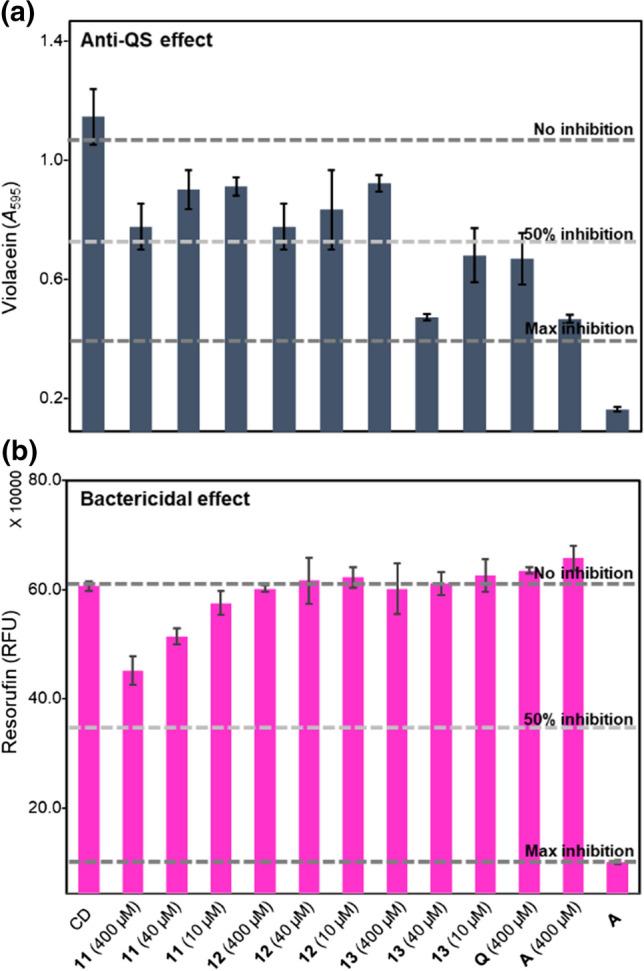
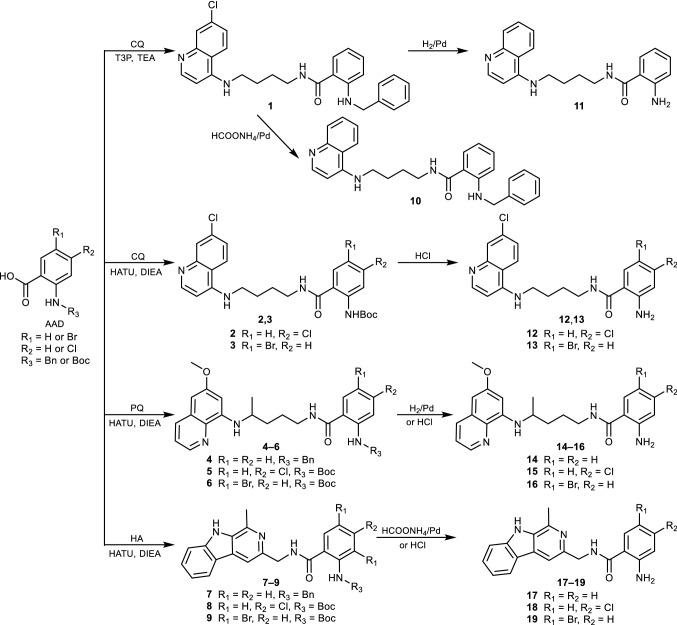
In the present study, we report the design and synthesis of novel amide-type hybrid molecules based on anthranilic acid and quinoline or β-carboline heterocyclic scaffolds. Three types of biological screenings were performed: (i) in vitro antiproliferative screening against a panel of solid tumor and leukemia cell lines, (ii) antiviral screening against several RNA viruses, and (iii) anti-quorum sensing screening using gram-negative Chromobacterium violaceum as the reporter strain. Antiproliferative screening revealed a high activity of several compounds. Anthranilamides 12 and 13 with chloroquine core and halogenated anthranilic acid were the most active agents toward diverse cancer cell lines such as glioblastoma, pancreatic adenocarcinoma, colorectal carcinoma, lung carcinoma, acute lymphoblastic, acute myeloid, chronic myeloid leukemia, and non-Hodgkin lymphoma, but also against noncancerous cell lines. Boc-protected analogs 2 and 3 showed moderate activities against the tested cancer cells without toxic effects against noncancerous cells. A nonhalogenated quinoline derivative 10 with N-benzylanthranilic acid residue was equally active as 12 and 13 and selective toward tumor cells. Chloroquine and quinoline anthranilamides 10-13 exerted pronounced antiviral effect against human coronaviruses 229E and OC43, whereas 12 and 13 against coronavirus OC43 (EC values in low micromolar range; selectivity indices from 4.6 to > 10.4). Anthranilamides 14 and 16 with PQ core inhibited HIV-1 with EC values of 9.3 and 14.1 µM, respectively. Compound 13 displayed significant anti-quorum/biofilm effect against the quorum sensing reporter strain (IC of 3.7 μM) with no apparent bactericidal effect.
在本研究中,我们报告了基于邻氨基苯甲酸和喹啉或β-咔啉杂环骨架的新型酰胺型杂合分子的设计和合成。进行了三种类型的生物筛选:(i)针对一系列实体瘤和白血病细胞系的体外抗增殖筛选,(ii)针对几种 RNA 病毒的抗病毒筛选,以及(iii)使用革兰氏阴性发光杆菌作为报告菌株的抗群体感应筛选。抗增殖筛选显示出几种化合物的高活性。带有氯喹核心和卤代邻氨基苯甲酸的邻苯二甲酰亚胺 12 和 13 是针对多种癌细胞系(如神经胶质瘤、胰腺腺癌、结直肠癌、肺癌、急性淋巴细胞白血病、急性髓细胞白血病、慢性髓细胞白血病和非霍奇金淋巴瘤)以及非癌细胞系最有效的药物。Boc 保护的类似物 2 和 3 对测试的癌细胞表现出中等活性,对非癌细胞没有毒性作用。具有 N-苄基邻氨基苯甲酸残基的非卤代喹啉衍生物 10 与 12 和 13 活性相当,对肿瘤细胞具有选择性。氯喹和喹啉邻苯二甲酰亚胺 10-13 对人冠状病毒 229E 和 OC43 表现出明显的抗病毒作用,而 12 和 13 对冠状病毒 OC43 (EC 值在低微摩尔范围内;选择性指数为 4.6 至 >10.4)。具有 PQ 核心的邻苯二甲酰亚胺 14 和 16 抑制 HIV-1 的 EC 值分别为 9.3 和 14.1μM。化合物 13 对群体感应报告菌株表现出显著的抗群体感应/生物膜作用(IC 为 3.7μM),而没有明显的杀菌作用。
 Zotero 插件