
镰状细胞病患者从羟基脲治疗转换为部分换血输血后出现危及生命的急性胸部综合征:一例报告
Life-Threatening Acute Chest Syndrome in a Patient With Sickle Cell Disease After Switching From Hydroxyurea Therapy to Partial Exchange Transfusions: A Case Report.
作者信息
Kvam Ann K, Torp Henrik A, Iversen Per O
机构信息
Department of Hematology, Oslo University Hospital, Oslo, NOR.
Division of Emergencies and Critical Care, Oslo University Hospital, Oslo, NOR.
出版信息
Cureus. 2021 Dec 7;13(12):e20236. doi: 10.7759/cureus.20236. eCollection 2021 Dec.
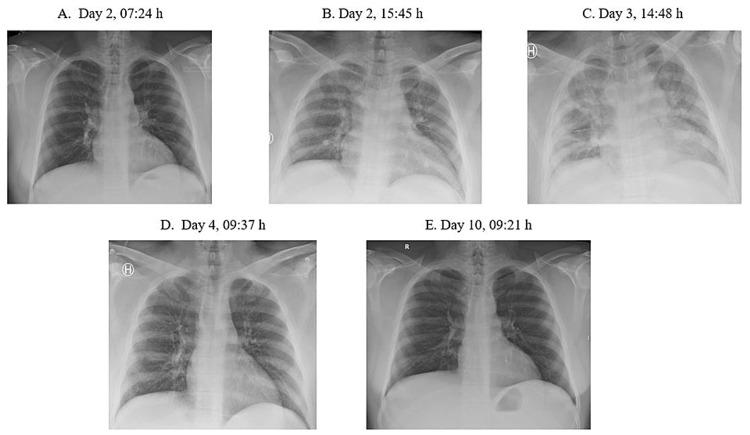
Acute chest syndrome (ACS) is a severe form of vaso-occlusive crisis, which is a main feature of sickle cell disease (SCD), an inherited hemoglobinopathy. Traditionally, hydroxyurea has been the treatment of choice for SCD to prevent vaso-occlusive crises including ACS. However, hydroxyurea may be contraindicated, for example, in patients wanting to have children. We here present a young male with SCD who wanted to become a father and developed a life-threatening episode of ACS following discontinuation of hydroxyurea and switching to partial exchange blood transfusions. The patient, aged 32 years and originally from Bahrain, had been diagnosed with homozygous SCD, alpha-thalassemia, and glucose-6-phosphate dehydrogenase deficiency as a child. He had an episode of ACS with moderate severity in 2008, after which he started using hydroxyurea. From 2008 until the present, he did not experience any episodes of ACS. About six months before the present episode, he stopped using hydroxyurea and switched to partial exchange transfusions, aiming to keep hemoglobin S (HbS) below 30%. The interval between the transfusions was typically about seven to eight weeks. On the evening (day 1) before hospital admission, he developed typical symptoms and signs of vaso-occlusive crisis, and during the first day in the hospital (HbS about 55%), his pulmonary function deteriorated, and he also developed cerebral symptoms (somnolence and confusion). On suspicion of ACS, a full blood exchange transfusion was administered on day 3. He then gradually recovered clinically, and his laboratory values also normalized. He was discharged on day 10. Subsequent follow-up visits at the outpatient clinic the following month were unremarkable. Possibly, this severe episode of ACS was triggered by switching from hydroxyurea therapy to partial exchange transfusions with too long intervals between the transfusions. This novel case is a compelling reminder of the possible perils that may accompany the discontinuation of hydroxyurea, the best-documented therapy in SCD.
急性胸部综合征(ACS)是血管闭塞性危机的一种严重形式,血管闭塞性危机是镰状细胞病(SCD)的主要特征,SCD是一种遗传性血红蛋白病。传统上,羟基脲一直是治疗SCD以预防包括ACS在内的血管闭塞性危机的首选药物。然而,羟基脲可能是禁忌的,例如,对于想要孩子的患者。我们在此介绍一名患有SCD的年轻男性,他想成为父亲,在停用羟基脲并改用部分换血输血后发生了危及生命的ACS发作。该患者32岁,原籍巴林,儿童时期被诊断为纯合子SCD、α地中海贫血和葡萄糖-6-磷酸脱氢酶缺乏症。他在2008年发生了一次中度严重的ACS发作,之后开始使用羟基脲。从2008年到现在,他没有经历过任何ACS发作。在本次发作前约六个月,他停止使用羟基脲并改用部分换血输血,目的是将血红蛋白S(HbS)保持在30%以下。输血间隔通常约为七到八周。在入院前的晚上(第1天),他出现了血管闭塞性危机的典型症状和体征,在住院的第一天(HbS约为55%),他的肺功能恶化,还出现了脑部症状(嗜睡和意识模糊)。怀疑为ACS后,在第3天进行了全血换血输血。然后他在临床上逐渐康复,实验室检查值也恢复正常。他于第10天出院。接下来的一个月在门诊的后续随访没有异常。可能,这次严重的ACS发作是由于从羟基脲治疗改为部分换血输血且输血间隔时间过长引发的。这个新病例有力地提醒人们,停用羟基脲(SCD中记录最充分的治疗方法)可能会带来危险。
 Zotero 插件